
































Key Points
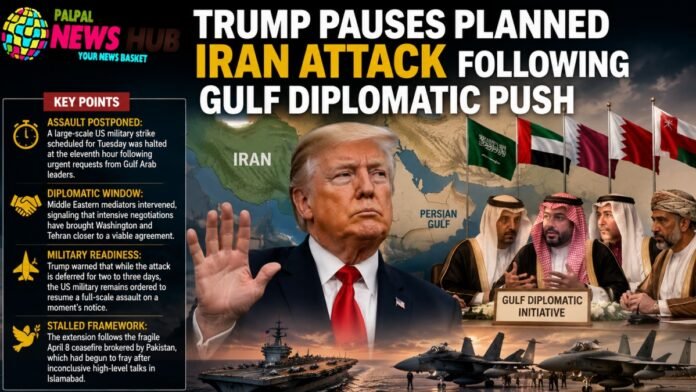
- Assault Postponed: A large-scale US military strike scheduled for Tuesday was halted at the eleventh hour following urgent requests from Gulf Arab leaders.
- Diplomatic Window: Middle Eastern mediators intervened, signaling that intensive negotiations have brought Washington and Tehran closer to a viable agreement.
- Military Readiness: Trump warned that while the attack is deferred for two to three days, the US military remains ordered to resume a full-scale assault on a moment’s notice.
- Stalled Framework: The extension follows the fragile April 8 ceasefire brokered by Pakistan, which had begun to fray after inconclusive high-level talks in Islamabad.
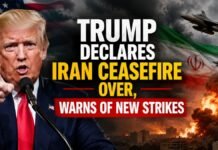
In a dramatic shift in the ongoing Middle East conflict, President Donald Trump confirmed Monday that he has temporarily suspended a major US military operation against Iran. The strikes, which were scheduled to commence on Tuesday morning, were halted after a coordinated diplomatic push from the leaders of Saudi Arabia, Qatar, and the United Arab Emirates. The Gulf nations approached Washington with assurances that serious, high-stakes negotiations are underway, with regional leaders expressing confidence that an agreement acceptable to the United States is finally within reach.
The announcement offers a reprieve for a region that has been locked in a state of open warfare since February 28, 2026, when the US and Israel launched sweeping airstrikes against Iranian military installations. Speaking to reporters on Monday, Trump noted that he agreed to a deferral of two or three days, harboring hope that the pause could be extended indefinitely if Tehran complies with US demands, primarily the total dismantling of its nuclear enrichment capabilities.
Fragile Islamabad Peace Track Given Extended Lifeline
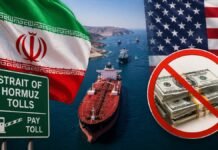
The decision to hold off on the assault breathes critical breathing room into diplomatic channels that many analysts feared had completely collapsed. Following the initial outbreak of hostilities, which triggered Iranian retaliatory strikes on Gulf infrastructure and a highly disruptive shipping blockade in the Strait of Hormuz, a fragile two-week ceasefire was successfully mediated by Pakistan on April 8.
Subsequent direct negotiations, led by US Vice President JD Vance and Iranian chief negotiator Mohammad Bagher Ghalibaf in Islamabad, reached a bitter stalemate after Tehran rejected Washington’s phased disarmament conditions. Despite issuing fierce public warnings that the “clock is ticking” for the Islamic Republic, Trump’s latest extension is intended to allow Iranian diplomats to formulate a unified, binding proposal that meets the core US requirement of guaranteeing that Iran will possess no nuclear weapons.
High-Alert Posture Maintained Over Strategic Waterways
Despite the cautious optimism expressed by Gulf intermediaries, the Trump administration has made it clear that the pause is strictly conditional and highly time-bound. International energy markets reacted immediately to the cooling rhetoric, with Brent crude benchmarks sliding just over 2% down to $109 per barrel after spending days inflated by fears of an immediate escalation.
Behind the diplomatic overtures, the threat of total military re-engagement remains acute. Trump explicitly stated that he has instructed top Pentagon officials and naval blockade commanders to remain on maximum alert. If the current multi-national diplomatic window fails to produce a definitive breakthrough by the end of the week, the US military is ordered to proceed with a full-scale, unrestricted assault on Iranian assets without further delay.