


































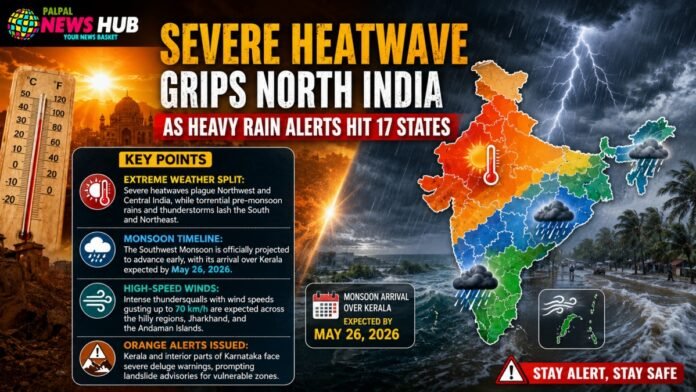
Key Points
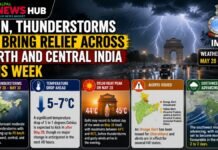
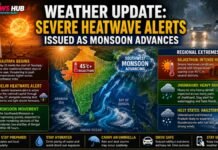
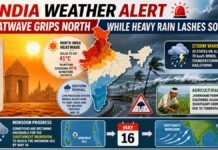
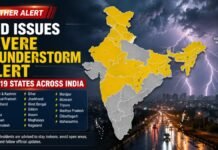
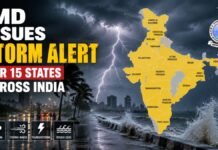
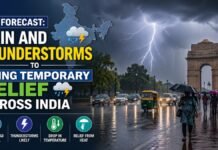
- Extreme Weather Split: Severe heatwaves plague Northwest and Central India, while torrential pre-monsoon rains and thunderstorms lash the South and Northeast.
- Monsoon Timeline: The Southwest Monsoon is officially projected to advance early, with its arrival over Kerala expected by May 26, 2026.
- High-Speed Winds: Intense thundersqualls with wind speeds gusting up to 70 km/h are expected across the hilly regions, Jharkhand, and the Andaman Islands.
- Orange Alerts Issued: Kerala and interior parts of Karnataka face severe deluge warnings, prompting landslide advisories for vulnerable zones.
Northwest and Central India are currently experiencing an intense thermal onslaught. The IMD has issued a severe heatwave alert for Delhi, West Uttar Pradesh, Haryana, Punjab, Chandigarh, Rajasthan, and Madhya Pradesh. According to meteorologists, a gradual rise in maximum temperatures by 3°C to 5°C is actively developing over these regions.
In Delhi-NCR, temperatures are projected to climb between 42°C and 44°C, driven by dry, hot northwesterly winds arriving from central Pakistan and Rajasthan. Urban centers in Uttar Pradesh, including Prayagraj, Ghazipur, Orai, Agra, and Lucknow, are similarly braced for extreme discomfort, with afternoon mercury levels consistently hovering around the 43°C mark paired with localized dust storms.
Pre-Monsoon Rains and ‘Orange Alerts’ in the South and Northeast
In stark contrast to the scorched northern plains, southern and northeastern India are experiencing intense pre-monsoon precipitation. This activity is heavily fueled by a low-pressure area forming over the southwest and adjoining west-central Bay of Bengal.
The IMD has confirmed that atmospheric conditions are becoming highly favorable for the early advancement of the seasonal cycle, predicting that the Southwest Monsoon will debut over Kerala on May 26, 2026. In anticipation, an ‘Orange Alert’ has been sounded for parts of South Interior Karnataka and Kerala, particularly the low-lying or landslide-prone districts of Pathanamthitta and Alappuzha. Heavy rains are also pounding Tamil Nadu and the Andaman and Nicobar Islands, where stormy seas and winds are gusting up to 70 km/h.
Meanwhile, the Northeast, including Assam, Meghalaya, and Arunachal Pradesh, is entering a highly sensitive weather phase with moderate to heavy rainfall accompanied by frequent lightning, thunder, and localized hail.
Regional Weather Breakdown and Temperature Outlook
The severe divergence in regional temperatures and official IMD alert statuses for May 18, 2026, highlights a deeply divided national climate profile:
| City / Region | Expected Maximum Temp | Expected Minimum Temp | IMD Alert Status / Weather Type |
|---|---|---|---|
| Delhi-NCR | 43°C | 31°C | Heatwave Alert, Dust Storm Possibility |
| Lucknow (Uttar Pradesh) | 43°C | 29°C | Severe Heatwave Warning |
| Bhopal (Madhya Pradesh) | 42°C | 30°C | Severe Heatwave Advisory |
| Bengaluru (Karnataka) | 33°C | 23°C | Yellow Alert, Intense Thunderstorms |
| Manali (Himachal Pradesh) | 17°C | 4°C | Light Rain, Chilly Conditions |
| Kolkata (West Bengal) | 38°C | 29°C | Thunderstorm with Gusty Winds |
Hilly States Face Wind and Hail Hazards
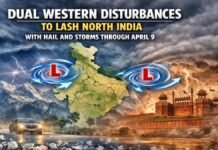
The western Himalayan region is witnessing its own unique atmospheric disruptions due to a fresh Western Disturbance moving across Northwest India. Hilly areas in Uttarakhand, including Nainital, Rudraprayag, Bageshwar, and Rishikesh, are on high alert for heavy showers and squalls traveling at 60 to 70 km/h.
Concurrently, Himachal Pradesh destinations like Shimla, Manali, and Chamba are seeing sudden drops in minimum temperatures, paired with localized light showers. Authorities have advised tourists and travelers to remain vigilant, as sudden pre-monsoon downpours in the eastern Himalayas and northeastern hill stations can rapidly trigger flash floods and hazardous landslides.
IMD Health Advisory: Residents in heatwave-affected northern states are strictly advised to avoid prolonged sun exposure during peak afternoon hours, maintain constant hydration, and limit heavy outdoor work to mitigate the risks of heat exhaustion.