































Key Highlights
- Energy Shortage: Global markets, particularly India, face severe supply disruptions as the conflict enters its eighth week.
- Legal Justification: Tehran claims the blockade adheres to international law in response to external aggression.
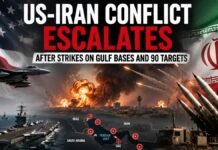
- Regional Bases: Iran blames U.S. and Israeli military operations launched from Gulf-based facilities for the escalation.
- India Relations: Iranian officials emphasized “excellent” ties with New Delhi, acknowledging the economic hardship the blockade has caused.
- Strategic Stalemate: Both Iranian and U.S. naval forces continue to restrict movement through the world’s most vital oil transit point.
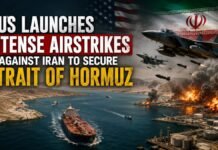
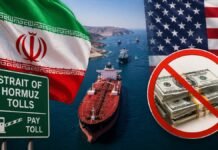
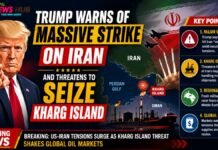
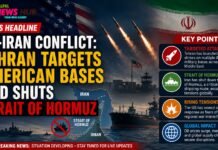
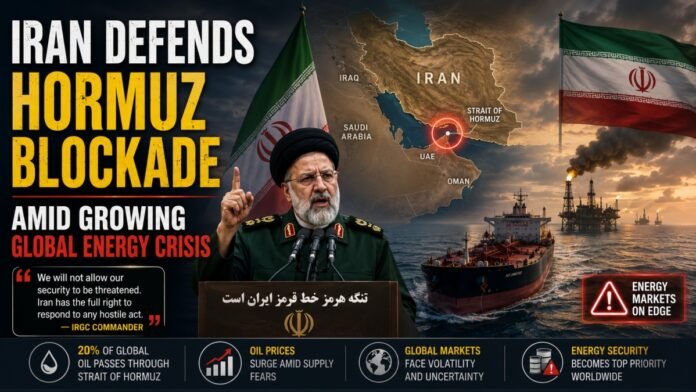
As the conflict between the United States and Iran nears the two,month mark, the global community is reeling from a massive energy crisis. The standoff, which has seen the Strait of Hormuz effectively shuttered by the naval maneuvers of both Tehran and Washington, has cut off a primary artery for global oil and gas. India, a major consumer of Iranian and regional energy, finds itself at a critical crossroads as fuel prices climb and supply chains falter.
In a recent diplomatic outreach, Iran expressed formal regret for the difficulties nations are experiencing. However, the tone from Tehran remains firm regarding the strategic necessity of the closure.
Iran Blames U.S. and Israeli “Aggression”
Ismail Baghai, the spokesperson for Iran’s Ministry of Foreign Affairs, defended the decision to blockade the Strait, describing it as a move forced upon the Islamic Republic. “We were forced to take this step because the United States and Israel launched attacks against Iran from their existing military bases within the Gulf region,” Baghai stated.
The Iranian administration contends that the presence of foreign military assets in neighboring Gulf states left them with no choice but to secure the maritime corridor. Tehran asserts that before the outbreak of hostilities, the Strait remained open and accessible, but the “unprovoked” nature of recent strikes necessitated a shift in policy to protect sovereign territory.
Navigating International Law and Trade
The Iranian Foreign Ministry maintains that its actions are consistent with the provisions of international law, arguing that the responsibility for the disruption of global trade lies solely with the U.S. and Israel. According to Baghai, Iran is merely confronting “aggressors” in a situation where the closure of the Strait is a justified defensive measure.
“While we are not pleased that this situation is causing difficulties for India and numerous other nations, the United States is ultimately responsible for this outcome,” Baghai added, shifting the culpability for the global economic downturn toward Washington’s military strategy in the Middle East.
The India,Iran Diplomatic Connection
Despite the economic strain, Tehran has gone to great lengths to emphasize its historical and diplomatic affinity with New Delhi. Baghai affirmed that the two nations possess “numerous historical affinities” and have consistently maintained strong ties.
Iran appears to be banking on India’s understanding of its position as a sovereign member of the United Nations. Iranian officials suggested that New Delhi recognize that Iran was attacked by two nuclear-armed powers, an act they claim cannot be ignored by the international community. This diplomatic charm offensive comes at a time when India is balancing its strategic partnership with the U.S. against its urgent need for stable energy imports.
Context: The 2026 Strategic Landscape
The current crisis follows a series of escalations that began earlier this year, complicating President Trump’s recent efforts to stabilize global trade during his visit to Beijing. With the Strait of Hormuz remaining a volatile flashpoint, energy analysts warn that unless a diplomatic breakthrough is reached between Washington and Tehran, the 2026 energy crisis could lead to a prolonged global recession.