

































Key Points
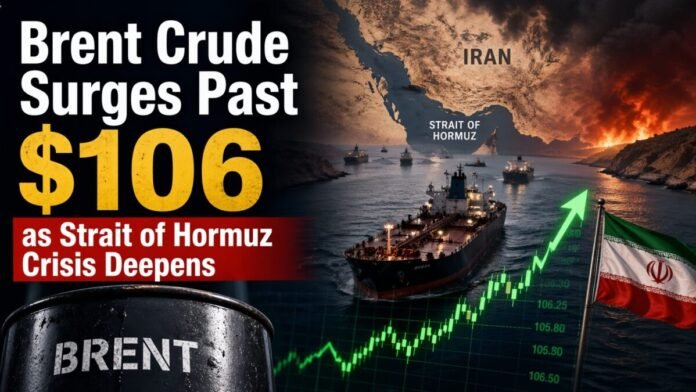
- Brent Surpasses $106: Crude oil prices hit a multi-year high as supply disruptions in West Asia intensify.
- Dollar Strength: The U.S. Dollar Index has climbed to 98.81, exerting significant pressure on emerging market currencies.
- Indian Markets Tumble: The Nifty 50 has breached the 24,000 support level, fueled by inflation fears and a rising India VIX.
- Geopolitical Gridlock: The de facto closure of the Strait of Hormuz remains the primary driver of the current energy volatility.
The upward trajectory of global crude oil prices has reached a critical tipping point this April. Brent crude has officially surged past the $106 per barrel mark, while West Texas Intermediate (WTI) continues to demonstrate similar strength, trading near $96. This rally is not merely a market fluctuation but a direct consequence of the prolonged maritime standoff in the Middle East. Since the de facto closure of the Strait of Hormuz began in late February, nearly 20 percent of the world’s oil supply has been effectively throttled, creating a massive supply gap that analysts expect could persist through the end of the year.
The Strengthening Dollar and Emerging Market Pressure
Compounding the energy crisis is the robust performance of the U.S. dollar. The Dollar Index (DXY) reached 98.81 on Friday, April 24, 2026, its highest level in weeks. A stronger greenback traditionally makes dollar-denominated commodities like oil more expensive for holders of other currencies, creating a double blow for emerging economies. This “haven” demand for the dollar has been bolstered by President Trump’s recent directives to the U.S. Navy and the subsequent retreat of naval forces to a 200-kilometer radius from the conflict zone, a development that has left investors wary of further escalation.
Impact on India: Inflation and Market Volatility
For oil, importing nations like India are finding the current price levels unsustainable. India’s crude oil import price has recently surged toward $125.88 per barrel, marking some of the costliest energy imports in over two decades. On the domestic front, the impact is already visible in the financial markets. The Nifty 50 tumbled below the psychologically important 24,000 level today, losing over 700 points in early trading.
The sell-off was particularly sharp in the IT and auto sectors, as investors anticipate a surge in input costs and a widening current account deficit. The India VIX, often referred to as the “fear gauge,” has jumped by nearly 6% over the last five sessions, signaling heightened anxiety over domestic inflation, which is being imported through these record energy costs.
Looking Ahead: Supply Constraints and Economic Outlook
The India Meteorological Department (IMD) and other regional observers have noted that while some weather-related relief might be coming to certain sectors, the energy shock remains the dominant economic variable. With Iran now enforcing tolls in the Strait of Hormuz and the U.S. maintaining a firm blockade, the “risk premium” on oil is unlikely to dissipate soon. Economic analysts warn that if Brent maintains its position above $100 throughout the second quarter, global growth projections for 2026 may need to be revised downward to account for the sustained inflationary pressure on manufacturing and transport.