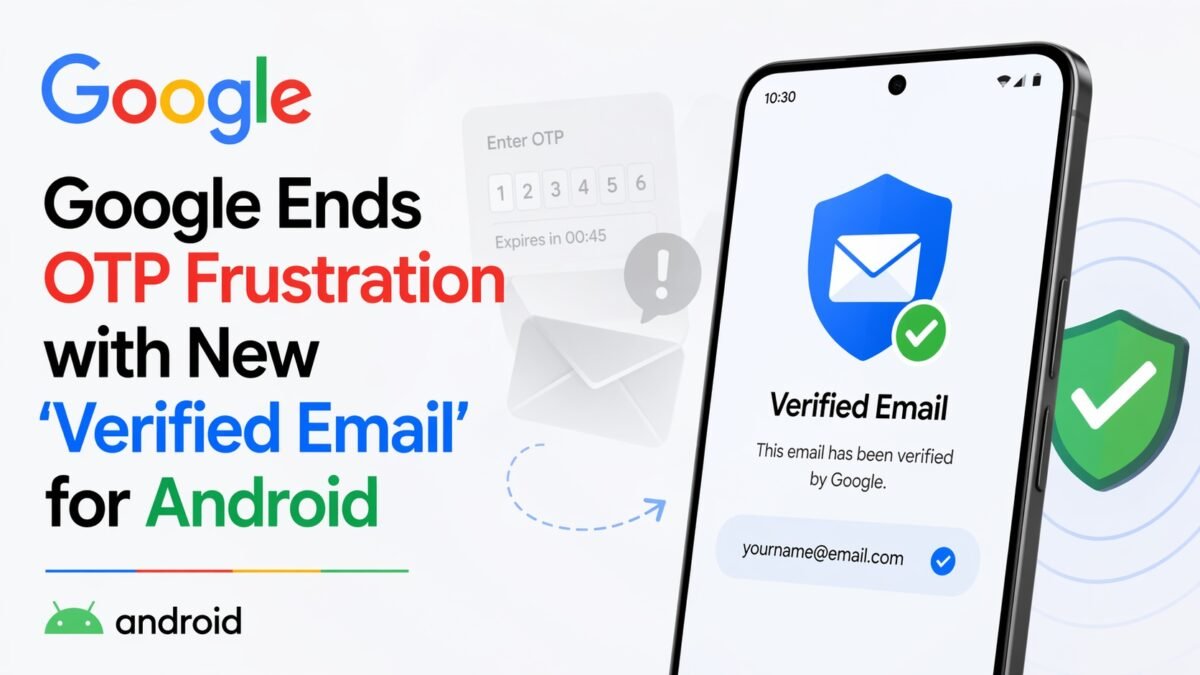
Key Points
- One, Tap Verification: Users can now complete sign-ups with a single tap on a system pop-up, bypassing the traditional verification loop.
- End of the OTP Era: The update eliminates the need to wait for SMS codes or “magic links,” reducing friction during app onboarding.
- Cryptographic Security: The system uses on-device, cryptographically verified credentials to ensure data remains private and secure.
- Broad Device Support: This feature is currently rolling out for personal Google Accounts on devices running Android 9 and newer.
In a significant move to enhance user experience, Google has introduced a “Verified Email” system that promises to transform the way Android users interact with new applications. For years, the sign-up process has been hindered by the “verification loop,” the tedious requirement for users to exit an app, open their email or SMS client, retrieve a One-Time Password (OTP), and return to the original app. This friction often leads to user drop-offs and frustration, especially in areas with delayed network notifications.
The new update, integrated directly into Android’s Credential Manager, allows the operating system to handle this verification in the background. By using a secure credential already present on the device, Android can now verify a user’s identity without requiring any external codes. This makes the onboarding process for new services as simple as clicking a single button.
How the OTP, Free Sign-Up Works
The mechanism is designed to be as unobtrusive as possible. When a user attempts to sign up for a compatible app, a native system sheet appears at the bottom of the screen. This pop-up clearly displays the specific information the app is requesting, such as a verified Gmail address or profile picture.
By selecting “Agree and continue,” the user grants permission for the encrypted credential to be shared with the app developer. This action completes the registration instantly, allowing the user to begin using the service immediately. Beyond simple sign-ups, this technology is also being deployed for account recovery and as a low-friction re-authentication step for sensitive actions, such as changing account settings or verifying a high-value transaction.
Security and Data Privacy
As Google moves away from traditional OTPs, which are increasingly vulnerable to “SIM swap” scams and phishing attacks, security remains a primary focus. The “Verified Email” system relies on cryptographic signatures that are unique to the user’s device and Google Account. This ensures that the credentials cannot be easily intercepted or spoofed by malicious actors.
Google has emphasized that users remain in complete control of their data. Apps cannot access a verified email address or any personal information without explicit, one-tap consent from the user. Furthermore, the system is designed to be transparent, providing a clear summary of what data is being shared before any transaction is finalized.
Implementation and Future Outlook
As of late April 2026, this feature is available to users with personal Google Accounts. Developers are already being encouraged to integrate the new Credential Manager APIs to take advantage of the reduced “churn” associated with faster registration. While this update specifically targets app sign-ups, it coincides with broader global shifts in digital security, such as the Reserve Bank of India’s new 2026 mandates for multi-factor authentication, suggesting a wider industry move toward more secure, device-native verification methods over aging SMS-based systems.