
































Key Points
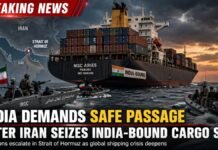
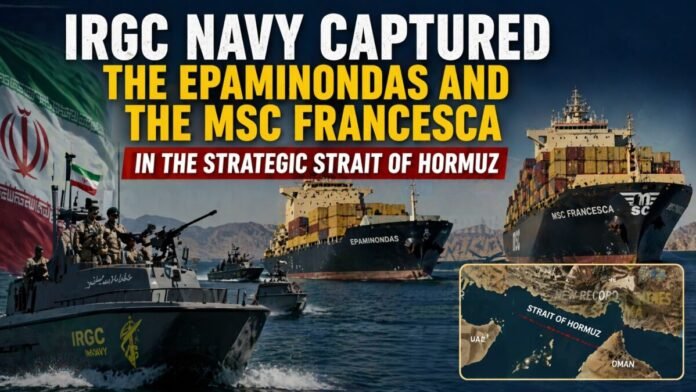
- Vessels Seized: The IRGC Navy captured the Epaminondas and the MSC Francesca in the strategic Strait of Hormuz on Wednesday.
- India Connection: The Epaminondas, a Liberia-flagged container ship, was en route from Dubai to Mundra Port, Gujarat.
- Aggressive Tactics: Reports indicate IRGC gunboats opened fire without warning, causing bridge damage to at least one vessel.
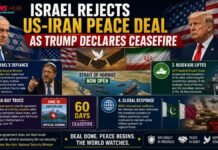
- Ceasefire Context: The seizures follow President Trump’s Truth Social announcement extending the ceasefire at the request of Pakistani mediators.
- Diplomacy Stalled: Vice President JD Vance’s mission to Islamabad has been postponed as Washington awaits a “unified proposal” from Tehran.
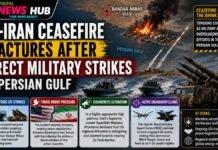
Despite a high-stakes diplomatic effort to maintain a fragile truce, the Iranian Revolutionary Guard Corps (IRGC) took aggressive action on Wednesday, April 22, 2026, by seizing two major commercial vessels. The IRGC Navy confirmed the capture of the MSC Francesca, a Panama-flagged ship, and the Epaminondas, which was bound for India. According to Iranian state media, the vessels were intercepted for allegedly “tampering with navigation systems” and operating without required permits, claims that have been met with skepticism by international maritime monitors.
The Epaminondas had recently departed from Dubai and was scheduled to dock at Mundra Port in Gujarat. The seizure of an India-bound vessel marks a significant expansion of the conflict’s economic impact, directly threatening the stability of South Asian supply chains and energy security.
Unprovoked Firing and Maritime Peril
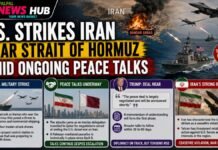
The seizures were preceded by a series of violent encounters in the waterway. The U.K. Maritime Trade Operations (UKMTO) reported that an IRGC-affiliated gunboat directed indiscriminate fire at three other commercial ships near the Omani coast. One vessel reportedly suffered heavy damage to its bridge during a strafing run about 15 nautical miles northeast of Oman.
A third ship, the Panama-flagged Euphoria, was also fired upon while transiting outbound from the Strait. These incidents occurred despite the vessels possessing valid transit documentation, signaling a breakdown in the “intelligent control” Iran claims to exercise over the passage. Maritime experts suggest these actions are a direct response to the ongoing U.S. naval blockade, which Tehran has characterized as an act of war equivalent to bombardment.
Trump’s Ceasefire and the “Fractured” Iranian Leadership
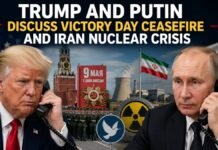
The maritime flare-up comes less than 24 hours after U.S. President Donald Trump used his Truth Social platform to announce an indefinite extension of the ceasefire that was set to expire today. Trump noted that the decision was a gesture of goodwill toward Pakistani mediators, specifically Prime Minister Shehbaz Sharif and Army Chief Asim Munir, who have been working to prevent a full-scale regional war.
However, Trump’s message carried a dual edge. He asserted that the Iranian government appears “severely divided” and incapable of presenting a cohesive negotiating stance. While the President has paused aerial strikes, he has refused to lift the blockade of the Strait of Hormuz, maintaining a “maximum pressure” stance until a “unified proposal” for a peace deal is delivered to Washington.
Diplomatic Vacuum in Islamabad
The sudden surge in IRGC activity has effectively derailed the immediate prospects for a second round of face-to-face talks. White House officials confirmed that Vice President JD Vance’s scheduled flight to Islamabad was postponed on Tuesday afternoon. The U.S. delegation, which was expected to meet with Iranian representatives in the Pakistani capital, remains on standby at the White House for emergency policy sessions.
Iranian hardliners, meanwhile, have dismissed the ceasefire extension as a “tactic to buy time” for a potential surprise attack. An advisor to the Iranian Parliament Speaker, Mohammad-Baqer Ghalibaf, urged the military to “take the initiative” against the naval siege. As the 20 tons of silver offerings at the Vaishno Devi shrine are audited and Indian energy costs fluctuate, the international community remains focused on the Strait of Hormuz, where the line between a shaky truce and total conflict grows thinner by the hour.