
































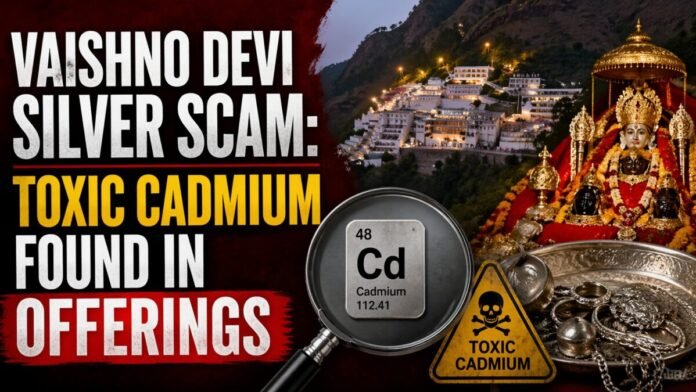
Key Points
- Massive Valuation Gap: 20 tons of offerings expected to be worth ₹500 crore were valued at only ₹30 crore.
- Toxic Composition: Lab tests confirmed the items consist of only 5 to 6 per cent silver, with the remainder being toxic cadmium, copper, and zinc.
- Health Hazard: Experts warn that cadmium is carcinogenic and emits lethal fumes when melted, threatening the health of mint workers and devotees.
- Regulatory Failure: The government mint reportedly warned the Shrine Board a year ago, but no enforcement action has been taken against local vendors.
- Consumer Fraud: Local shopkeepers are accused of selling industrial-grade cadmium as sacred silver to millions of unsuspecting pilgrims.
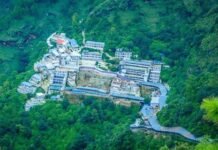
The Shri Mata Vaishno Devi Shrine Board, which manages the world-renowned temple in the Trikuta Hills of Jammu and Kashmir, recently initiated a process to melt and secure 20 tons of accumulated silver offerings. Based on 2026 market rates, officials estimated the stockpile to be worth between ₹500 and ₹550 crore. However, upon delivery to a government mint for processing, the true scale of a long-running fraud was uncovered.
Preliminary purity tests revealed the actual value of the metal is roughly ₹30 crore. This staggering discrepancy indicates that for years, the vast majority of “silver” tokens, coins, and ceremonial canopies (chatras) offered by devotees were actually cheap, industrial counterfeits.
The Hidden Danger of Cadmium
The investigation into the metal composition provided alarming results. Rather than high-purity silver, the items were found to be a mixture of inexpensive metals, predominantly cadmium, iron, and copper. While silver is a precious commodity, cadmium is available for a mere ₹400 to ₹500 per kilogram.
The use of cadmium is particularly egregious because it is a highly toxic metal, the use of which in consumer goods is strictly regulated or prohibited under international safety standards. Because cadmium possesses a lustre that closely mimics silver, it is frequently used by unscrupulous manufacturers to deceive buyers. Ordinary devotees, purchasing these items in good faith for their religious rituals, have no way of distinguishing the toxic substitute from the genuine precious metal.
A Public Health Crisis in the Name of Faith
Beyond the financial deception, the discovery has sparked a major health and safety controversy. Experts at the government mint have raised the alarm regarding the melting process. When cadmium is heated to its melting point, it releases fumes that are known carcinogens. Prolonged exposure or inhalation of these fumes can lead to irreversible damage to the lungs and kidneys.
The mint has stated that the current stockpile poses a significant risk to its technicians. Furthermore, the fact that millions of these items are handled daily by pilgrims and temple staff constitutes a direct violation of the Legal Metrology Act. Despite the mint informing the Jammu and Kashmir administration and the Shrine Board of these findings over a year ago, the sale of these hazardous items continues in the markets of Katra unabated.
Exploitation of Devotee Trust
The revelation has exposed a deeply entrenched racket involving local vendors and manufacturers who exploit the religious sentiments of pilgrims. In one specific sample batch of 70 kilograms of material, only 3 kilograms of actual silver were recovered. This suggests a systematic effort to maximise profits by selling toxic waste as sacred offerings.
As of April 2026, the Shrine Board has yet to launch a widespread crackdown or issue a formal advisory to pilgrims regarding the purchase of silver items. The lack of accountability from both the temple administration and local law enforcement has led to growing demands for a high-level investigation into the supply chains feeding the Katra markets. For millions of devotees, the discovery that their offerings of faith have been replaced by “poison” is a profound betrayal of trust.