

































Key Points
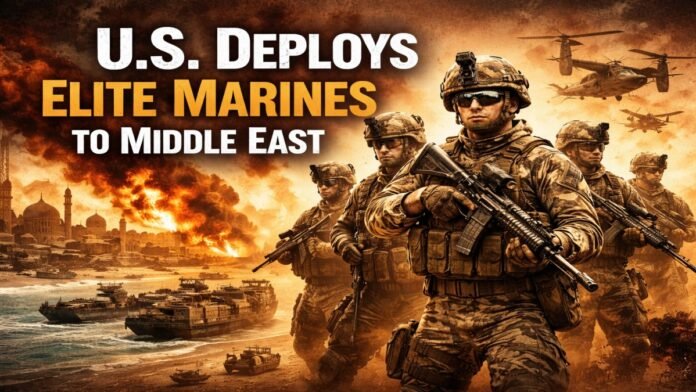
- Strategic Deployment: Approximately 2,500 Marines from the 31st Marine Expeditionary Unit are en route from Japan, supported by the amphibious assault ship USS Tripoli.
- Energy Crisis: Iran’s effective blockade of the Strait of Hormuz has disrupted one-fifth of the global oil supply, causing crude prices to skyrocket by 40% to reach $100 per barrel.
- Humanitarian Toll: Intensified strikes in Lebanon have resulted in nearly 800 deaths and displaced approximately 850,000 people, according to recent reports.
- Mission Scope: While officials state a ground invasion is not imminent, the troops are specialized in embassy security, civilian evacuations, and humanitarian assistance.
The shadows of a wider conflict in the Middle East have lengthened as the United States significantly expands its military footprint in the region. The ongoing military confrontation between Iran and Israel has disrupted global stability, and diplomatic efforts to de-escalate the situation appear increasingly fragile. Washington’s latest move, the deployment of specialized elite units, is designed to safeguard American interests and prevent regional volatility from spiraling into a total collapse of international trade.
The economic repercussions are already hitting consumers worldwide. Iran’s recent drone and missile strikes against Israel and various Gulf assets have led to an effective closure of the Strait of Hormuz, a critical artery for the global economy. With one-fifth of the world’s oil supply currently stalled, crude oil prices have surged to $100 per barrel, representing a 40% increase. This spike has sparked fears of a prolonged energy crisis that could mirror the severe disruptions of the 1970s.
The Arrival of the USS Tripoli and Elite Marines
U.S. defense officials confirmed that the 31st Marine Expeditionary Unit, previously stationed near Japan, is now transiting toward the maritime borders of Iran. The contingent includes roughly 2,500 Marines and is led by the USS Tripoli, an amphibious assault ship capable of launching F, 35B fighter jets and conducting complex naval operations. Experts estimate the flotilla will reach its destination within a week, joining a growing U.S. naval presence that already includes the aircraft carrier USS Abraham Lincoln.
While social media speculation has raised concerns about a potential ground invasion, the Pentagon has clarified that the deployment is intended to provide a “security perimeter.” These Marines are highly trained for non-combatant evacuation operations (NEO) and the protection of diplomatic facilities. Their presence serves as both a deterrent to further Iranian aggression and a rapid response force for the unfolding humanitarian emergencies in the region.
A Growing Humanitarian Crisis in Lebanon
The conflict has already exacted a devastating human cost, particularly in Lebanon. Recent exchanges between Israel and Hezbollah have left approximately 800 people dead and forced nearly 850,000 residents to flee their homes. Many of the displaced are now seeking refuge in overcrowded schools and community centers, or are living in cars as they flee the primary combat zones in southern Lebanon and Beirut’s suburbs.
The situation was further aggravated after American and Israeli aircraft targeted military infrastructure within Iranian airspace, an escalation that followed Iran’s retaliatory missile strikes. As military assets continue to pour into the region, the international community remains on high alert. The closure of shipping lanes and the rising cost of fuel are no longer just geopolitical talking points; they are realities affecting the daily expenses of the common man from New York to New Delhi.