


































Key Highlights
- Strategic Shift: The closure ends a 25-year diplomatic presence at the most critical US mission near the Afghan border.
- Economic Factors: The move is expected to save the US Treasury $7.5 million annually, as part of a broader federal spending reduction.
- Security Crisis: The decision follows violent anti-US protests across Pakistan, sparked by the death of Iran’s Supreme Leader.
- Staffing Details: 107 employees (18 Americans and 89 local staff) will be affected, with closure costs estimated at $3 million.
- Diplomatic Impact: Analysts view the withdrawal as a reduction of direct US influence in the volatile border regions of Khyber Pakhtunkhwa.
The US Consulate in Peshawar, long considered a cornerstone of American oversight in South Asia, has officially ceased all operations. Established as a vital hub during the 2001 invasion of Afghanistan, the mission served as the primary center for intelligence sharing, border monitoring, and regional stabilization during the War on Terror. Its proximity to the Torkham border crossing made it an indispensable asset for tracking movements between Pakistan and Afghanistan.
The State Department confirmed that the mission will not resume operations, bringing a definitive end to its role as a diplomatic and logistical operations center. While the US Embassy in Islamabad will absorb its primary functions, the loss of a physical presence in Peshawar marks a significant transition in how Washington manages its interests in the tribal regions.
Budgetary Constraints and Federal Cuts
In a notification sent to Congress, the Trump administration framed the closure as a fiscally responsible measure. By shuttering the mission, the US government anticipates an annual savings of $7.5 million. This move aligns with the administration’s ongoing policy of drastic cuts to federal agencies and foreign missions deemed non-essential in the current economic climate.
Administration officials argue that advancements in remote monitoring and consolidated diplomatic efforts in Islamabad will prevent any lapse in advancing national interests. However, critics suggest the $3 million required for the immediate decommissioning process reflects the complexity of vacating such a fortified and high-stakes location.
The “Khamenei Factor” and Rising Instability
While the official narrative focuses on economics, the timing is inextricably linked to the geopolitical firestorm following the death of Iran’s Supreme Leader, Ayatollah Ali Khamenei. The recent escalation in the Iran, Israel, and US conflict has triggered a wave of intense anti-American sentiment throughout Pakistan.
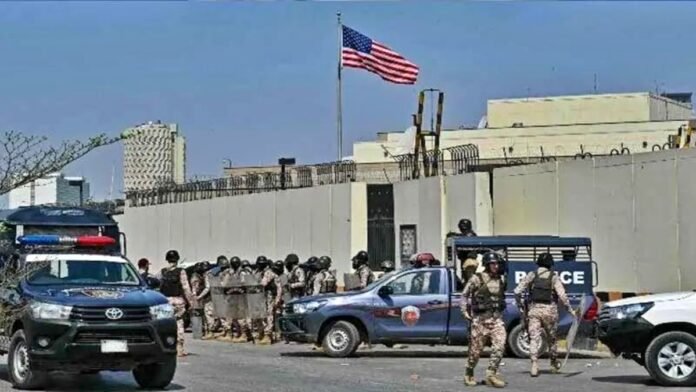
On March 1, 2026, the US Consulate in Karachi was the site of a deadly confrontation where 12 protesters were killed while attempting to storm the facility. Following that incident, operations in Peshawar were temporarily suspended due to credible threats against American personnel. The permanent closure is seen by many as a tactical withdrawal to protect US lives as the region braces for further retaliation from Iranian-aligned groups.
Regional Consequences
The closure is being perceived in Islamabad as a major diplomatic setback. For Pakistan, the presence of the Peshawar mission provided a direct line of communication with US officials regarding border security and counter, terrorism cooperation. Without this local presence, the bilateral relationship may face increased friction, particularly as the US shifts its focus away from direct regional engagement.
As the US continues to navigate the fallout of the war in West Asia, the abandonment of the Peshawar consulate underscores a new era of American foreign policy, one defined by reduced physical footprints and a concentration of resources within highly secure, centralized hubs.