


































Key Points:
- Water Savings: 876 million liters daily saved in Malaysia.
- Energy Efficiency: Up to 50% reduction in cooling costs.
- Economic Impact: New opportunities for palm oil farmers and green-tech jobs.
- Environmental Stewardship: A model for sustainable data center operations.
As global data centers expand exponentially, the environmental toll of their operations—particularly water and energy consumption—is becoming increasingly urgent. Now, Malaysia has emerged as a pioneer in addressing this challenge with an innovative solution: Sawit EcoTherm, a palm oil-derived cooling technology developed by the Malaysian Palm Oil Board (MPOB). This breakthrough could redefine sustainable data center operations, blending traditional natural resources with cutting-edge engineering.
The Water and Energy Dilemma
Data centers are voracious consumers of resources. Globally, they account for approximately 1% of total electricity use and 0.5–2% of global carbon emissions, according to the International Energy Agency (IEA). In Malaysia, traditional cooling systems in data centers like those in Johor and Selangor consume 876 million liters of water daily, equivalent to the domestic needs of four million people. With demand for data storage and cloud services surging, this strain on water resources has sparked alarm among policymakers and environmentalists.
Sawit EcoTherm: A Sustainable Alternative
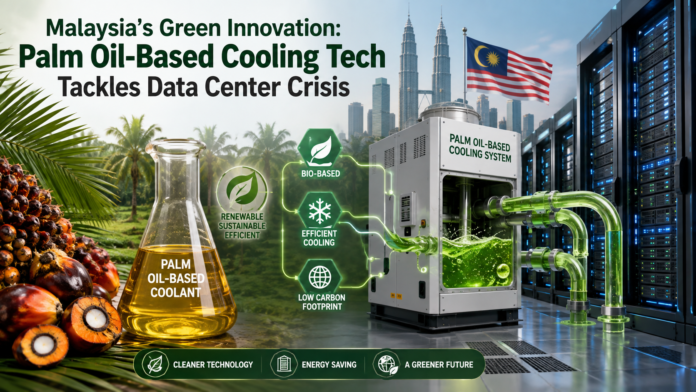
MPOB’s new technology offers a radical departure from conventional cooling methods. Sawit EcoTherm is a palm oil-based liquid designed to replace water in cooling systems. Here’s how it works:
- Immersion Cooling: Heat-generating server components are submerged in the eco-friendly liquid, which absorbs heat within a closed-loop system.
- No Water Required: Unlike traditional systems, this method eliminates the need for water, drastically reducing strain on local reservoirs.
- High Efficiency: The liquid’s thermal properties allow it to manage the intense heat generated by AI servers (3–5 times hotter than standard computers) more effectively, potentially cutting cooling-related electricity use by 30–50%, as claimed by MPOB.
Environmental and Economic Benefits
Beyond environmental gains, Sawit EcoTherm has the potential to boost Malaysia’s palm oil sector. By utilizing 95% renewable palm-based materials, the technology creates a new market demand for local crops. This could support farmers and generate jobs in the green-tech sector, aligning economic growth with sustainability goals.
Challenges and Next Steps
While the technology’s claims are promising, several hurdles remain:
- Scalability: Large-scale implementation requires rigorous testing to ensure reliability and cost-effectiveness.
- Global Adoption: Competing with established cooling solutions like liquid ammonia or hydrogen fluoride may demand further innovation.
- Regulatory Hurdles: Approval for widespread use in data centers will depend on compliance with safety and environmental standards.
A Model for the Future?
Malaysia’s initiative highlights a critical shift toward resource-conscious innovation. By leveraging its strengths in palm oil production and renewable energy, the country is positioning itself as a leader in sustainable tech. If successful, Sawit EcoTherm could inspire similar solutions worldwide, offering a blueprint for harmonizing technological progress with environmental stewardship.
Conclusion: A Green Revolution in the Clouds?
The success of Sawit EcoTherm hinges on its ability to scale and adapt. For Malaysia, it represents not just a technical achievement but a strategic move toward sustainable economic development. As data centers continue to grow globally, the world may soon depend on such innovations to balance progress with planetary health.
Verification Note: All claims are based on MPOB reports and industry sources. Further independent validation is recommended for large-scale implementation.