






























Key Points
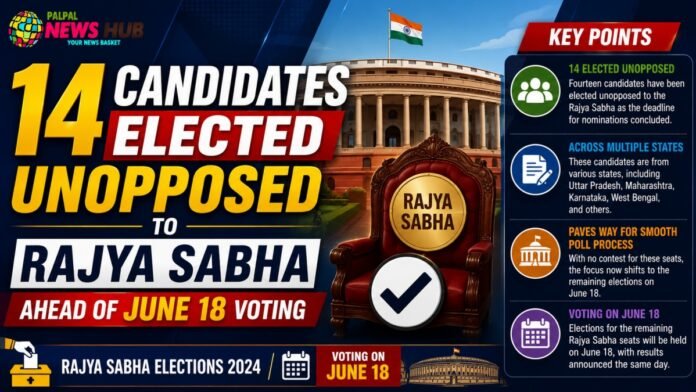
- Unopposed Victories: Out of the 14 seats decided on the final day of nomination withdrawals, the BJP secured 10 seats while the Congress won four.
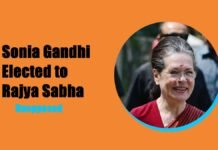
- High-Profile Winners: Congress National President Mallikarjun Kharge and party spokesperson Pawan Khera secured their entry from Karnataka.
- Controversy in Madhya Pradesh: The BJP swept all three seats in Madhya Pradesh following the high-stakes cancellation of Congress nominee Meenakshi Natarajan’s nomination.
- Current House Strength: In the 244-member Upper House, the ruling NDA maintains a dominant position with 149 seats.
The deadline for the withdrawal of nominations concluded on Thursday, resulting in unanimous victories where the number of valid candidates exactly matched the available vacancies.
The table below outlines the political distribution of the 14 members who secured their seats without a contest:
| State | Total Seats | BJP Victors | Congress Victors |
|---|---|---|---|
| Karnataka | 4 | M. Nagaraj | Mallikarjun Kharge, Pawan Khera, Mansoor Ali Khan |
| Gujarat | 4 | Rajubhai Shukla, Mansinh Parmar, Mukeshbhai Rathwa, Jitendra Kanjariya | None |
| Madhya Pradesh | 3 | Rajneesh Agrawal, Tarun Chugh, Mahesh Kevat | None |
| Rajasthan | 3 | Satish Poonia, Alka Gurjar | Neeraj Dangi |
Major Political Shifts in Karnataka and Rajasthan
In Karnataka, the election marks a key transition as the terms of four sitting members, including former Prime Minister H.D. Deve Gowda, BJP’s Iranna Kadadi and Narayan Koragappa, and Congress’s Mallikarjun Kharge, are set to expire on June 25. The ruling Congress successfully leveraged its assembly numbers to secure three of the four seats, anchoring its legislative presence in the Upper House with the re-election of party chief Mallikarjun Kharge alongside Mansoor Ali Khan and Pawan Khera. The BJP secured the remaining fourth seat with the uncontested election of M. Nagaraj.
Meanwhile, Rajasthan maintained a predictable status quo based on state assembly strengths. The BJP secured two seats, electing former state chief Satish Poonia and Alka Gurjar, while the Congress retained its single seat by re-electing sitting MP Neeraj Dangi. All four seats going to the polls in Gujarat were similarly claimed by the BJP without opposition.
Nomination Row Triggers Unopposed Sweep in Madhya Pradesh
The most politically charged development emerged from Madhya Pradesh, where the ruling BJP captured all three available seats. This complete sweep occurred after the election returning officer rejected the nomination papers of Congress candidate Meenakshi Natarajan during the scrutiny phase.
Judicial Delay: The Congress party immediately moved the Supreme Court to challenge the disqualification of Natarajan’s nomination. However, the top court deferred its hearing on the matter until Friday, allowing the BJP nominees, Rajneesh Agrawal, Tarun Chugh, and Mahesh Kevat, to be declared winners unopposed on Thursday.
Upcoming Battles and Overall House Numbers
While 14 seats have been settled, intense political maneuvering continues for the remaining 12 vacancies scheduled for voting on June 18. Contests will span multiple states, including four seats in Andhra Pradesh, two in Jharkhand, and one seat each in Maharashtra, Tamil Nadu, Manipur, Meghalaya, Arunachal Pradesh, and Mizoram. Preliminary voting alignments suggest that the BJP is poised to claim eight of these remaining seats, followed by the Jharkhand Mukti Morcha, or JMM, with two, and one seat each for the Congress and the Tamilaga Vettri Kazhagam, or TVK.
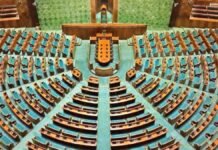
Regarding the overall balance of power within the 244-member Rajya Sabha, the ruling National Democratic Alliance, or NDA, holds a decisive majority.
The broad numerical distribution of the Upper House stands as follows:
- National Democratic Alliance (NDA): 149 seats
- Opposition Coalition: 78 seats
- Unaligned Regional Parties: 17 seats
This comfortable buffer allows the ruling coalition a seamless legislative path for major policy clearances and bills in the upcoming parliamentary sessions.