




























Key Points
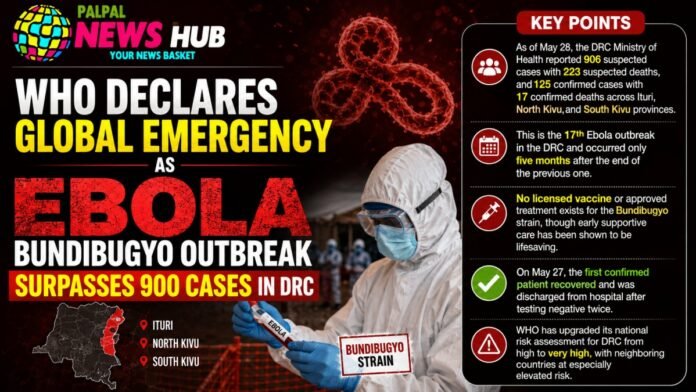
- As of May 28, the DRC Ministry of Health reported 906 suspected cases with 223 suspected deaths, and 125 confirmed cases with 17 confirmed deaths across Ituri, North Kivu, and South Kivu provinces.
- This is the 17th Ebola outbreak in the DRC and occurred only five months after the end of the previous one.
- No licensed vaccine or approved treatment exists for the Bundibugyo strain, though early supportive care is lifesaving.
- On May 27, the first confirmed patient recovered and was discharged from the hospital after testing negative twice.
- WHO has upgraded its national risk assessment for DRC from high to very high, with neighboring countries at especially elevated risk.
On May 5, 2026, the WHO was alerted to a high-mortality outbreak of unknown illness in the Mongbwalu Health Zone of Ituri Province, DRC, including deaths among health workers. The situation took weeks to identify because the outbreak went undetected initially since standard tests targeted only the Zaire strain and returned negative results. Laboratory analysis on May 14 confirmed Bundibugyo virus disease in eight of 13 blood samples, and the DRC officially declared its 17th Ebola outbreak on May 15, 2026.
As of May 29, 2026, a combined total of 1,262 suspected and confirmed cases and at least 241 deaths had been reported, with the true number of infections likely considerably higher.
Spreading Across Borders
Alongside the DRC declaration, Uganda confirmed an outbreak after identifying an imported case, a Congolese man who traveled to Kampala and later died there. Uganda has since reported nine confirmed cases, including one death, with at least three linked to travel from DRC.
The outbreak is occurring in areas affected by insecurity, population displacement, mining-related movement, and frequent cross-border travel, all of which raise the risk of further transmission. Armed groups including the ADF, CODECO, and Rwanda-backed M23 have long restricted humanitarian access in this part of eastern DRC, obstructing aid operations and limiting movement.
A Strain With No Vaccine or Treatment
Two approved Ebola vaccines exist, but neither is approved for the Bundibugyo strain. Discussions are underway at the WHO to determine which vaccine candidates can be tested in emergency clinical trials. The two monoclonal antibody treatments licensed after DRC clinical studies in 2018 to 2020 were effective against the Zaire strain but not against Bundibugyo.
Past Bundibugyo outbreaks have recorded case fatality rates between 30% and 50%. However, for known cases in the current outbreak, the rate currently appears to be below 25%, though that figure continues to evolve. WHO’s Anaïs Legand, a technical officer on viral hemorrhagic fevers, stressed that early access to care can greatly improve survival rates.
First Recovery Brings Cautious Hope
On May 27, the DRC reported that the first confirmed Ebola patient had recovered and been discharged following two negative tests, marking a landmark moment in the outbreak response. Legand noted that recoveries are expected among patients who have not yet received laboratory confirmation, and expressed optimism that more patients will recover with timely care.
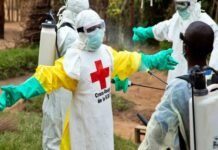
With no licensed treatment or vaccine available, the WHO has stated that response strategies will rely heavily on supportive care, early case detection, strict infection prevention protocols, rigorous contact tracing, safe burial practices, and community engagement.
What Comes Next
On May 19, the WHO Director-General convened the first meeting of the IHR Emergency Committee, and temporary recommendations were issued to member states. Health authorities continue to work toward expanding testing capacity and clearing the backlog of samples from suspected cases, as the number of reported cases is expected to rise further as surveillance improves.