


































Key Points
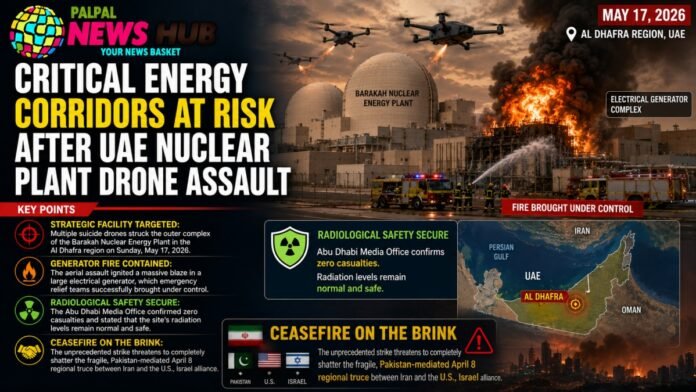
- Strategic Facility Targeted: Multiple suicide drones struck the outer complex of the Barakah Nuclear Energy Plant in the Al Dhafra region on Sunday, May 17, 2026.
- Generator Fire Contrained: The aerial assault ignited a massive blaze in a large electrical generator, which emergency relief teams successfully brought under control.
- Radiological Safety Secure: The Abu Dhabi Media Office confirmed zero casualties and stated that the site’s radiation levels remain normal and safe.
- Ceasefire on the Brink: The unprecedented strike threatens to completely shatter the fragile, Pakistan-mediated April 8 regional truce between Iran and the U.S., Israel alliance.
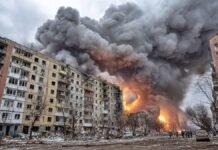
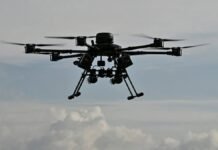
The ongoing geopolitical conflict in West Asia took a dangerous turn on Sunday when a swarm of suicide drones executed a coordinated attack on the Barakah Nuclear Energy Plant. Located in the remote Al Dhafra region of the United Arab Emirates, the critical infrastructure site became the target of an aggressive aerial bombardment, which caused a massive fire in a large electrical generator situated within the broader facility complex.
Emergency response units and specialized industrial fire crews were immediately dispatched to the sensitive zone. The Abu Dhabi Media Office later confirmed the containment of the incident via the digital platform X, assuring the public that relief teams had brought the fire under complete control. Local authorities have heavily emphasized that the attack resulted in no human casualties, and comprehensive technical sweeps indicate that the plant’s radiological safety levels were not compromised.
Security Profile of the Peninsula’s Sole Nuclear Facility
This grave incident has severely heightened international security concerns, marking the first instance, amidst the ongoing diplomatic standoff between Iran and the Israel, U.S. axis, in which this strategic, four-reactor facility has faced a direct military strike. Geographically positioned in the western desert, far removed from the urban center of Abu Dhabi, the plant operates in proximity to the Saudi Arabian border and remains the sole operational nuclear energy facility across the entire Arabian Peninsula.
The UAE constructed the Barakah complex with the extensive technical assistance of South Korea, representing a massive state investment of approximately US$20 billion before commencing commercial operations in 2020. At present, the Vienna-based International Atomic Energy Agency (IAEA) has refrained from issuing an immediate diplomatic comment regarding the severe safety breach, and no regional paramilitary or extremist group has officially claimed responsibility for the launch.
Escalation Risks and the Threat of a Global Energy Crisis
Defense and intelligence analysts warn that the attack on the Barakah plant is not an isolated event, but rather a volatile expansion of the military conflict that has unfolded across the region, specifically around the Strait of Hormuz and the Persian Gulf, over the past several weeks. The strike occurred concurrently with a total standstill in back-channel diplomatic dialogue between Tehran and Washington, heavily raising the probability that the region’s temporary truce could dissolve into open warfare.
Strategic Assessment: If this sensitive nuclear installation suffers subsequent strikes, or if the UAE and its allies initiate heavy retaliatory military measures, the entire West Asian theater could be plunged into a catastrophic war, a scenario that would instantly paralyze the global supply of crude oil and spark an unprecedented global energy crisis.
With U.S. President Donald Trump maintaining a strict naval port blockade on Iranian vessels and Iran newly asserting administrative control over Gulf shipping lanes through its newly formed Strait Authority, the margin for error in the region has narrowed to zero. Civil defense forces across the Gulf Cooperation Council (GCC) states have reportedly been placed on maximum alert following Sunday’s drone infiltration.