






























Key Points
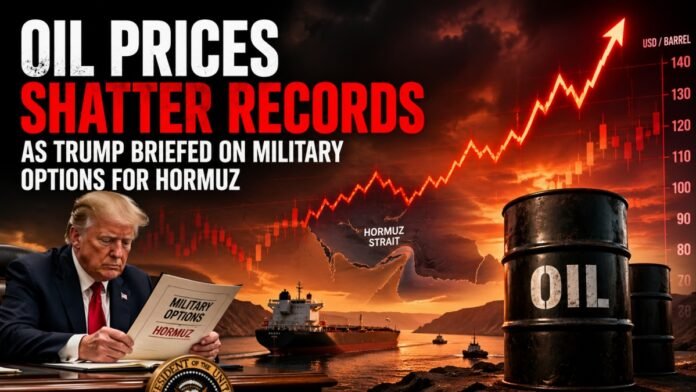
- Market Surge: Brent crude peaked at $126 per barrel, the highest since 2022, fueled by the ongoing “dual blockade” between the U.S. and Iran.
- Military Briefing: President Trump is scheduled to meet with CENTCOM officials today to discuss “short and powerful” strikes to break the naval stalemate.
- International Coalition: A confidential U.S. State Department cable has invited global powers to join the “Maritime Freedom Construct” (MFC) to secure the strait.
- Economic Toll: The conflict, which began on February 28, has cost the U.S. $25 billion so far and pushed gas prices to an average of $4.30 per gallon.
- Iranian Defiance: Tehran warns that prices could reach $140 if the U.S. does not lift its blockade of Iranian ports, claiming its economy remains resilient.
The global economy is facing its most severe energy shock in decades as the blockade of the Strait of Hormuz, the world’s most critical maritime chokepoint, enters its third month. On Thursday, Brent crude prices shattered a four-year record, briefly surging past the $126-per-barrel mark. The escalating tension between Iran and the United States has sent petrol and diesel prices skyrocketing across the globe, raising the specter of a widespread economic recession as supply lines for 20% of the world’s oil and gas remain paralyzed.
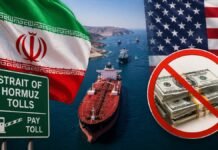
The current crisis traces back to February 28, 2024, when the conflict initiated following U.S. and Israeli strikes on Iranian infrastructure. While a fragile ceasefire has been in place since April 8, a “dual blockade” remains. The United States continues to throttle Iranian oil exports via a naval blockade, while Tehran has retaliated by severely restricting commercial traffic through the 21-mile-wide strait.
Trump’s Diplomatic and Military Maneuvers
In a major diplomatic initiative aimed at restoring maritime flow, the U.S. State Department has dispatched a confidential diplomatic cable to various nations. The cable, which has been reviewed by Reuters, appeals for the formation of an international coalition known as the “Maritime Freedom Construct” (MFC). The goal is to mobilize a global task force to secure the passage of vessels and prevent Iran from utilizing the strait as economic leverage.
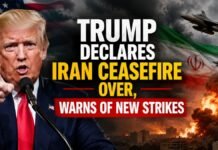
However, diplomacy is increasingly being shadowed by the threat of force. According to reports from Axios, President Trump is scheduled to receive a high-level briefing today from Admiral Brad Cooper, the commander of U.S. Central Command. The briefing is expected to outline plans for potential new military strikes against Iranian targets, designed to exert sufficient pressure to compel Tehran back to the negotiating table without a full-scale ground invasion.
Escalating Rhetoric and “Mr. Nice Guy”
The President has amplified the pressure through unconventional channels. Recently, Trump shared a provocative post on social media featuring an image of himself holding a machine gun with the caption, “I am no longer Mr. Nice Guy.” The message underscores the administration’s shift away from the “strategic patience” of the early April talks, which were led by Vice President J.D. Vance in Pakistan but ultimately ended in a deadlock.
The Trump administration has also sought to weaken Iran’s regional influence by celebrating the United Arab Emirates’ recent exit from OPEC+. Trump has characterized the UAE’s withdrawal as a significant victory, claiming it undermines a cartel that he alleges “rips off the world” through artificial price inflation.
Iran’s Defiant Counterstrike
Tehran appears remarkably aggressive and defiant despite the tightening economic noose. Iranian officials assert that the U.S. blockade has failed to cripple their internal production, claiming instead that the high cost of oil is backfiring on Western economies.
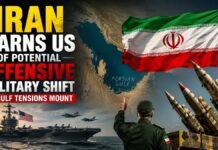
Iranian leadership has issued a stern warning: as long as the U.S. maintains its naval presence around Iranian ports, the Strait of Hormuz will remain effectively closed. Tehran’s state media has even predicted that crude oil prices could surge to $140 per barrel in the coming days, a scenario that would test the political resolve of the Trump administration as domestic gas prices approach historic highs.
The Shadow of Global Recession
With the conflict now passing the 60-day mark, the economic fallout is becoming undeniable. Annual inflation in the Eurozone has already climbed to 3%, driven by a nearly 11% spike in energy costs. If the Strait of Hormuz is not reopened soon, analysts warn that the deepening crisis could trigger a new wave of global unemployment and food insecurity, particularly in nations dependent on the fertilizers and grain shipments that transit the region. For now, the eyes of the international community are fixed on the White House’s next move and whether the proposed international coalition can find a path to de-escalation.