

































Key Highlights
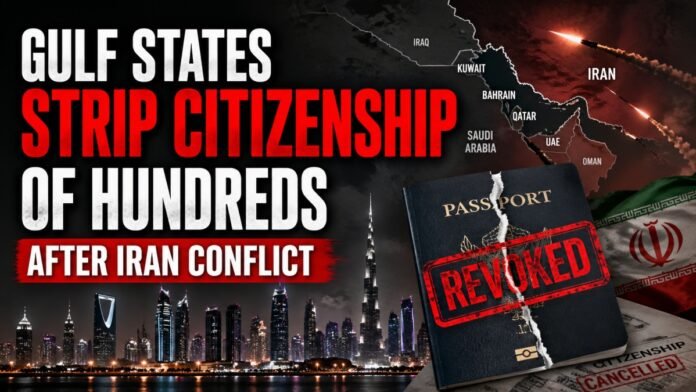
- Mass Revocation: Kuwait has stripped 1,266 individuals of their nationality, including prominent public figures and former officials.
- Celebration Penalized: Bahrain revoked the citizenship of 69 people for allegedly celebrating Iranian attacks on U.S. military bases.
- Statelessness Crisis: Human rights advocates warn that these moves are creating a “stateless” class of women and children in the Gulf.
- Targeting Dissent: Observers suggest the legal justifications, such as “fraudulent acquisition” of nationality, are being used to mask political purges.
- Regional Precedent: The UAE has signaled it will follow suit by targeting citizens of Iranian descent as regional security remains fragile.
In one of the most significant legal maneuvers since the conclusion of active hostilities in the 2026 regional conflict, the Kuwaiti government has revoked the citizenship of 1,266 individuals. The list of those affected is remarkably diverse, including ordinary residents alongside high-profile figures such as former Member of Parliament Al, Fikr, legendary national football player Ahmed Al, Tarabulsi, and noted author Abdulaziz Al, Sari.
The official government narrative maintains that these individuals acquired their nationality through fraudulent means, marriage, or other legal loopholes. However, geopolitical analysts point out that the purge specifically targets those suspected of harboring pro-Iran sympathies. Given that Kuwait suffered significant infrastructure damage during the recent conflict, the state appears to be utilizing nationality laws as a tool to consolidate internal security and eliminate perceived “fifth column” elements.
Bahrain Targets “Jubilant” Citizens
Within 24 hours of the Kuwaiti announcement, Bahrain followed with a decree stripping 69 people of their nationality. According to state media, the decision was authorized by the King and targeted individuals who reportedly expressed joy or celebrated when U.S. military installations in Bahrain were struck by Iranian missiles during the war.
The move has reignited long-standing sectarian tensions within the country. While Bahrain is a Shia-majority nation, its government is Sunni-led. The administration has categorized these public expressions of jubilation as acts of treason and “undermining the security of the state.” Critically, the revocation list includes entire families, meaning women and children have been rendered stateless, losing their access to healthcare, education, and the right to travel overnight.
The UAE and the Rise of “Stateless” Residents
The United Arab Emirates has also signaled a shift in policy, indicating that it is reviewing the status of citizens of Iranian origin. This follows the UAE’s recent withdrawal from OPEC and its pivot toward a more autonomous, Western-aligned security posture. Experts suggest that the UAE is seeking to insulate its domestic politics from Iranian influence by vetting the loyalty of naturalized citizens.
Sayed Ahmed Alwadaei, Director of the Bahrain Institute for Rights and Democracy (BIRD), has characterized this period as the dawn of a “dangerous era” for human rights in the Middle East. He argues that by stripping citizenship without a robust judicial process, these governments are exercising arbitrary repression that could leave thousands of people in legal limbo for decades.
A Threat to International Norms
The international community, including various UN bodies, has expressed “grave concern” over the trend. International law generally prohibits the revocation of citizenship if it results in statelessness, yet Gulf nations are increasingly utilizing domestic security laws to bypass these conventions.
As the “Hormuz for Sanctions” negotiations continue in the background of this domestic upheaval, the internal stability of the Gulf remains precarious. With thousands now facing a future without a country, the social and political ramifications of these revocations may eventually pose as great a threat to regional stability as the military conflict itself.