































Key Highlights
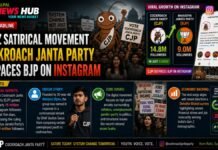
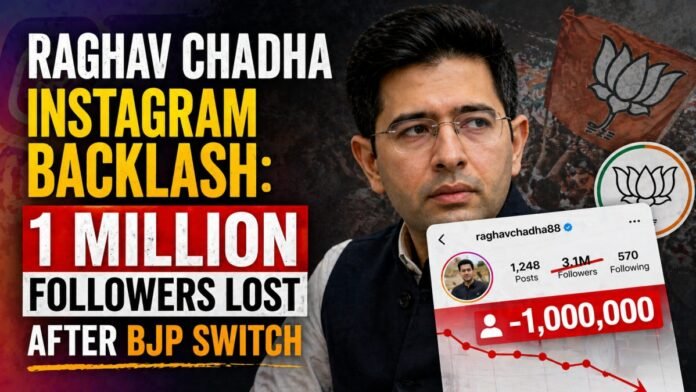
- Gen Z Backlash: A viral “unfollow campaign” led to a drop from 14.6 million to 13.5 million followers in a single day.
- Mass Defection: Chadha was joined by six other AAP Rajya Sabha MPs, including Swati Maliwal and Harbhajan Singh, in a formal merger with the BJP.
- Bot Allegations: Social media analysts report a sudden surge in “bot” accounts, suggesting attempts to artificially inflate his stabilizing follower count.
- Persona Reshape: AAP leaders claim Chadha is systematically deleting past posts critical of Prime Minister Modi.
- Political Impact: The move leaves AAP with only three MPs in the Upper House, significantly shifting the parliamentary balance.
The intersection of youth politics and social media has reached a boiling point following Raghav Chadha’s high-profile exit from the Aam Aadmi Party (AAP). On Friday, April 24, 2026, Chadha announced his decision to join the Bharatiya Janata Party (BJP), describing himself as a “right man in the wrong party,” but the digital response was swift and severe.
By Saturday afternoon, Chadha’s Instagram follower count had plummeted by approximately one million users. This mass exodus is being attributed to a coordinated “unfollow campaign” driven primarily by Gen Z supporters who previously viewed Chadha as a modern, anti-establishment icon. For a leader whose brand was built on digital accessibility and data-driven advocacy, this erosion of online capital represents a significant blow to his public image.
Allegations of “Fake Followers” and Image Recovery
As the follower count bottomed out at 13.1 million, observers noted a suspicious and rapid influx of new followers. Experts in digital forensics have raised concerns that these new additions consist largely of “bot” accounts, profiles with no pictures, no posts, and recent creation dates.
Allegations suggest that third-party “follower farms” may have been utilized to create a “popularity cushion” and hide the true extent of the backlash. While Chadha’s team has dismissed these claims as part of a “coordinated smear campaign,” the presence of hundreds of thousands of inactive accounts has fueled a broader debate regarding the authenticity of political influence in the age of social media.
“The Washing Machine” and Deleted Rhetoric
The controversy has been further intensified by AAP Delhi unit chief Saurabh Bharadwaj, who accused Chadha of “scrubbing” his digital history. Reports indicate that several past posts and videos in which Chadha sharply criticized PM Narendra Modi and the BJP have disappeared from his profiles.
Bharadwaj likened this to a “systematic reshaping” or a “washing machine” effect, where a leader’s past ideologies are laundered to fit their new political alignment. Viral clips of Chadha previously calling the BJP a “party of illiterate goons” have since resurfaced, shared widely by former supporters to highlight what they perceive as ideological inconsistency.
A Shift in the National Landscape
Raghav Chadha’s defection was not an isolated event but part of a larger fracture within AAP. Alongside him, prominent figures such as Sandeep Pathak, Ashok Mittal, Swati Maliwal, and Harbhajan Singh also joined the BJP. This collective move fulfilled the constitutional requirement for a two-thirds merger, though remaining AAP leaders like Sanjay Singh have vowed to seek their disqualification from the Rajya Sabha.
As the dust settles, the focus remains on whether Chadha can rebuild his rapport with the youth demographic or if the “unfollow” trend marks a permanent shift in his political trajectory. This episode serves as a stark reminder that in the 2026 political climate, a leader’s credibility is measured as much by their Instagram engagement as it is by their parliamentary record.