Key Highlights
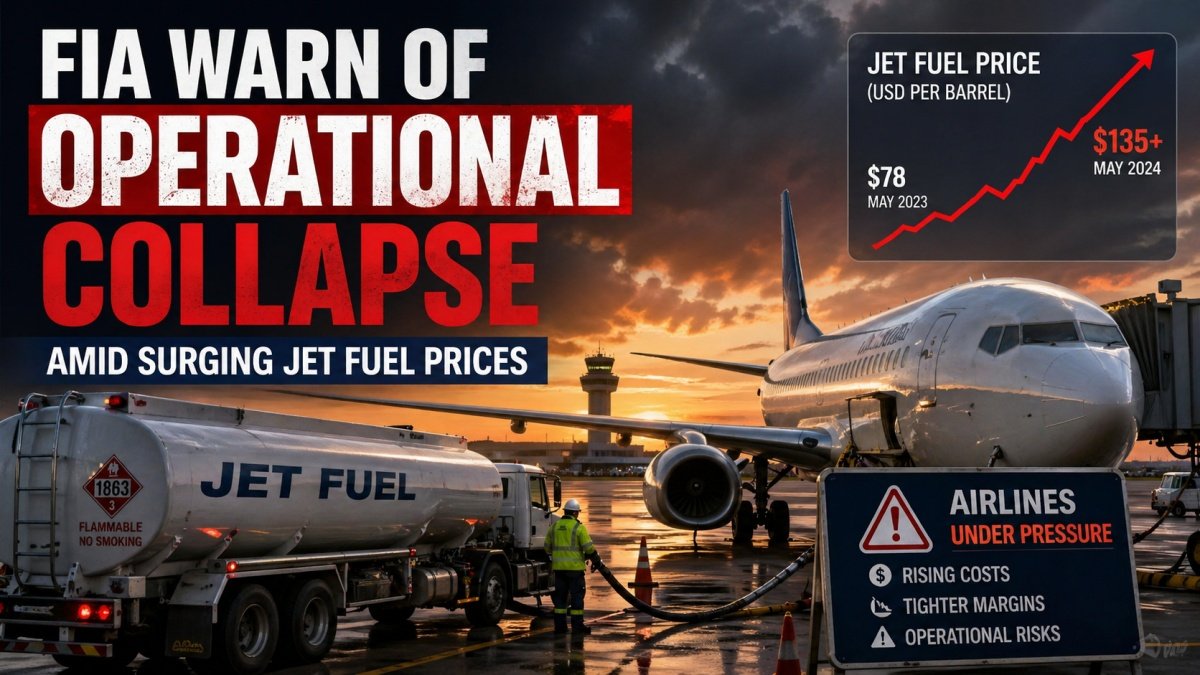
- Existential Threat: The FIA states that extreme financial stress has brought the industry to the verge of stopping operations.
- Pricing Surge: Aviation Turbine Fuel (ATF) prices for international routes have spiked by ₹73 to ₹75 per liter in April 2026.
- Cost Imbalance: Fuel now accounts for 55 to 60 percent of airline operating expenses, up from the traditional 30 to 40 percent.
- Policy Demands: Airlines are seeking a temporary suspension of the 11 percent excise duty and the reinstatement of a “crack band” pricing formula.
- Geopolitical Pressure: The ongoing West Asia conflict and the blockade of the Strait of Hormuz have pushed Brent Crude to nearly $118 per barrel.
The Federation of Indian Airlines (FIA), the primary industry body representing India’s leading carriers, including Air India, IndiGo, and SpiceJet, has issued a dire warning to the Union Government. In an urgent communiqué addressed to the Ministry of Civil Aviation on April 26, 2026, the FIA signaled that the current pricing environment for Aviation Turbine Fuel (ATF) has rendered both domestic and international networks unsustainable.
According to the FIA, the industry is navigating an unprecedented crisis that threatens to lead to the grounding of aircraft and the widespread cancellation of flights. The organization highlighted that the current pricing mechanism is “ad-hoc” and “irrational,” eroding the economic viability of critical flight routes and putting Indian carriers at a disadvantage against foreign airlines operating from lower-cost global hubs.
The Impact of the West Asia War
The primary driver behind the current crisis is the escalating conflict in West Asia, which began on February 28, 2026. The subsequent blockade of the Strait of Hormuz, a transit point for 20 percent of global energy supplies, has caused a catastrophic spike in refined fuel prices. While Brent Crude has surged to approximately $118 per barrel, the “crack spread”, the margin refineries charge to convert crude into jet fuel, has reached record levels.
The FIA noted that ATF prices touched a peak of $260.24 per barrel, a staggering 295 percent increase from the previous year. This volatility is compounded by the Indian Rupee reaching historic lows against the US Dollar, adding a significant exchange-rate burden on airlines that must settle fuel and leasing contracts in foreign currency.
Urging Immediate Fiscal Relief
To prevent a total collapse of flight services, the FIA has outlined three critical requests for government intervention:
- Excise Duty Relief: A temporary suspension of the 11 percent excise duty currently levied on ATF for domestic operations to provide immediate cash-flow relief.
- Crack Band Reinstatement: The reintroduction of a transparent, formula-based pricing mechanism to cap the margins made by oil marketing companies during periods of extreme volatility.
- VAT Rationalization: An urgent appeal to state governments to lower Value Added Tax (VAT) in major aviation hubs like Delhi and Tamil Nadu, where rates range between 25 and 29 percent.
Risks to National Connectivity
The federation warned that if these measures are not implemented, the resulting financial losses will be “insurmountable.” Beyond the threat to airline profitability, the crisis poses a significant risk to national connectivity and the broader economy. A reduction in flight frequencies would inevitably lead to a sharp increase in airfares for travelers and create widespread instability in schedules, potentially reversing the growth trends seen in the Indian aviation sector over the last decade.