


































Key Highlights
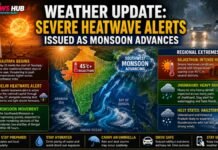
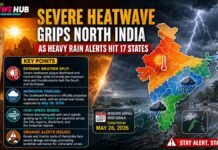
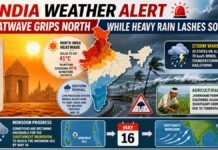
- Extreme Heat: Temperatures have peaked at 46.6°C in Banda, Uttar Pradesh, and 46°C in parts of Rajasthan.
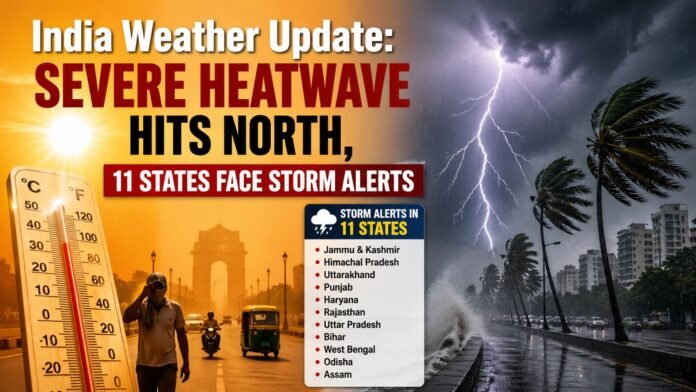
- Storm Warning: 11 states are on alert for thunderstorms and high-speed winds reaching up to 70 km/h.
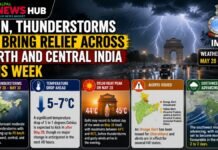
- Relief Ahead: A new Western Disturbance is expected to lower temperatures by 2 to 3 degrees starting April 28.
- High-Altitude Snow: Snowfall is predicted for regions in Himachal and Uttarakhand above 4,400 meters.
- Health Advisory: Delhi residents are urged to stay indoors as a ‘Yellow Alert’ remains active for heat and poor air quality.
The Indian subcontinent is witnessing a stark meteorological contrast today, April 27, 2026. While the northern heartland, including Delhi-NCR, Uttar Pradesh, and Rajasthan, is gripped by a punishing heatwave, the India Meteorological Department (IMD) has signaled a significant shift. A massive storm is projected to sweep across 11 states, promising a reprieve from the rising mercury, though it carries the risk of localized damage from high winds.
North India Scorches Under Record Temperatures
The plains of North India have become a furnace, with the intense solar radiation making daily life increasingly difficult for millions.
- Uttar Pradesh: Banda has emerged as a national hotspot, recording a staggering maximum of 46.6 degrees Celsius.
- Rajasthan: In the desert districts of Barmer and Jaisalmer, the mercury has climbed to a dangerous 46 degrees Celsius.
- National Capital: Delhi is currently enduring the full brunt of the season’s heat, with temperatures hitting 42.1 degrees Celsius.
The IMD has maintained a ‘Yellow Alert’ for the capital, warning that “Loo” conditions, which are hot, life-threatening winds, could prevail throughout the afternoon.
Storms and Rain Forecast for 11 States
In a sudden shift, the IMD has forecast atmospheric instability across 11 states. This weather system is expected to bring dusty winds gusting up to 70 kilometers per hour, lightning, and moderate rainfall.
- Bihar: Thunderstorm warnings have been issued for 19 districts.
- Central and Northern Plains: Parts of Madhya Pradesh (including Bhopal and Gwalior) and Haryana are expected to see significant cloud cover and showers.
- The Himalayas: Hilly regions like Uttarakhand and Himachal Pradesh will experience light rain, while high-altitude zones exceeding 4,400 meters are likely to see fresh snowfall.
The Role of the Upcoming Western Disturbance
Meteorological experts indicate that a fresh Western Disturbance, an extratropical storm originating in the Mediterranean, will become active on April 28. Its influence is expected to linger until May 2, primarily impacting Western Uttar Pradesh, Delhi, and Northern Rajasthan. This system is the primary hope for cooling the region, with a projected temperature drop of 2 to 3 degrees Celsius. However, areas like Eastern Uttar Pradesh and the coastal state of Odisha are likely to remain trapped in dry, humid conditions for the foreseeable future.
Public Health and Safety Precautions
The combination of extreme heat and stagnant air has pushed Delhi’s air quality into the ‘poor’ category, creating a double threat for vulnerable populations. Health experts and local authorities have issued the following advisories:
- Avoid Exposure: Citizens are advised to remain indoors between 12:00 PM and 5:00 PM.
- Hydration: Maintaining high fluid intake is critical to prevent heatstroke.
- School Revisions: Several districts have already adjusted school hours to ensure children are home before the peak heat hours.
As weather fluctuations continue, the IMD urges the public to remain vigilant over the next five days, as the transition between heatwaves and storms can lead to unpredictable environmental hazards.