


































Key Points
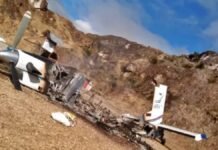
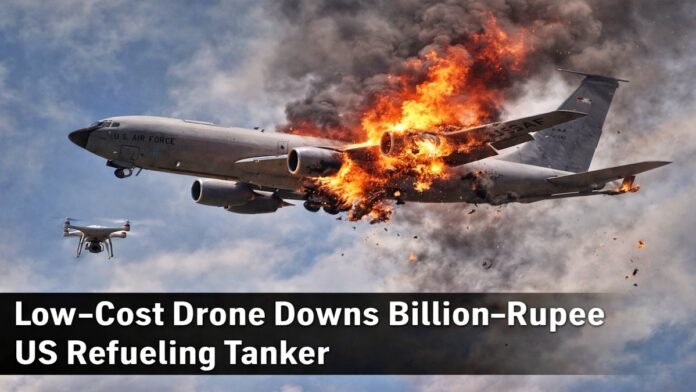
- The Iraqi Resistance Front claimed the successful downing of a US KC-135 Stratotanker, a vital aerial refueling platform.
- The attack resulted in the deaths of four US soldiers, with two others critically injured, raising the total American death toll in the conflict to 13.
- The strike utilized a “Hadid-110” jet-powered drone, which costs roughly ₹6.4 million, to destroy an aircraft valued at over ₹7.5 billion.
- This incident highlights the growing threat of “Operation True Promise IV,” where high-speed stealth drones are bypassing traditional air defenses.
- The KC-135 is considered a strategic “force multiplier,” and its loss significantly impacts the range of US strike missions over Iran.
On the 14th day of the intensifying conflict in the Middle East, the United States military faced one of its most significant strategic setbacks to date. The Iraqi Resistance Front, a Tehran-backed militia, claimed responsibility for destroying a US Air Force KC-135 Stratotanker in western Iraq. The loss is particularly staggering when viewed through the lens of asymmetric warfare; a ₹7.5 billion (750 crore) strategic asset was eliminated by a “suicide” drone costing only ₹6.4 million.
While US Central Command (CENTCOM) initially described the event as a “loss” under investigation, the Iraqi Resistance Front issued a detailed statement through Reuters. They asserted that the strike was a defensive action intended to protect Iraqi sovereignty against the ongoing “Operation Epic Fury,” the US-led air campaign targeting Iranian infrastructure.
The Lethality of the ‘Hadid-110’
The weapon used in the attack, identified as the “Hadid-110,” represents a new generation of Iranian loitering munitions. Unlike the slower, propeller-driven drones of the past, the Hadid-110 is powered by a compact jet engine, allowing it to reach speeds of up to 510 kilometers per hour. Its high speed and low radar cross-section are designed specifically to penetrate sophisticated air defense layers and strike high-value targets with minimal warning.
On Thursday, March 12, the militia reportedly launched a coordinated swarm of these drones against 13 different military locations. The Hadid-110’s ability to independently lock onto targets with precision makes it a formidable threat to “soft” but vital targets like refueling tankers and transport planes, which lack the maneuverability of fighter jets.
Impact on US Air Power
The destruction of the KC-135 hits the very “circulatory system” of the US Air Force. Manufactured by Boeing and in service since 1956, the Stratotanker is the primary vessel for mid-air refueling. Each sortie can carry 90,000 liters of fuel, essentially allowing fighter jets and bombers to stay airborne for extended durations to reach targets deep within Iranian territory.
With a current fleet of approximately 803 aircraft globally, the loss of even one tanker has immediate logistical consequences. It limits the “global reach” of the squadron it supports and forces military planners to reallocate resources from other sectors. The four service members killed in the crash bring a somber human cost to this logistical nightmare, as the total US fatalities in the two-week-old war continue to climb.
The Rise of the Iraqi Resistance Front
The Iraqi Resistance Front has emerged as a central pillar of the “Axis of Resistance,” a network of militias formed to counter US influence in the region following the 2020 assassination of General Qasem Soleimani. By utilizing inexpensive, high-tech weaponry provided by Iran, these groups are successfully engaging in a war of attrition. This latest incident serves as a stark reminder that in modern conflict, the most expensive and advanced military hardware can remain vulnerable to low-cost, expendable technology.