


































Imagine a plumbing system where the water pressure is constantly cranked up way too high. Eventually, pipes leak, joints strain, and the main boiler takes a serious beating. That is essentially what happens inside your body when you have hypertension, commonly known as high blood pressure.
It is often called the “silent killer” because it rarely comes with a dramatic warning label, no flashing lights, no painful alarms. You could feel perfectly fine while your arteries are quietly working overtime. But don’t let the lack of symptoms fool you. Understanding and managing hypertension is one of the most powerful things you can do for your long-term health.
What Exactly is Hypertension?
Every time your heart beats, it pumps blood through your arteries to the rest of your body. Blood pressure is the measurement of the force of blood pushing against the walls of your blood vessels.
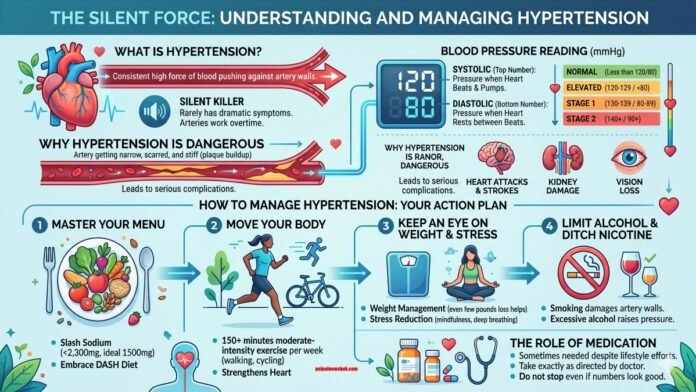
When you get your blood pressure checked, you are given two numbers, usually written like a fraction (for example, 120/80 mmHg):
- Systolic Pressure (Top Number): The pressure in your arteries when your heart beats and pumps blood.
- Diastolic Pressure (Bottom Number): The pressure in your arteries when your heart rests between beats.
The Numbers to Know:
- Normal: Less than 120/80 mmHg.
- Elevated: Systolic between 120–129 and diastolic less than 80 mmHg.
- Hypertension (Stage 1): Systolic 130–139 or diastolic 80–89 mmHg.
- Hypertension (Stage 2): Systolic 140 or higher, or diastolic 90 mmHg or higher.
If your numbers consistently land in the hypertension zone, your heart and blood vessels are working much harder than they should have to.
Why Should You Care?
Consistently high pressure damages the delicate lining of your arteries. Over time, they become scarred, stiff, and narrow, making it much easier for plaque to build up. This restriction in blood flow can lead to serious, life-altering complications, including:
- Heart Attacks and Strokes: Blocked or ruptured vessels in the heart or brain.
- Kidney Damage: The kidneys rely on healthy blood vessels to filter waste; high pressure can cause kidney failure.
- Vision Loss: Strained, delicate vessels in the eyes can strain, burst, or bleed.
How to Manage Hypertension: Your Action Plan
The good news? Hypertension is highly manageable, and in many cases, simple lifestyle shifts can do a massive amount of the heavy lifting. Here is how you can take control:
1. Master Your Menu
What you put on your plate directly impacts your blood vessel health.
- Slash the Sodium: Excess salt causes your body to hold onto water, which increases blood volume and raises pressure. Aim to keep sodium under 2,300 mg a day (about one teaspoon of salt), though 1,500 mg is ideal for most adults with high blood pressure.
- Embrace the DASH Diet: Dietary Approaches to Stop Hypertension (DASH) emphasizes whole grains, fruits, vegetables, lean proteins, and low-fat dairy while cutting back on saturated fats and added sugars.
2. Move Your Body
Think of exercise as a workout for your blood vessels. Regular physical activity makes your heart stronger, allowing it to pump more blood with less effort. Aim for at least 150 minutes of moderate-intensity exercise (like brisk walking, cycling, or swimming) every week.
3. Keep an Eye on the Scale and Stress
- Weight Management: Losing even a few pounds can significantly reduce blood pressure if you are carrying excess weight.
- Stress Reduction: Chronic stress keeps your body in a constant “fight or flight” state, spiking your heart rate and constricting blood vessels. Practice mindfulness, deep breathing, or hobbies that genuinely unwind your mind.
4. Limit Alcohol and Ditch Nicotine
Smoking instantly raises your blood pressure and damages blood vessel walls. Meanwhile, excessive alcohol intake can raise blood pressure to unhealthy levels and interfere with medications.
The Role of Medication
Sometimes, despite eating like a saint and training like an athlete, genetics or other underlying health factors keep your numbers high. That is where medical intervention comes in.
If your doctor prescribes blood pressure medication (like diuretics, ACE inhibitors, or beta-blockers), take them exactly as directed. Do not stop taking them just because your numbers look good, that usually means the medicine is doing its job successfully!
Final Thoughts
Managing hypertension isn’t about radically upending your life overnight; it’s about making consistent, sustainable choices. By tracking your numbers, eating mindfully, moving often, and working closely with your healthcare team, you can keep the pressure down and live a vibrant, healthy life.