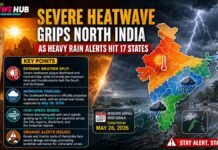




































Key Points
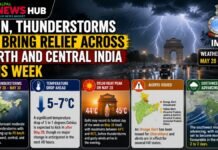
- Regional Relief: Thunderstorms and light rain are expected to lower mercury levels across North and Central India today.
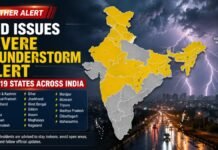
- Bihar Alert: ‘Orange’ and ‘Yellow’ alerts have been issued for all 38 districts due to anticipated high-speed winds and lightning.
- Agricultural Impact: Persistent heat and potential rain in Punjab and Haryana pose significant challenges for the ongoing wheat harvest.
- Future Outlook: A new Western Disturbance arriving on May 2nd is likely to cause further temperature fluctuations.
- Southern Activity: Heavy rainfall is predicted for Tamil Nadu due to a low-pressure system in the lower atmosphere.
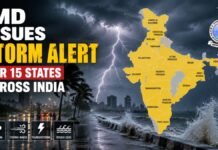
According to the latest bulletin from the India Meteorological Department (IMD), a significant shift in weather patterns is expected to bring down temperatures across several states. While the early summer heat has been intense, a combination of intensifying pre-monsoon activity and incoming moisture is set to trigger thunderstorms and gusty winds.
In the National Capital Region and surrounding areas, strong winds and lightning strikes are anticipated throughout the day. The maximum temperature is forecast to hover around 37°C, with a minimum of 26°C. However, this cooling trend may be short-lived; meteorologists warn that from May 1st, the skies are expected to clear, potentially pushing temperatures back above the 40°C mark.
Regional Forecast: Uttar Pradesh and Bihar
In Uttar Pradesh, rainfall is expected across several major cities, including Lucknow, Gorakhpur, Prayagraj, Varanasi, and Aligarh. In Lucknow specifically, showers accompanied by thunder could lead to a noticeable drop in the mercury to approximately 34°C.
Further east, Bihar is on high alert. The IMD has issued an ‘Orange Alert’ for 19 districts, signaling a need for residents to be prepared for severe weather, while the remaining 19 districts are under a ‘Yellow Alert.’ The state is bracing for winds gusting between 40 to 50 km/h. While the rain may provide cooling, the subsequent rise in humidity levels is expected to cause discomfort.
Impact of Western Disturbances in Central India
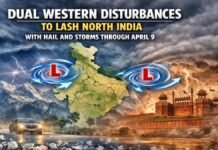
The weather in Rajasthan and Madhya Pradesh is currently being dictated by a Western Disturbance interacting with easterly winds from the Bay of Bengal. This atmospheric synergy is likely to produce dust storms and light precipitation over the next three to four days, potentially lowering temperatures by 1 to 2 degrees.
While districts such as Vidisha, Guna, and Sagar are still battling intense heat, relief is on the horizon for Gwalior, Rewa, and Singrauli, where rainfall is anticipated. Forecasters are also monitoring a second Western Disturbance scheduled to arrive on May 2nd, which could further stabilize or fluctuate local temperatures.
Snowfall in the North and Heavy Rain in the South
The Himalayan region continues to see weather. In Himachal Pradesh, a ‘Yellow Alert’ remains in effect for five districts, including Shimla and Kullu, with rain and snow expected to persist until May 5th. Similarly, the hilly terrains of Uttarakhand are bracing for moderate rainfall and potential hailstorms.
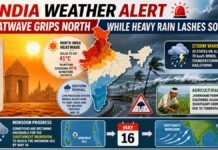
In South India, a localized low-pressure area over Tamil Nadu is driving heavy rainfall. Districts such as the Nilgiris, Coimbatore, and Salem are expected to experience heavy downpours for the next 48 to 72 hours, providing a significant boost to local water tables but also raising concerns regarding localized flooding.
Heatwave Conditions and Agricultural Concerns
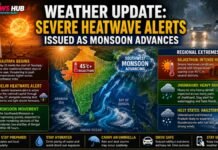
Despite the rain in other sectors, a heatwave remains a dominant threat in the West and parts of the North. In Punjab and Haryana, maximum temperatures are staying firm between 39 and 40 degrees Celsius, a situation that will pose a challenge for farmers currently engaged in the critical wheat harvest. Any unseasonal rain in these specific belts could damage the standing crop.
Meanwhile, residents in Maharashtra and Gujarat are facing temperatures as high as 41 degrees Celsius. In coastal regions, the combination of high heat and extreme humidity is creating a high heat index, leading to significant physical discomfort for those outdoors.