































Key Highlights
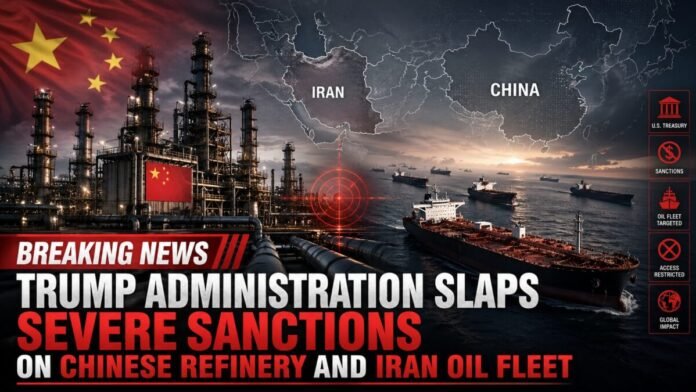
- Hengli Petrochemical Targeted: The Dalian-based refinery, which processes 400,000 barrels daily, was sanctioned for purchasing billions in Iranian crude.
- Shadow Fleet Crackdown: Approximately 40 shipping companies and tankers involved in “illicit” oil transport are now under U.S. restrictions.
- Waivers Expiring: Treasury Secretary Scott Bessent confirmed that temporary waivers for Iranian and Russian oil at sea will not be extended.
- Economic Stranglehold: The move aims to force Iran to shutter its oil production within days amid escalating Persian Gulf tensions.
The U.S. administration, led by President Donald Trump, has executed its most aggressive strike against Iran’s economy to date. On Friday, April 24, 2026, the Department of the Treasury announced sweeping sanctions designed to dismantle Iran’s oil export infrastructure. This latest move in the “maximum pressure” campaign specifically targets the financial lifelines that allow Tehran to bypass international restrictions, aiming to drive Iranian oil exports to zero.
The primary objective is to sever Iran’s largest revenue stream, oil exports, which the administration identifies as the primary source of funding for regional instability. The Treasury Department has signaled it is monitoring every intermediary, buyer, and financial institution involved in the trade. These measures come at a volatile moment, with the Persian Gulf nearing a state of conflict and the critical Strait of Hormuz facing significant shipping disruptions.
Sanctions Hit Chinese “Teapot” Refineries
A central pillar of this enforcement action is the targeting of Hengli Petrochemical, located in Dalian, China. As one of China’s largest independent “teapot” refineries, the facility has a massive processing capacity of approximately 400,000 barrels per day. According to U.S. intelligence and reports from the advocacy group United Against Nuclear Iran (UANI), Hengli has been a consistent recipient of Iranian crude since 2023, generating hundreds of millions of dollars for the Iranian military.
By blacklisting Hengli, the U.S. is sending a clear message to independent Chinese refiners, who currently purchase over 80% of Iran’s shipped oil. The sanctions block all U.S. assets of the designated entities and prohibit American citizens or institutions from engaging in business with them.
Dismantling the Shadow Fleet
In addition to the refinery, the U.S. Treasury’s Office of Foreign Assets Control (OFAC) has sanctioned roughly 40 shipping companies and vessels. These entities are allegedly part of a sophisticated “shadow fleet” used to transport oil under falsified manifests and deceptive tracking data.
U.S. Treasury Secretary Scott Bessent stated that his department is committed to a “financial stranglehold” on the regime. In a stern warning issued to financial institutions in China, Hong Kong, the UAE, and Oman, Bessent made it clear that any entity facilitating Iranian oil sales or holding Iranian funds will face secondary sanctions.
Global Market Impact and the End of Waivers
The aggressive stance comes as global energy markets face extreme volatility, with oil prices recently surging past $100 per barrel. To prevent a total market shock, the U.S. had previously granted limited, 30-day waivers for Russian seaborne oil and Iranian oil already “at sea.”
However, in a significant policy shift, Secretary Bessent announced that these waivers will officially expire and will not be renewed. Bessent noted that much of the oil in transit has been absorbed by the market, and the U.S. is now focused on a total blockade. “We have the blockade, and there’s no oil coming out,” Bessent remarked, suggesting that Iran may be forced to shut down its production wells within the next 48 to 72 hours to avoid permanent damage to its infrastructure.
This decisive action marks a turning point in the administration’s foreign policy, prioritizing the complete economic isolation of Tehran over short-term market stability, as the U.S. seeks to neutralize Iran’s nuclear and military ambitions once and for all.