



































Key Points
- Staggering Death Toll: An estimated 187 million deaths have occurred due to organized violence between 1926 and 2026.
- Civilian Front Lines: The casualty profile has inverted, with civilians now making up approximately 90% of war-related deaths compared to 5% in World War I.
- Energy Crisis: The ongoing 2026 Iran war has triggered a 140% spike in Asian LNG prices following the March 18 strike on Qatar’s Ras Laffan facility.
- Environmental Debt: Global militaries currently rank as the world’s fourth-largest greenhouse gas emitter, surpassing the entire Russian Federation.
- Education Void: Approximately 52 million children are currently out of school due to armed conflict, contributing to a global total of 273 million excluded youth.
As we reach the hundred-year mark of modern global conflict, the myth of a “long peace” has been effectively dismantled. Since 1926, the world has existed in a state of nearly unbroken violence, moving from the industrial carnage of the 20th century to the high, intensity, technology, technology-driven wars of 2026. Data suggests that this century of attrition has resulted in roughly 187 million deaths, a demographic hollow that has fundamentally altered the human trajectory.
The nature of this violence has undergone a radical structural shift. In the early 1900s, combat was largely restricted to designated battlefields. Today, warfare targets the “essential infrastructure of life,” water, electricity, and housing, turning urban centers into the new front lines.
The 2026 Iran War and Global Economic Shock
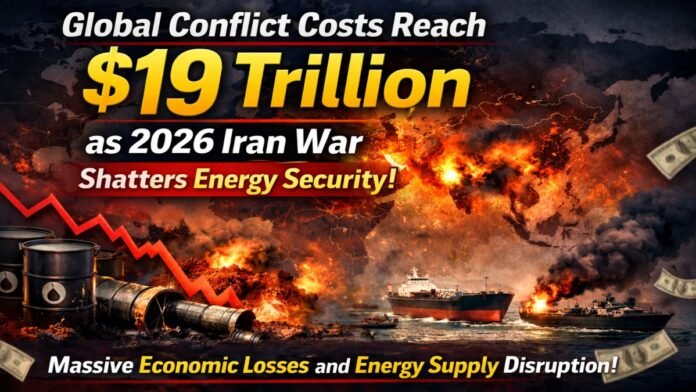
The most recent surge in systemic violence, the 2026 Iran war, has exposed the extreme fragility of the globalized economy. Following the closure of the Strait of Hormuz, which disrupted 20% of the world’s oil supply, a catastrophic strike on March 18 hit Qatar’s Ras Laffan Industrial City. This attack on an inactive LNG complex caused a 17% reduction in national production capacity and sent Asian LNG spot prices soaring by over 140%.
The global economic impact of violence reached an unprecedented $19.1 trillion (PPP) in 2024, accounting for 13.5% of the total global GDP. This massive diversion of capital creates a $4 trillion annual deficit in the funds required to meet the UN Sustainable Development Goals. In many low-income nations, every 1% increase in military spending results in a nearly identical reduction in public health investment.
The “Silent Victims”: Climate and Culture
If global militaries were a nation, they would be the fourth-largest polluter on Earth. The carbon footprint of modern conflict is massive; conflict emissions in Ukraine alone reached 175 million tonnes of CO2 between 2022 and 2024. Furthermore, the reconstruction of devastated regions like Gaza is projected to emit 47 million tonnes of CO2, driven by the heavy carbon costs of cement and steel production.
Beyond environmental decay, “culturicide” has become a strategic tool for erasing historical identity. The 2026 Iran war has already resulted in damage to the UNESCO-listed Golestan Palace in Tehran and modern heritage sites in Tel Aviv’s “White City.” These losses represent a permanent depletion of the human story, stripping survivors of the cultural anchors necessary for societal recovery.
The Generational Deficit
The most enduring legacy of this centenary is the “developmental void” left in the wake of destroyed school systems. As of early 2026, 52 million children are out of school specifically due to armed conflict. In regions like South Sudan, 70% of school-age children remain outside the education system, while in the Gaza Strip, 100% of children have missed more than a year of learning. This stunting of cognitive development ensures that the instability of today will haunt the workforce of the next century, trapping post-war societies in a cycle of poverty and unemployment.