































Key Highlights
- Mediation Efforts: President Putin presented a proposal for a “quick political and diplomatic settlement” to the escalating military campaign in West Asia.
- Geopolitical Stakes: The call, initiated by Washington, marks the first high-level dialogue between the two leaders since December 2025.
- Iran Conflict Status: The war, dubbed “Operation Epic Fury,” began on February 28, 2026, and has significantly disrupted global oil markets and regional stability.
- Ukraine Update: Putin briefed Trump on recent Russian military manoeuvres, asserting that Moscow remains open to peace but will not compromise on its core security interests.
- Global Energy Concerns: Both leaders expressed concern over the Strait of Hormuz closure and its impact on a “new price reality” for global energy.
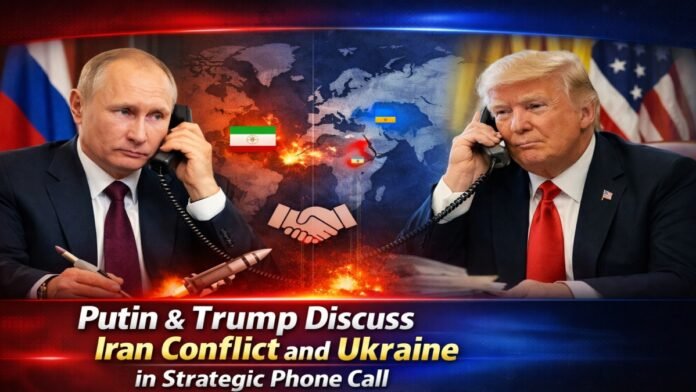
On Monday night, March 9, 2026, the Kremlin and the White House confirmed a lengthy and “constructive” telephone conversation between President Vladimir Putin and President Donald Trump. This discussion took place on the 11th day of a transformative conflict in the Middle East, which was ignited by a massive US-Israeli air campaign against Iranian leadership and military infrastructure on February 28.
Putin, positioned as a key ally to Tehran, offered to act as a mediator to prevent further regional escalation. During the hour-long call, he emphasised that a diplomatic exit strategy is the most urgent priority to prevent a total humanitarian and economic collapse. Russia’s role as a peacemaker is seen as a strategic pivot, as Moscow seeks to protect its long-standing interests in Iran while navigating its own complex relationship with the Trump administration.
The Iran, Israel, US War: A Tense Eleven Days
The conflict began with decapitation strikes that resulted in the death of Iran’s Supreme Leader, Ali Khamenei, followed by the rapid succession of his son, Mojtaba Khamenei. In response, Tehran has launched retaliatory missile and drone strikes across the region, targeting American bases and Israeli assets, which has led to the closure of the Strait of Hormuz.
During the call, Trump provided his assessment of the military situation, including claims of significant naval and infrastructure damage inflicted on Iranian forces. However, Putin cautioned that continuing the military campaign could lead to a permanent disruption of Gulf oil production, threatening the global economy with unprecedented price hikes.
Crossroads in Ukraine: Four Years of Conflict
Beyond West Asia, the leaders addressed the war in Ukraine, which has now entered its fifth year. President Putin provided a detailed update on the “line of contact,” claiming that Russian forces are achieving strategic successes in key sectors. While the Kremlin described the talk as a step toward a “businesslike” relationship, the White House maintained that any long-term settlement in Ukraine must remain a top priority for the US administration.
Trump reportedly urged Putin to prioritise a resolution to the European conflict, even as the Russian leader pitched his mediation services for the Middle East. The dialogue suggests a potential “restarting” of bilateral communication channels that had been largely frozen, as both nations grapple with the reality of two simultaneous, interconnected global crises.
The Path Forward
The international community is now closely watching for signs of a ceasefire. Putin’s “peace formula” likely involves a cessation of Western military action in exchange for Iranian concessions, though details remain classified. For the global market, the mere fact that the leaders of the world’s two largest nuclear powers are talking has provided a slight stabilization in oil futures, despite the ongoing volatility in the Persian Gulf.