






























KEY POINTS
- PM Modi personally welcomed UAE President Sheikh Mohamed bin Zayed at Delhi airport on January 19, 2026
- This was MBZ’s fifth visit to India in a decade and third as UAE President
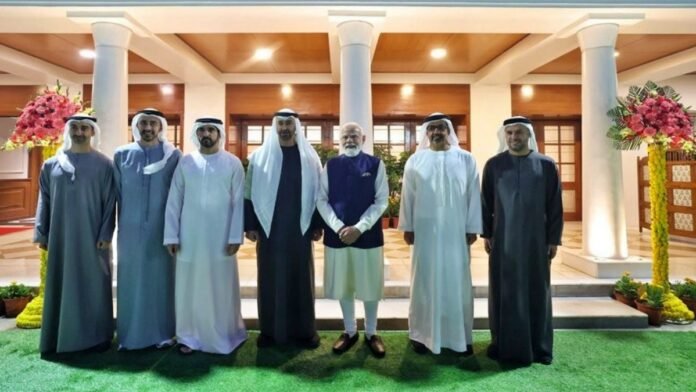
- High-level delegation included Crown Prince of Dubai Sheikh Hamdan and senior ministers
- Visit resulted in five major pacts on nuclear energy, AI, counter-terrorism, defense, and technology
- Both leaders reaffirmed commitment to India-Middle East-Europe Economic Corridor (IMEC)
- UAE expressed support for India’s BRICS presidency in 2026 and AI Impact Summit in February 2026
- Meeting lasted over three hours, exceeding the scheduled two-hour timeframe
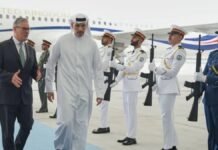
Prime Minister Narendra Modi personally welcomed UAE President Sheikh Mohamed bin Zayed Al Nahyan at Delhi airport on January 19, 2026, demonstrating the exceptional warmth and importance attached to this bilateral relationship. The Prime Minister traveled to the airport specifically to receive his “brother,” as he described the UAE leader on the social media platform X, sharing photographs of their warm embrace.
The personal gesture of an airport welcome, typically reserved for the closest strategic partners, underscored the deepening fraternity between the two nations. PM Modi posted on X, “Went to the airport to welcome my brother, His Highness Sheikh Mohamed bin Zayed Al Nahyan, President of the UAE. His visit illustrates the importance he attaches to a strong India-UAE friendship. Looking forward to our discussions.”
Foreign Secretary Vikram Misri described the visit as “short, but of immense diplomatic significance,” noting that the two leaders traveled together from the airport to the Prime Minister’s residence for their formal discussions. The journey itself became an opportunity for informal dialogue, setting a positive tone for the substantive negotiations that followed.
HIGH-LEVEL DELEGATION AND FAMILY PRESENCE
The UAE delegation represented the highest echelons of Emirati leadership, combining both Abu Dhabi and Dubai royal families with senior government officials. The presence of multiple royal family members lent a personal warmth to the diplomatic proceedings, signaling the visit’s exceptional importance.
The delegation included His Highness Sheikh Hamdan bin Mohammed bin Rashid Al Maktoum, Crown Prince of Dubai, Deputy Prime Minister and Minister of Defence, who traveled from Dubai specifically for this engagement. His participation highlighted the unified UAE front on strengthening ties with India across both emirates. Additionally, Sheikh Hamed bin Zayed Al Nahyan, Sheikh Abdullah bin Zayed Al Nahyan, Deputy Prime Minister and Minister of Foreign Affairs, and Sheikh Hamdan bin Mohamed bin Zayed Al Nahyan, Deputy Chairman of the Presidential Court for Special Affairs, accompanied the President.
Sheikh Mohammed bin Hamad bin Tahnoun Al Nahyan, Adviser to the UAE President, several ministers, and top officials completed the high-powered entourage. The comprehensive representation from across the UAE government underscored that this was not merely a ceremonial visit but a substantive strategic dialogue covering the full spectrum of bilateral cooperation.
COMPREHENSIVE STRATEGIC PARTNERSHIP REVIEW
The official meeting at the Prime Minister’s residence extended well beyond its scheduled two-hour timeframe, lasting over three hours and covering an ambitious agenda across multiple domains. The leaders conducted a comprehensive review of bilateral cooperation spanning trade, investment, energy, connectivity, defense, security, development partnership, technology, health, and education.
Both leaders expressed satisfaction at the depth and maturity of the India-UAE Comprehensive Strategic Partnership, which has continued to strengthen over the past decade. The partnership, elevated to a comprehensive strategic level in 2017, has become one of India’s most consequential relationships in the Gulf region, encompassing over $85 billion in annual bilateral trade and a substantial Indian diaspora presence in the UAE.
The discussions reflected growing convergence on emerging global priorities, with particular emphasis on transforming the partnership into a futuristic, technology-driven alliance that addresses 21st-century challenges while maintaining robust traditional cooperation in energy and trade.
FIVE MAJOR AGREEMENTS SIGNED
The visit yielded concrete outcomes through five major pacts that will define the partnership’s trajectory through 2026 and beyond. The agreements covered nuclear energy cooperation, artificial intelligence collaboration, counter-terrorism measures, defense industrial cooperation, and advanced technology partnerships.
Nuclear Energy Cooperation: Both sides agreed to collaborate on peaceful uses of nuclear energy, marking a significant expansion of their energy partnership beyond traditional hydrocarbons. This cooperation will focus on civilian nuclear applications, safety protocols, and potentially joint research initiatives.
Artificial Intelligence and Advanced Computing: The technology partnership agreement includes substantial UAE investment in data centers within India and joint establishment of a supercomputing cluster. The collaboration will prioritize AI sectors where both nations possess complementary strengths, potentially creating a joint AI research and development ecosystem.
Counter-Terrorism Framework: The two countries signed enhanced cooperation agreements on counter-terrorism, reflecting shared concerns about regional security threats and commitment to combating extremism through intelligence sharing, capacity building, and coordinated responses.
Defense Industrial Cooperation: The defense pact aims to strengthen industrial collaboration, potentially involving joint production, technology transfer, and co-development of defense equipment, building on existing military exercises and training programs.
Data Embassy Initiative: Both leaders announced plans to explore creating a “Data Embassy” based on mutual sovereignty principles, representing an innovative approach to data governance and digital infrastructure cooperation that could serve as a model for other nations.
STRATEGIC INITIATIVES AND FUTURE AGENDA
Beyond the formal agreements, the leaders agreed on an action-oriented agenda for 2026 that includes several pioneering initiatives. The UAE Foreign Minister conveyed his country’s support for the AI Impact Summit to be hosted by India in February 2026, signaling UAE’s commitment to participating in India’s emerging technology leadership initiatives.
Both leaders reiterated their commitment to implementing the India-Middle East-Europe Economic Corridor (IMEC), the ambitious infrastructure project announced during the G20 summit in Delhi. The corridor aims to create a modern trade route connecting India to Europe through the Middle East, with the UAE serving as a critical hub.
The discussions also covered India’s presidency of the BRICS grouping in 2026, with the UAE expressing support for India’s leadership role in the emerging markets bloc. This support is particularly significant given the UAE’s own growing engagement with BRICS and its strategic interest in alternative global governance structures.
REGIONAL STABILITY AND GLOBAL SOUTH COOPERATION
The leaders discussed regional and global issues, including the evolving situation in West Asia, reaffirming their shared interest in protecting and promoting regional peace, stability, and prosperity. The UAE’s position as a key Arab nation and India’s growing influence in the region create opportunities for joint mediation and conflict resolution efforts.
Both countries agreed to enhance cooperation and coordination on issues affecting the Global South, building on their shared commitment to representing developing nations’ interests in international forums. This includes joint efforts in multilateral organizations, development assistance coordination, and support for sustainable development goals.
The comprehensive nature of the discussions reflected how the India-UAE partnership has evolved from a bilateral relationship into a strategic axis with regional and global implications, capable of influencing outcomes beyond their immediate borders.
TRADE, INVESTMENT, AND ECONOMIC TIES
The economic dimension of the partnership remains robust, with bilateral trade exceeding $85 billion annually. The two nations are each other’s top trading partners in their respective regions, with the UAE serving as India’s third-largest trading partner globally.
The leaders discussed expanding non-oil trade, increasing investments in strategic sectors, and exploring new avenues for economic collaboration. The UAE’s sovereign wealth funds have emerged as significant investors in India’s infrastructure and technology sectors, while Indian companies have established a substantial presence in the UAE’s services, manufacturing, and retail sectors. The commitment to diversify beyond hydrocarbons toward technology, manufacturing, and services reflects both nations’ economic transformation agendas and their desire to build resilient, future-ready economies.
PEOPLE-TO-PEOPLE TIES AND DIASPORA
The presence of over 3.5 million Indian nationals in the UAE forms the backbone of the bilateral relationship, contributing significantly to the UAE’s development while maintaining strong connections to India. The leaders acknowledged the Indian community’s role as a bridge between the two nations and discussed measures to enhance their welfare and facilitate their contributions to both economies.
The personal warmth displayed during the visit, including the family presence in the delegation and the “brotherly” language used by both leaders, reflects the deep people-to-people connections that transcend formal diplomatic protocols. This emotional dimension strengthens the partnership’s resilience and creates constituencies in both countries that support deeper engagement.
SIGNIFICANCE OF THE VISIT
This fifth visit in a decade and third official visit as President demonstrates the consistent priority both leaders attach to the bilateral relationship. The visit built on recent high-level engagements, including Sheikh Khaled bin Mohamed bin Zayed Al Nahyan’s visit in September 2024 and Sheikh Hamdan bin Mohammed bin Rashid Al Maktoum’s visit in April 2025, creating strong momentum for the partnership.
Foreign Secretary Vikram Misri termed the visit “brief but of immense diplomatic significance,” noting that it set the tone and direction for India-UAE ties in the near future. The fact that a three-hour substantive discussion emerged from a planned two-hour meeting indicates the depth of engagement and the breadth of issues covered.
The visit’s success in yielding concrete agreements while strengthening personal bonds suggests that the India-UAE Comprehensive Strategic Partnership will continue to serve as a model for how nations with different histories and systems can build robust, mutually beneficial relationships based on shared interests and mutual respect.