Key Points
- Electoral Debut: Vijay’s fledgling Tamizhaga Vettri Kazhagam (TVK) won 108 seats, disrupting the traditional DMK, AIADMK binary.
- Alliance Shift: The Congress party ended its two-decade partnership with the DMK to support TVK in a landmark post-poll alliance.
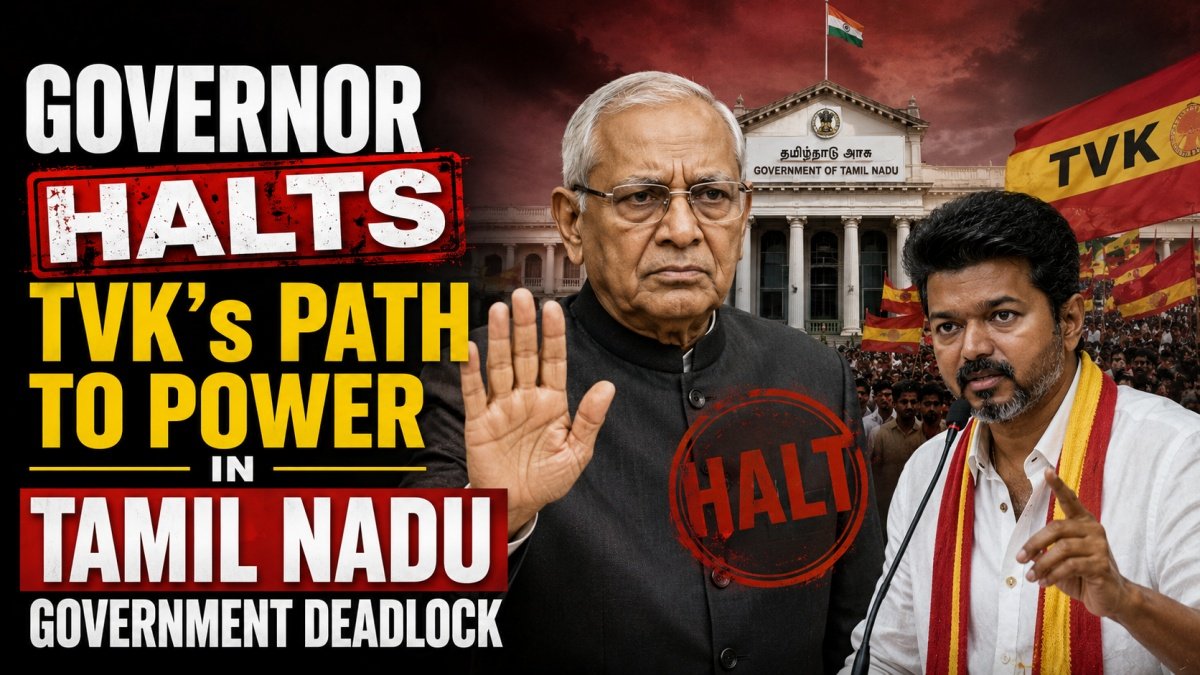
- Governor’s Mandate: Governor Arlekar has demanded a physical guarantee of 118 signatures before inviting the TVK-led coalition to form the government.
- Legal Precedent: Critics argue the decision ignores the S.R. Bommai ruling, which states that a majority must be tested on the floor of the House, not in the Raj Bhavan.
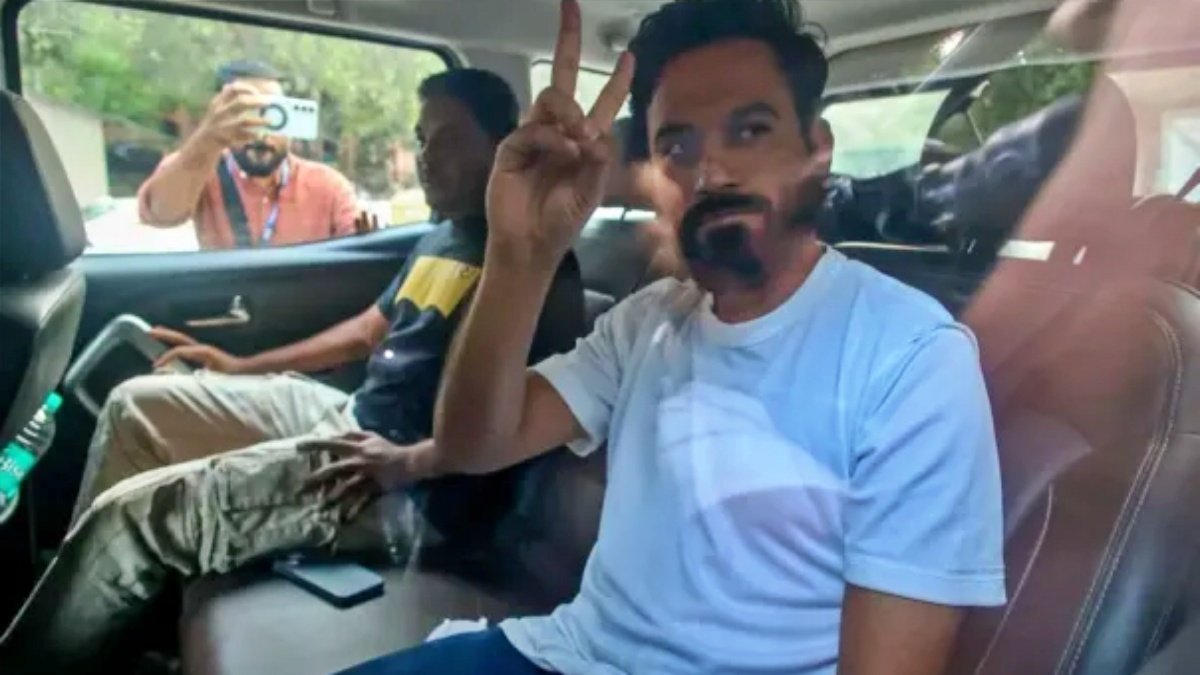
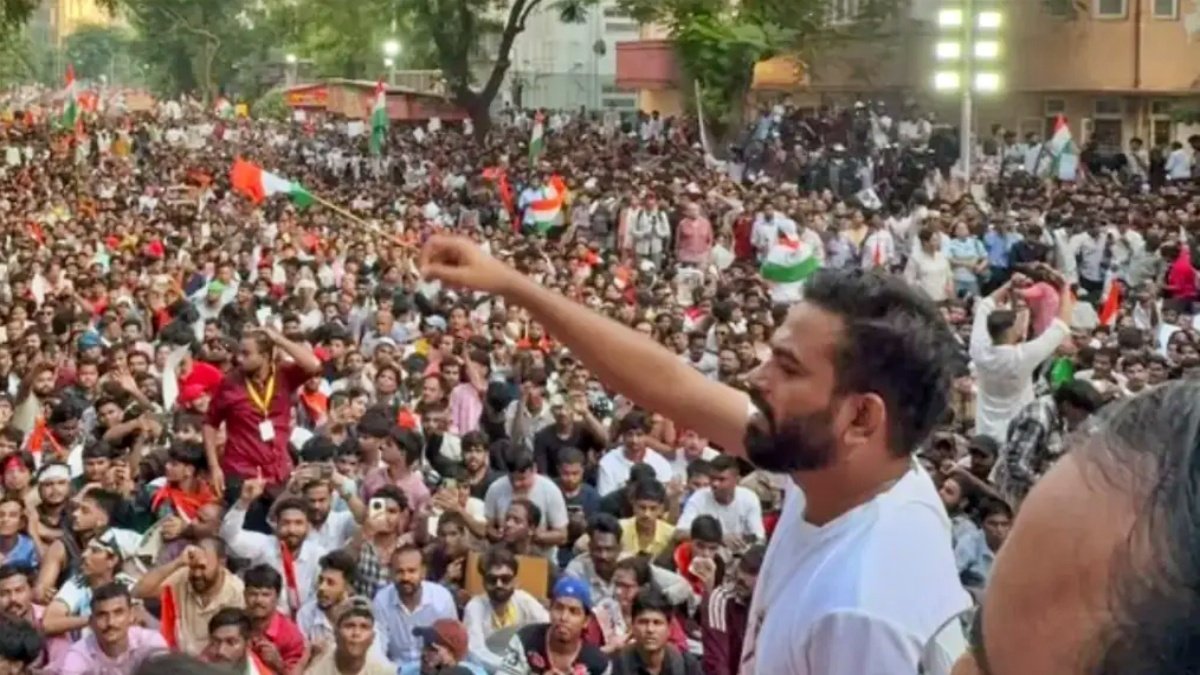
The political climate in Tamil Nadu has reached a boiling point as actor-turned-politician Vijay, the president of Tamizhaga Vettri Kazhagam (TVK), finds himself at a constitutional crossroads. Following the declaration of the 2026 Assembly election results on May 4, Vijay called on Governor Rajendra Vishwanath Arlekar at the Lok Bhavan in Chennai to stake his claim to form the next government. Despite arriving with the momentum of a historic electoral debut, the TVK chief was met with a significant “speed breaker” in his path to the Chief Ministership.
Governor Arlekar, who assumed additional charge of the state in March 2026, flatly rejected Vijay’s request for an immediate swearing-in. The Governor has laid down a strict prerequisite: the production of a letter of support signed by at least 118 MLAs, representing the magic number in the 234-seat Assembly. Currently, TVK stands as the single largest party with 108 seats, and while it claims the support of five Congress legislators and several independents, it remains short of the physical verification demanded by the Raj Bhavan.
The Shadow of 2018 and Charges of “Double Standards”
This development has reignited a fierce debate over the discretionary powers of Governors, with many drawing a sharp contrast to the 2018 Karnataka Assembly elections. In that instance, the then-Governor of Karnataka invited B.S. Yediyurappa of the BJP to form the government as the leader of the single largest party, even though he lacked a clear majority at the time of his invitation.
Unlike the current situation in Tamil Nadu, Yediyurappa was not required to produce a signed list of 112 supporting MLAs before his oath. Instead, he was granted 15 days to prove his majority on the floor of the House, though he ultimately resigned after just three days following a Supreme Court-mandated floor test. Critics argue that the insistence on a “physical guarantee” within the Raj Bhavan for Vijay, while granting a “concession” to others in similar past scenarios, highlights a potential inconsistency in how constitutional norms are applied.
S.R. Bommai and the Legal Path Forward
The standoff centers on a fundamental question of Indian constitutional law: where should a government’s majority be tested? In the landmark 1994 case of S.R. Bommai vs. Union of India, a nine-judge bench of the Supreme Court ruled that the floor of the Legislative Assembly is the only forum where a government’s strength can be legitimately ascertained. The verdict was intended to curb the arbitrary influence of Governors in dismissals and government formations.
Legal experts note that by demanding proof before the oath, the Tamil Nadu Governor is effectively conducting a “pre-test” within the confines of the Raj Bhavan. Senior advocates have pointed out that several minority governments have been invited to take office in India’s past, with the understanding that legitimacy is earned through a public vote of confidence in the House.
As the May 10 deadline for the expiration of the current Assembly term approaches, the pressure on the Raj Bhavan to resolve the deadlock continues to mount. The outcome will not only decide the immediate fate of Tamil Nadu’s governance but will also set a crucial precedent for the role of the Governor in India’s federal democracy.