

































Key Developments in NATO Policy
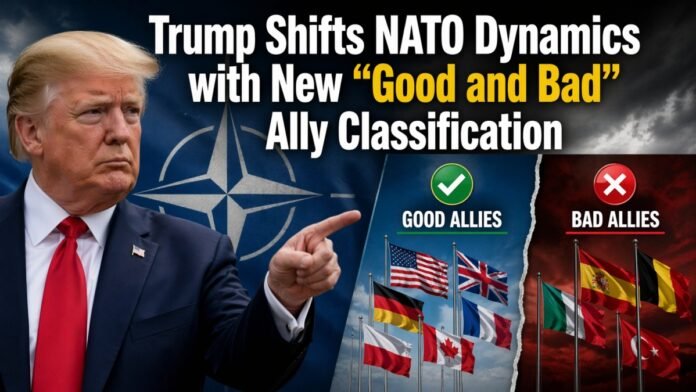
- Strategic Categorization: Washington has established a formal list of “good” and “bad” allies, rewarding those who align with U.S. military objectives.
- The Iran Litmus Test: Support for the ongoing conflict with Iran, dubbed “Operation Epic Fury,” has become the primary metric for determining an ally’s standing.
- Defense Spending Targets: U.S. officials are pushing for a 5% GDP defense spending threshold, significantly higher than the previous 2% mandate.
- Security Repercussions: Nations deemed “uncooperative” face potential troop withdrawals, canceled joint exercises, and the suspension of advanced weaponry sales.
A profound shift is underway within NATO as President Donald Trump’s administration implements a rigorous “loyalty” ranking for member states. This policy, which separates the alliance into “exemplary” and “naughty” tiers, was solidified following NATO Secretary General Mark Rutte’s high-stakes visit to Washington this April. The core objective is to leverage U.S. security guarantees to secure absolute strategic alignment, particularly regarding the volatile conflict with Iran.
According to Secretary of Defense Pete Hegseth, the administration will prioritize “special favor” for nations that increase their defense budgets and provide active support for U.S. missions. This includes granting access to military bases and assisting in the enforcement of maritime blockades in the Strait of Hormuz. Hegseth has warned that those failing to contribute to collective defense under these new terms will face immediate consequences.
The “Good” List: Poland and the Baltic Bloc
Nations that have embraced Washington’s strategic vision are already seeing the benefits of their “exemplary” status. Poland, which has emerged as a cornerstone of U.S. strategy in Europe, currently hosts approximately 10,000 American troops, with Warsaw covering a significant portion of the basing costs. Other nations on the “good” list include:
- Central and Eastern Europe: Romania, Bulgaria, Albania, and the Czech Republic.
- The Baltic Front: Estonia, Latvia, and Lithuania, all of whom have been praised for exceeding military spending targets.
These nations are expected to receive priority for state, of, the, art military hardware and increased American troop presence as the U.S. considers relocating units from less cooperative regions.
The “Bad” List: Mediterranean and Western Dissent
Conversely, a group of long-standing allies has found itself on the “hit list” for refusing to grant base access for strikes against Iran or withholding logistical support. Countries such as France, Spain, Italy, Greece, and Turkey have explicitly declined to involve their facilities in the Iran conflict, citing concerns over regional escalation.
While the United Kingdom initially hesitated, it has since shifted into a more favorable position by allowing limited use of its military installations. For those remaining on the “bad” list, the White House has threatened to reduce U.S. troop deployments and halt participation in shared military training, a move that experts fear could lead to the total fragmentation of NATO’s unified front.
Rising Internal and Global Criticism
The “reward and punishment” strategy has sparked a firestorm of criticism within the United States. Senator Roger Wicker and other veteran lawmakers have cautioned that treating allies as transactional partners could cause irreparable damage to diplomatic relations. Critics argue that forcing a choice between national sovereignty and U.S. military strategy will drive a wedge between Europe and America, potentially creating a rift that no future administration will be able to bridge. As Washington prepares to enforce these classifications, the very survival of NATO as a collective security apparatus remains in question.