


































Key Developments
- Industrial Paralysis: Ceramic and glass hubs report a 30% reduction in operations due to LNG shortages.
- Price Surges: Glass bottle and packaging costs have spiked by 20%, impacting the pharma and beverage sectors.
- Construction Delays: Rising steel and cement prices, fueled by energy costs, are stalling national infrastructure projects.
- Logistics Bottlenecks: Tensions in the Strait of Hormuz have sent shipping insurance and freight rates to record highs.
- Consumer Inflation: Naphtha and plastic shortages are driving up the cost of shampoos, detergents, and packaged foods.
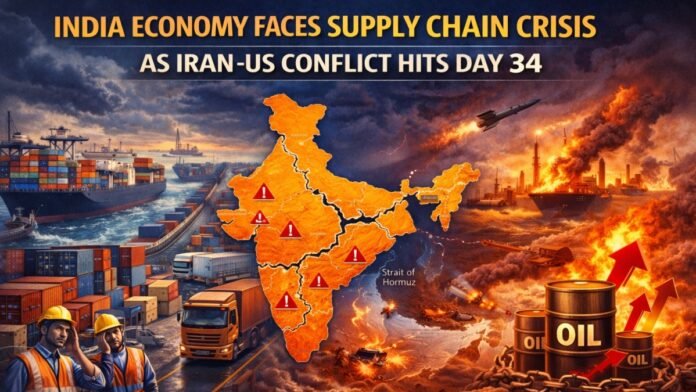
As the conflict between Iran, the United States, and Israel enters its 34th day, the geopolitical tremors are being felt in Indian factories, markets, and households. What began as an energy security concern has evolved into a comprehensive supply chain crisis. The disruption of oil and gas routes has created a “chain reaction” that is now visible in the shortage of bitumen for road construction, the disappearance of aluminum beer cans from shelves, and the rising cost of pharmaceutical packaging.
Construction and the Ceramic Crisis
The real estate and infrastructure sectors are among the hardest hit. Record-high prices for Liquefied Natural Gas (LNG) and industrial fuels have drastically increased the production costs of cement and steel. In Morbi, Gujarat, the world’s second-largest ceramic hub, hundreds of units have been forced to slow down or halt production as the cost of running gas-fired kilns becomes unsustainable. This has led to a sharp escalation in project costs, causing delays in affordable housing and highway projects across the country.
Chemicals and the Packaging Shortage
India’s chemical industry is grappling with a severe deficit of raw materials. Disruptions in the petrochemical supply chain have led to a critical shortage of silicone oil and ammonia. In glass manufacturing centers like Firozabad, Uttar Pradesh, many traditional furnaces have either shut down or are operating at minimum capacity.
The repercussions are widespread, bottle prices have surged by approximately 20%, while the cost of adhesive tapes, labels, and protective packaging has risen steadily. These shortages are now impacting the distribution of life-saving medicines and essential consumer goods, as aluminum supplies remain diverted or stuck in transit.
The Toll on FMCG and Agriculture
The everyday consumer is beginning to feel the pinch as industries reliant on petroleum-derived products, such as naphtha, pass on operational costs. Prices for plastic packaging, shampoos, and packaged snacks have begun to climb.
Perhaps more concerning is the impact on the agricultural sector. The timely delivery of seeds and fertilizers depends on complex logistics and packaging networks that are currently under strain. If these disruptions continue, they could jeopardize the upcoming crop cycles and fuel food inflation, adding further pressure to a domestic economy already struggling with high fuel prices.
Shipping, Remittances, and the MSME Sector
The Strait of Hormuz remains a primary point of concern for Indian trade. Increased maritime risks have forced shipping companies to hike insurance premiums, which in turn has pushed up export and import rates. Small and Medium Enterprises (MSMEs) are currently bearing the brunt of these costs, with many being forced to scale back production, directly impacting employment levels in industrial corridors.
Furthermore, the conflict has disrupted major infrastructure projects in the Gulf, where millions of Indian expatriates are employed. Any prolonged instability in the region threatens to diminish the flow of remittances, which are a vital pillar of India’s foreign exchange reserves. While the Central Government has attempted to mitigate the crisis by reducing excise duties on petrol and diesel, the sheer scale of the supply chain disruption suggests that a long-term resolution will require more than just fiscal adjustments.