
































Key Highlights
- CPI Trend: Headline inflation rose by 0.47% month, on, month, though it remains well within the RBI’s comfort zone.
- Rural vs. Urban: Inflation was higher in rural areas (3.37%) compared to urban centers (3.02%).
- Food Prices: Food inflation reached 3.47%, with tomatoes and cauliflower seeing significant price spikes.
- Jewelry Surge: Silver jewelry prices skyrocketed by 160.84%, while gold and platinum rose by 48.16%.
- Regional Variation: Telangana recorded the highest inflation rate among major states at 5.02%.
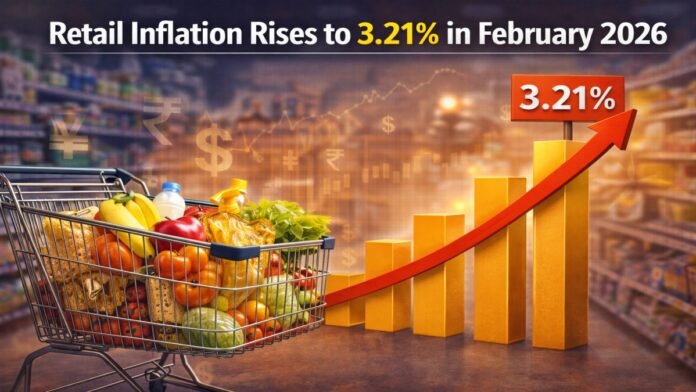
Data released by the Ministry of Statistics and Programme Implementation (MoSPI) on Thursday reveals a moderate uptick in the cost of living. While the 3.21% figure is a climb from January’s 2.74%, the overall inflationary environment remains stable compared to previous years. The National Statistical Office (NSO) noted that while rural inflation (3.37%) continues to outpace urban inflation (3.02%), the gap is narrowing as supply chains stabilize.
The core of this month’s increase was tied to the “Food and Beverages” segment, which registered an inflation rate of 3.35%. Other essential sectors also saw modest rises, including education services (3.33%), clothing and footwear (2.81%), and the housing and utilities sector (1.52%).
The Price Tug-of-War: From Garlic to Gold
The February data highlights a stark contrast between commodities in surplus and those facing supply constraints or high global demand.
Significant Price Declines:
The agricultural sector saw a major cooling in the prices of staples. Garlic led the decline at -31.09%, followed closely by onions (-28.20%) and potatoes (-18.46%). These drops provided a significant cushion for the average household kitchen budget, alongside cheaper pulses like pigeon peas (-16%).
Significant Price Increases:
Conversely, the “Luxury and Vegetables” category saw extreme volatility. Silver jewelry witnessed an extraordinary 160.84% jump, likely influenced by global industrial demand and currency fluctuations. In the kitchen, the relief from cheaper onions was offset by a 45.29% rise in tomato prices and a 43.77% increase in cauliflower, reflecting seasonal supply gaps.
Regional Impact and Data Integrity
Inflation did not hit all states equally. Telangana emerged as the most expensive major state with an inflation rate of 5.02%, significantly higher than the national average. Other states seeing higher than average prices include Rajasthan (3.53%) and Kerala (3.50%).
MoSPI emphasized the robustness of this data, noting that price collection achieved near-perfect coverage. Field staff from the NSO visited 1,465 villages and 1,407 urban markets across all States and Union Territories. The ministry reported a price reporting accuracy of 99.89% for rural markets and 99.78% for urban markets for the February 2026 cycle, ensuring the figures reflect a comprehensive, real-time economic snapshot.
Click here to read the Full report: