

































Key Points
- Orange alert issued for dense fog across North India, visibility zero in several Delhi areas
- IndiGo warns of reduced visibility and slower flight operations in North and East India
- Over three dozen flights canceled on Monday, many delayed by several hours
- Trains canceled, rescheduled and delayed for three consecutive days due to fog
- Passengers advised to check flight status on airline websites and apps
- Airport teams fully prepared to manage operations and assist customers
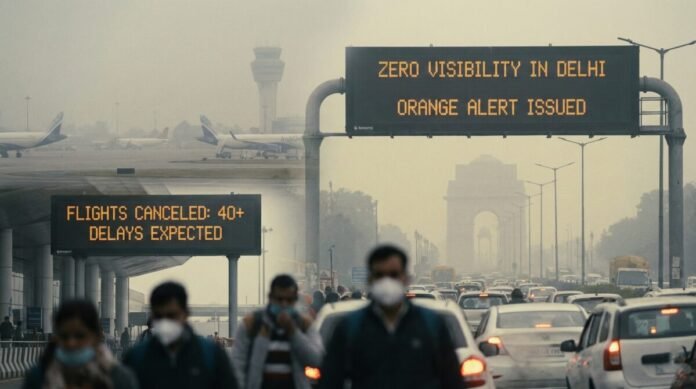
Extremely dense fog blanketed the entire North India region including the national capital Delhi on Wednesday morning, creating hazardous conditions for travel and daily life. The India Meteorological Department has issued an orange alert warning of even denser fog in the next few hours, with visibility dropping to zero meters in several areas of Delhi. The thick layer of fog has severely impacted flight operations, train services, and road traffic across the region.
The fog situation has deteriorated rapidly over the past 72 hours, with Wednesday morning witnessing the worst conditions so far this winter season. Satellite imagery shows a massive fog cover stretching from Punjab and Haryana through Delhi and into Uttar Pradesh and Bihar, affecting hundreds of millions of people. The Meteorological Department has warned that conditions may persist or worsen over the next 24 to 48 hours.
Airlines Issue Fresh Travel Advisories
IndiGo issued a comprehensive travel advisory on Wednesday morning addressing the dense fog situation across North and East India. The airline warned passengers of low visibility conditions and slower flight operations due to the foggy winter skies. In a post shared on the social media platform X, IndiGo stated that with the onset of morning under foggy winter skies, fog is expected in parts of North and East India, which may lead to reduced visibility and slower flight operations during early morning hours.
Earlier on Monday, several airlines, including IndiGo and SpiceJet, had issued similar advisories when the fog first intensified. More than three dozen flights were canceled on Monday, and many others were delayed by several hours. The disruption continued through Tuesday and Wednesday, with airlines struggling to maintain schedules amid rapidly changing visibility conditions at major airports, including Delhi’s Indira Gandhi International Airport, Lucknow, Amritsar, and Varanasi.
Airport Operations and Safety Measures
Airline officials have confirmed that teams are fully prepared at airports across the affected region to handle the challenging conditions. IndiGo stated that the airline is already taking proactive steps to ensure safety and that airport teams are working together to manage schedules smoothly, assist customers, and maintain continuous operations flow. Ground staff have been deployed in increased numbers to handle passenger queries and rebooking requests.
Airport authorities have activated low visibility procedures at Delhi’s IGI Airport and other affected facilities. These procedures include reduced flight movement rates, increased spacing between aircraft, and enhanced ground navigation assistance. While these measures ensure safety, they inevitably lead to slower operations and cascading delays throughout the day. The Airports Authority of India has deployed additional equipment and personnel to monitor conditions and assist airlines.
Passenger Guidance and Travel Recommendations
All passengers traveling through North and East Indian airports have been strongly advised to plan ahead and leave for the airport well in advance of their scheduled departure times. Airlines are recommending that travelers check the latest flight status frequently on official airline websites or mobile apps rather than relying on third-party information sources. The continuous updating of flight schedules means departure times can change rapidly based on visibility improvements or deteriorations.
Passengers have been urged to keep their contact information updated in airline systems to receive real-time notifications about flight changes. For those with connecting flights, airlines are advising longer layover times to account for potential delays. The airlines’ customer service teams are working extended hours to manage the increased volume of queries and rebooking requests, but passengers should expect longer wait times due to the scale of disruptions.
Train Services Severely Disrupted
The dense fog has not only affected air travel but has also severely impacted railway operations across North India. Over the past three days, trains have been canceled, rescheduled, and delayed by several hours due to poor visibility conditions. The Railway Board is exercising extreme caution in train operations, keeping passenger safety as the top priority. Many long-distance trains, including premium services like Rajdhani, Shatabdi, and Duronto Express, have been running several hours behind schedule.
Northern Railway officials have reported that train speeds have been reduced to 30-40 kmph in fog-affected sections to prevent accidents. This precautionary measure, while essential for safety, has created a ripple effect of delays across the entire rail network. Passengers have been stranded at stations for extended periods, and railway authorities have set up help desks to provide information and assistance to travelers affected by the disruptions.
Meteorological Analysis and Forecast
The India Meteorological Department has explained that the current fog episode is a result of high moisture content in the lower atmosphere, calm wind conditions, and radiative cooling during nighttime hours. The orange alert indicates that dense to very dense fog is likely to persist for the next 24-48 hours across Punjab, Haryana, Delhi, Uttar Pradesh, Bihar, and parts of Rajasthan and Madhya Pradesh.
Weather experts predict that fog conditions may intensify further over the weekend as temperatures are expected to drop by 2-3 degrees Celsius. The fog is likely to extend into East Indian states, including West Bengal, Jharkhand, and Odisha, affecting Kolkata and other major cities. The Meteorological Department has advised people to avoid unnecessary travel during early morning hours when fog density is at its peak.
Impact on Daily Life and Road Safety
The dense fog has severely affected road traffic across North India, with major highways, including the Delhi-Chandigarh, Delhi-Jaipur, and Delhi-Agra expressways, experiencing extremely poor visibility. The Delhi Traffic Police have issued advisories urging motorists to drive with fog lights on, maintain safe distances, and avoid high-speed driving. Several accidents have been reported on highways due to reduced visibility, though no major casualties have been confirmed.
Schools in several districts have adjusted their opening hours to avoid early morning travel during peak fog conditions. The Delhi government has advised vulnerable populations, including children, the elderly, and those with respiratory conditions, to limit outdoor exposure during dense fog periods. Air quality has also deteriorated further due to the trapping of pollutants in the lower atmosphere, compounding health risks for residents.