


































Key Points
- Founder of CNN: Launched the world’s first 24-hour news channel in 1980, fundamentally altering how the public consumes information.
- Cable Pioneer: Developed the “superstation” concept with TBS and launched influential networks including TNT and Cartoon Network.
- Historic Philanthropy: Pledged $1 billion to the United Nations in 1997, a then-unprecedented move that challenged other billionaires to increase their giving.
- Champion Sportsman: Won the America’s Cup in 1977 and owned the Atlanta Braves and Atlanta Hawks, merging media with professional sports.
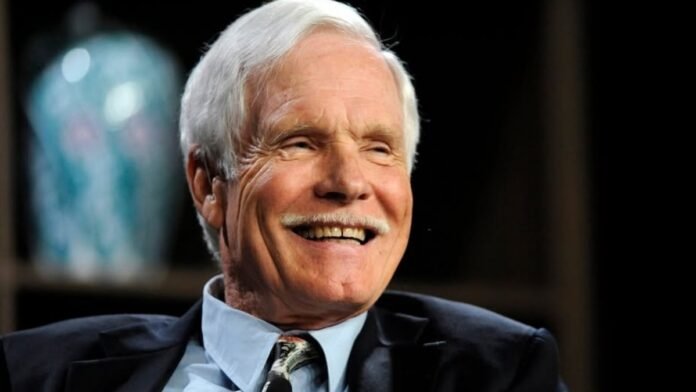
Ted Turner, the charismatic and often controversial businessman who famously proved that the world had an insatiable appetite for non-stop news, has passed away at the age of 87. The announcement was made Wednesday by Turner Enterprises, marking the end of an era for a man who was arguably the most influential media figure of the late 20th century. While the exact date of his passing was not immediately disclosed, the news has triggered a wave of tributes from the industries he helped build.
Born Robert Edward Turner III, he first made his mark by expanding his father’s billboard company into a broadcasting powerhouse. His most significant gamble came on June 1, 1980, with the launch of the Cable News Network, or CNN. While industry critics initially dismissed the project as the “Chicken Noodle Network,” Turner’s vision eventually transformed the global media landscape. By the time of the Gulf War in 1991, CNN had become the definitive source for real-time global events, proving the viability of its 24-hour model.
Turner’s influence extended far beyond the newsroom. He was a pioneer in the cable television industry, creating a suite of networks that helped establish the foundation of the modern multi-channel era. His acquisition of the Atlanta Braves and the Atlanta Hawks allowed him to leverage his media platforms to broadcast professional sports to a national audience, a strategy that remains a cornerstone of the industry today.
Known as “Captain Outrageous” for his bold personality and competitive drive, Turner was also a world-class sailor. His 1977 victory in the America’s Cup cemented his reputation as a man who could succeed against the odds in any arena, whether on the water or in the boardroom.
In his later years, Turner shifted his focus toward philanthropy and environmental preservation. He became one of the largest private landowners in North America, dedicated to restoring bison populations and to extensive land conservation efforts. His $1 billion pledge to the United Nations was a watershed moment in the history of giving, leading to the creation of the United Nations Foundation and encouraging a new generation of “giving pledges” among the world’s wealthiest individuals.
In 2018, Turner revealed in a televised interview that he was battling Lewy body dementia, a neurodegenerative condition, he faced with his characteristic candor. Despite the challenges of his illness, he remained a vocal advocate for nuclear non-proliferation and environmental sustainability. His passing leaves a significant void in the media world, but his influence is still felt in every breaking news alert and live broadcast across the globe.