


































Key Points
- New Milestone: A record-breaking 274 climbers summited Mount Everest in a single day, surpassing the previous southern route record of 223 set in 2019.
- Bottleneck Causes: The overcrowding resulted from a severely delayed route opening on May 13 and China’s total closure of the northern Tibetan route.
- Perilous Conditions: Mountaineers were forced to wait in long queues within the hazardous “Death Zone,” where oxygen levels are dangerously depleted.
- Urgent Rush: A rapidly closing weather window with high winds forecast for the weekend prompted hundreds of climbers to attempt the summit simultaneously.
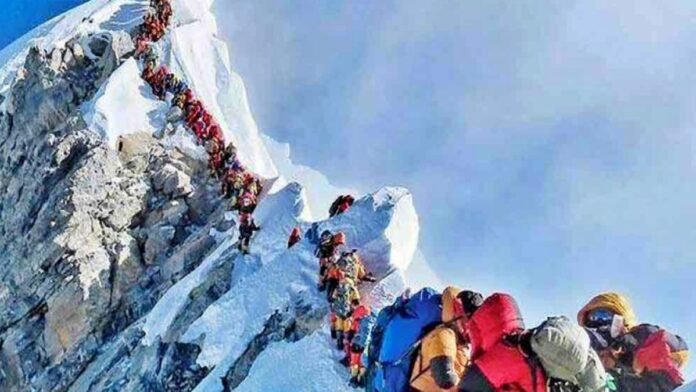
In a historic yet highly controversial milestone for mountaineering, 274 climbers successfully stood atop the summit of Mount Everest in a single day. On Thursday, a massive influx of adventurers scaled the world’s highest peak via the southern route from Nepal. While the Expedition Operators Association of Nepal celebrated the high success rate, the immense bottleneck has reignited intense global scrutiny regarding climber safety and commercial overcrowding on the mountain.
The unprecedented single-day rush shattered the previous record set on May 22, 2019, when 223 climbers reached the summit from the Nepali side. While the 2019 season saw additional climbers ascending simultaneously from the north, this year’s traffic was entirely concentrated on a single path.
Geopolitics and Weather Merge to Create a Perfect Storm
The severe bottleneck on the southern face was dictated by two primary factors: international border restrictions and volatile Himalayan weather.
For this climbing season, China chose not to issue any new permits to international mountaineers, completely sealing off the northern route from the Tibetan side. This restriction forced global expedition agencies to funnel all clients exclusively through Nepal, where the government had issued approximately 500 climbing permits for the season.
Furthermore, a prolonged stretch of poor weather heavily disrupted initial setup operations. Specialized Sherpa teams, traditionally known as “Icefall Doctors,” faced weeks of treacherous conditions while trying to clear massive seracs, blocks of unstable glacial ice, and fix safety ropes. Consequently, the main route to the summit was not fully opened until May 13, weeks later than usual.
“Because the route remained closed for an extended period, an exceptionally large crowd of climbers converged at Base Camp simultaneously,” an official from the Expedition Operators Association of Nepal explained. “As soon as the weather cleared, everyone began their ascent at the exact same time.”
High Risks in the “Death Zone”
With meteorological reports heavily forecasting high, destructive winds for the upcoming weekend, expedition leaders realized they had a highly restrictive window of clear weather. In a rush to avoid the incoming storm, hundreds of climbers made their final push toward the 8,848-meter summit ahead of schedule.
This collective rush exacerbated the overcrowding to a critical level, forcing queues of climbers to wait for hours on narrow, icy ridges. These delays occurred primarily within the “Death Zone,” an altitude above 8,000 meters where the human body cannot adapt, oxygen levels are extremely low, and prolonged exposure is frequently life-threatening.
While officials confirmed that all 274 individuals returned safely from this specific push, veteran mountaineers warn that relying on luck during such extreme bottlenecks is an unsustainable practice. Despite the persistent safety anxieties, the day’s events stand as a monumental, record-breaking chapter in the history of Himalayan exploration.