

































Key Highlights
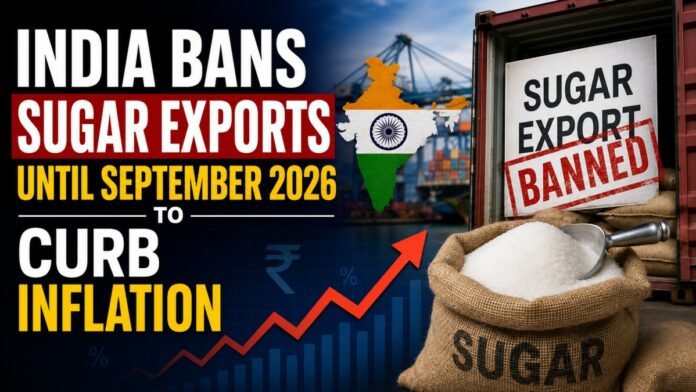
- Policy Reclassification: The Directorate General of Foreign Trade (DGFT) has shifted sugar from the ‘Restricted’ category to ‘Prohibited’ status.
- Duration: The ban remains in effect until September 30, 2026, or until further notice from the Ministry.
- Broad Scope: The order covers all varieties of the commodity, including white, raw, and refined sugar.
- Strategic Carve-outs: Exports to the EU and USA under specific quotas, along with food security shipments to neighboring nations, remain permitted.
In a decisive move to protect the domestic consumer, the Central Government has enacted an immediate ban on the export of all sugar categories. This decision, formalized through a notification by the Directorate General of Foreign Trade (DGFT), reclassifies the commodity’s status to ‘Prohibited’ for the remainder of the 2025,26 marketing year. The primary driver behind this intervention is the urgent need to maintain an adequate buffer for local consumption while tempering the upward pressure on retail prices that has built up over recent months.
The notification applies broadly, ensuring that stocks of raw, white, and refined sugar are retained within the country to meet domestic demand. This policy shift reflects the government’s proactive stance on food inflation, prioritizing the affordability of a kitchen staple for millions of Indian households.
Production Realities and the 2026 Outlook
India currently holds the dual title of the world’s second-largest producer and second-largest exporter of sugar, trailing only Brazil in global rankings. Traditionally, India has been a vital supplier for nations such as Bangladesh, Indonesia, Sri Lanka, and various African countries. However, the current agricultural cycle has presented unexpected challenges.
While initial projections from the Ministry of Agriculture suggested a surplus that would allow for the export of roughly 1.5 million metric tonnes, actual sugarcane yields in key producing states have fallen short of expectations. This decline in production volume forced the government to pivot its strategy, choosing to halt exports rather than risk a domestic shortage. By securing the internal supply now, officials hope to avoid the volatile price spikes often seen during periods of lower agricultural output.
Global Market Implications and Exceptions
The sudden withdrawal of a major global player like India is expected to have a ripple effect on international markets. Market analysts suggest that this decision could trigger a surge in global sugar prices, creating a strategic opening for other major exporters, such as Brazil and Thailand, to increase their footprint in Asian and African markets.
Despite the ban, the government has maintained certain diplomatic and economic commitments. The prohibition does not apply to:
- Trade Quotas: Exports to the European Union and the United States under the CXL and TRQ quotas will continue.
- Advance Authorization: Shipments made under the Advance Authorization Scheme remain active.
- Food Security: Government, to, government shipments intended to support the food security of other nations are still authorized.
- Existing Consignments: Any cargo that was already in the process of being exported or had cleared customs before the notification was granted an exemption to prevent logistical deadlock.