

































Key Highlights
- Formal Dissent: Rahul Gandhi sent a letter to PM Modi registering a formal protest against the selection methodology.
- Lack of Data: The LoP alleged that crucial files, including 360-degree reports and self-appraisals, were withheld.
- Procedural Hurdles: Gandhi was reportedly asked to review dossiers for 69 candidates during the meeting without prior notice.
- Constitutional Role: Gandhi asserted that the Leader of the Opposition is not a “rubber stamp” for pre-determined government choices.
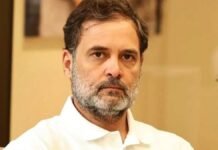
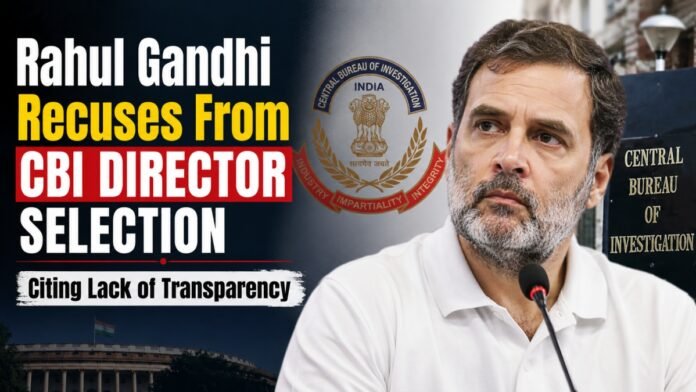
In a significant move that highlights the ongoing friction between the government and the opposition, Rahul Gandhi, the Leader of the Opposition (LoP) in the Lok Sabha, has recused himself from the high-powered committee tasked with selecting the next Director of the Central Bureau of Investigation (CBI). Gandhi took to ‘X’, formerly Twitter, to announce his decision, stating that he could not participate in a process he deemed fundamentally biased.
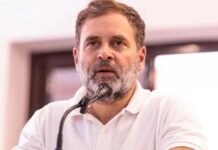
“I have written a letter to Prime Minister Modi registering my dissent regarding the selection process for the CBI Director,” Gandhi stated. He emphasized that his participation in what he described as a compromised procedure would be a violation of his constitutional duties.
The “Rubber Stamp” Controversy
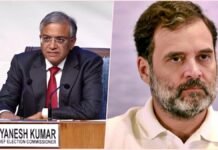
The Director of the Central Bureau of Investigation, a premier central agency, is selected by a statutory three-member panel. This committee is chaired by the Prime Minister and includes the Leader of the Opposition and the Chief Justice of India, or a Supreme Court judge nominated by the CJI.
In his letter to the Prime Minister, Gandhi adopted a stern tone, arguing that the government’s refusal to share candidate information promptly reduced the selection exercise to a mere formality. He explicitly stated that the LoP’s role is to provide meaningful oversight, not to act as a “rubber stamp” meant to blindly endorse decisions already finalized by the executive.
Allegations of Procedural Irregularities
The core of Gandhi’s grievance lies in the alleged lack of transparency regarding candidate backgrounds. The LoP claimed that the government failed to provide the Selection Committee with “360-degree reports” or self-appraisal records of the contenders.
Furthermore, Gandhi revealed that he was presented with a list of 69 potential candidates for the first time during the actual meeting. He argued that scrutinizing the professional integrity and performance history of nearly 70 officers in a single sitting is “practically impossible” and undermines the spirit of the Delhi Special Police Establishment (DSPE) Act.
Context and Latest Implications
This development comes at a time of heightened scrutiny regarding the independence of central investigative agencies. By withholding information without a clear legal basis, Gandhi alleges the government is attempting to “make a mockery” of the process to ensure the appointment of a pre-selected candidate.
Legal experts note that while the committee can proceed with a majority decision, the formal recusal and dissent of the LoP raises questions about the perceived neutrality of the incoming CBI Director. The government has yet to issue an official response to the specific allegations regarding the late disclosure of candidate dossiers.