
































Key Points
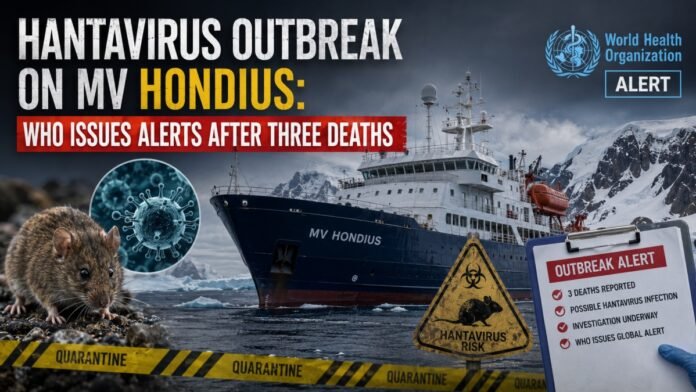
- Three passengers have died following a Hantavirus outbreak on the Dutch ship MV Hondius.
- The WHO has confirmed eight total cases, including five confirmed and three suspected.
- Health alerts are active in 12 countries, including the U.S., UK, and Germany.
- Medical experts from the WHO and ECDC are currently on board conducting screenings.
- The virus is primarily transmitted through rodent contact and is not considered a human-to-human epidemic.
The MV Hondius, a well-known Dutch vessel that recently departed from Argentina, has become the focal point of a serious international health crisis. A cluster of Hantavirus infections has emerged on board, leading to the tragic deaths of three foreign passengers. The incident has mobilized health departments and scientific communities globally, placing them on high alert as they work to contain the spread of this rare but deadly pathogen.
Official Case Count and Symptom Progression
The World Health Organization (WHO) has officially documented eight cases linked to the vessel. Of these, five have been laboratory-confirmed as Hantavirus, while three others remain under investigation as suspected cases.
While the disease initially presents with symptoms mimicking the common flu, including fever and muscle aches, it can rapidly deteriorate into a life-threatening pulmonary condition. Public health officials emphasize that early detection is critical, as the transition from mild symptoms to severe respiratory distress can be sudden and catastrophic.
Global Response and 12-Nation Alert
In response to the travel history of the passengers, the WHO has issued formal alerts to 12 nations, most notably the United Kingdom, the United States, and Germany. These measures were taken after several individuals disembarked at Saint Helena to return to their respective home countries. Although many passengers have transitioned to their destinations without showing symptoms, the long incubation period of the virus necessitates rigorous monitoring.
The timeline of the outbreak traces back to April 6, when the first case was identified in a male passenger. Despite medical intervention, the individual passed away on board on April 11. Subsequent fatalities were reported involving a passenger who traveled to Johannesburg and another case identified in Switzerland, highlighting the international reach of the incident.
Transmission and Prevention: Not a New Epidemic
Addressing public anxiety, the head of the WHO clarified that Hantavirus does not pose a pandemic threat similar to COVID-19. Hantavirus, a zoonotic disease, typically spreads through direct contact with the waste, urine, or saliva of infected rodents.
The WHO noted that transmission primarily occurs in enclosed spaces where rodent activity is present. Crucially, this specific strain does not typically spread from human to human, meaning the risk to the general public remains low as long as the source of the infection is managed.
Ongoing Investigative Measures
To manage the situation on the vessel, a senior WHO expert has boarded the MV Hondius in Cabo Verde. The investigative team is bolstered by two physicians from the Netherlands and a specialist from the European Centre for Disease Prevention and Control (ECDC). This team is tasked with conducting continuous health screenings for all remaining passengers and crew as the ship continues its journey toward the Canary Islands.
Medical Warning: Severe Symptoms and Treatment
The clinical progression of Hantavirus is notoriously deceptive. After the initial onset of fever, the virus begins to weaken the patient’s blood vessels, which can lead to rapid fluid accumulation in the lungs. In these advanced stages, specialized medical equipment such as an Extra-Corporeal Membrane Oxygenation (ECMO) machine is often the only available life-saving intervention.
The WHO has issued strict guidelines to halt the infection chain, emphasizing that the incubation period can last up to six weeks. Public health agencies are currently working in tandem to monitor all exposed individuals and ensure that the MV Hondius is thoroughly sanitized to eliminate any remaining environmental risks.