Key Points
- The Telecom Regulatory Authority of India (TRAI) is developing a single-sign-on system for nationwide public Wi-Fi.
- The initiative aims to fix existing friction in the PM-WANI framework, removing the need for repeated OTP logins.
- Advanced WPA3 security standards will be integrated to protect UPI and mobile banking transactions.
- The project targets a massive increase in public Wi-Fi adoption, which currently stands at just 2% in India.
- New models include ad-supported free access and premium high-speed plans for rural and urban areas.
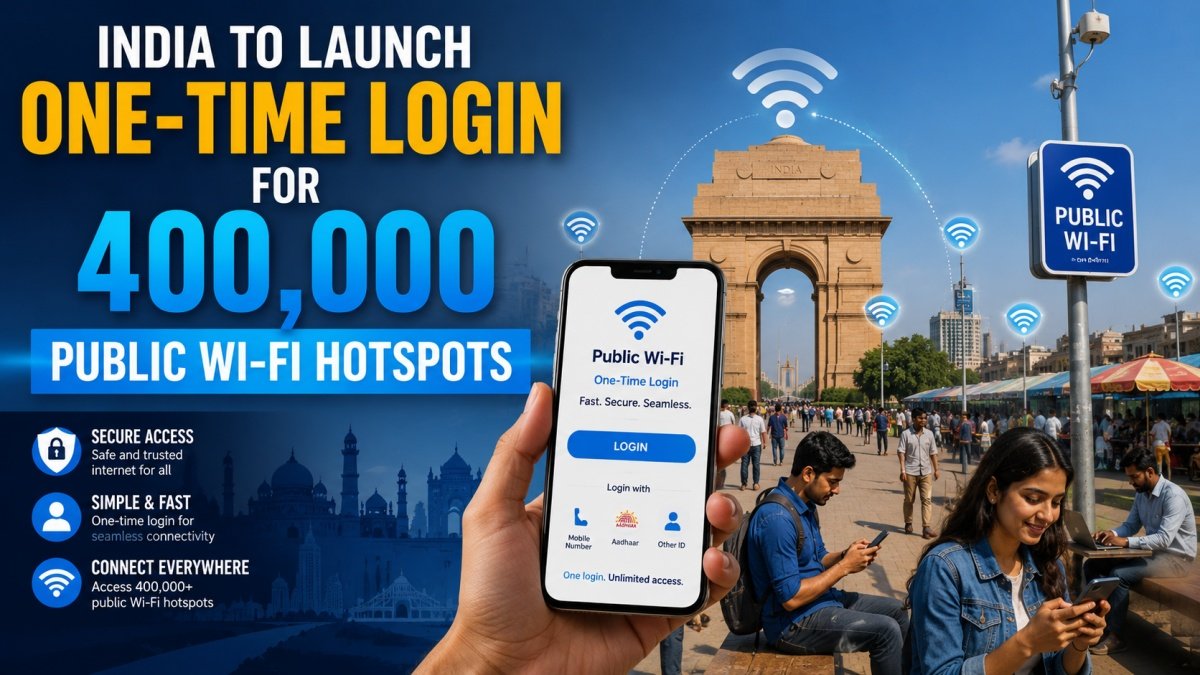
In an era where high-speed internet has transitioned from a luxury to a fundamental necessity, the Government of India is preparing to eliminate one of the biggest hurdles to public connectivity: login fatigue. Currently, users at railway stations, malls, and parks must navigate cumbersome OTP (One-Time Password) processes every time they switch locations. To solve this, a new high-tech framework is being finalized to allow seamless internet roaming across more than 400,000 public Wi-Fi hotspots with a single initial login.
TRAI’s Strategic Roadmap
The Telecom Regulatory Authority of India (TRAI) has taken the lead by releasing a comprehensive consultation paper. This document outlines a move toward a more interoperable and user-friendly ecosystem. By addressing the technical and administrative shortcomings of the current PM-WANI (Prime Minister’s Wi-Fi Access Network Interface) system, TRAI intends to make public internet access not only more accessible but significantly more secure for the average citizen.
Under this proposed system, the fragmentation of public networks will be bridged. Instead of registering a new profile at every individual hotspot, a user’s credentials will be recognized across all participating networks nationwide, mirroring the seamless experience of cellular roaming.
Fortifying Digital Transactions with WPA3
Security remains a primary pillar of this digital expansion. The government has announced that the system will utilize the WPA3 (Wi-Fi Protected Access 3) security standard. This represents a significant upgrade over older protocols, providing robust encryption that is vital for the modern Indian economy.
Experts suggest that, amidst the rising prevalence of cyber fraud, this initiative will prove instrumental in bolstering public trust. By securing the “last mile” of connectivity, the government aims to ensure that digital payments, UPI transactions, and online banking are protected from interception, even on open public networks.
Bridging the Rural-Urban Divide
TRAI’s vision extends far beyond metropolitan centers. The initiative seeks to promote a community-based Wi-Fi model in rural India, designed to deliver low-cost internet to the hinterlands. This framework is expected to create new revenue streams for local network operators through a variety of business models, including:
- Ad-supported access: Providing free basic internet in exchange for viewing brief advertisements.
- Premium tiers: Offering ultra-high-speed data for a small fee.
- Government-backed subsidies: Ensuring connectivity in commercially unviable regions.
Closing the Global Usage Gap
The statistics highlight a massive growth opportunity for the Indian digital market. Despite a population of 1.4 billion, only 2% of Indians currently utilize public Wi-Fi. This stands in stark contrast to global leaders like South Korea, where usage is at 80%, and the United States, which maintains a 70% adoption rate.
According to former BSNL Chairman Arun Srivastava, the success of this system could drastically reduce the data load on already congested mobile networks while making high-speed access more affordable. If implemented successfully, this government initiative is poised to transform India’s internet landscape, turning every public space into a secure, high-speed digital gateway.