
































Key Points
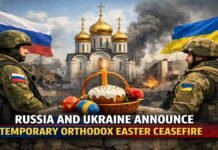
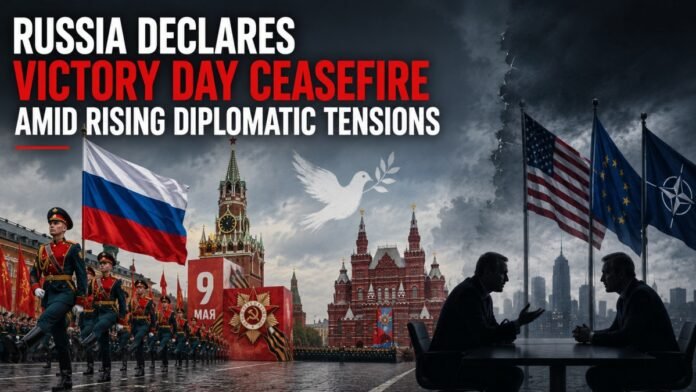
- A ceasefire is in effect from midnight May 8 through May 10 for “Victory Day.”
- President Putin ordered the halt to offensive operations to ensure peaceful commemorations.
- President Zelenskyy mocked the Moscow parade, citing potential drone threats over Red Square.
- Moscow summoned Armenia’s ambassador following the 8th EPC Summit in Yerevan.
- Russian officials warned of “massive strikes” on Kyiv if celebrations are disrupted.
The protracted and destructive war between Russia and Ukraine has taken a significant diplomatic turn as Moscow implements a temporary pause in hostilities. On Thursday, the Russian Ministry of Defense announced the decision to observe a complete ceasefire across the combat zone for several days. This historic measure is intended to commemorate the 81st anniversary of the Soviet victory in the Great Patriotic War, a cornerstone of Russian national identity and a move intended to foster a moment of reflection across the region.
A Presidential Directive for Peace
The temporary truce was established following direct instructions from the President of the Russian Federation, Vladimir Putin. This effort to maintain stability coincides with celebrations marking the 81st anniversary of the Soviet victory in World War II. From midnight on May 8 until May 10, all major offensive operations between the two nations are scheduled to remain suspended. Russia has issued an explicit pledge to maintain absolute peace during this window, ensuring that the commemorative ceremonies can conclude peacefully and without disruption.
Zelenskyy’s Remarks and the Kremlin’s Reaction
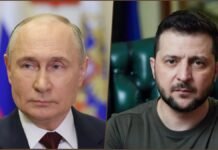
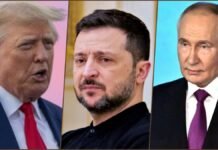
The announcement comes amid heightened rhetoric following the 8th European Political Community (EPC) Summit held in Yerevan on May 4. During the summit, which also addressed the ongoing conflict in Iran and broader European defense security, Ukrainian President Volodymyr Zelenskyy delivered a provocative address. Making a direct reference to Russia’s Victory Parade on Red Square, he suggested that the event might lack military hardware this year due to battlefield strain. Zelenskyy claimed that Moscow harbors an internal fear that Ukrainian drones could, at any moment, appear over the heart of the capital during the festivities.
Maria Zakharova, the spokesperson for the Russian Ministry of Foreign Affairs, issued a stern diplomatic response to these claims. She warned European Union nations that overlooking such aggressive statements is a mistake and accused Western nations of attempting to forcibly alter historical narratives by destroying Soviet-era monuments.
Military Warnings and Strategic Deterrence
The diplomatic clash has been accompanied by severe military warnings from the Kremlin. Senior Russian officials have adopted a hardline stance regarding threats to the Victory Day celebrations. They have issued a clear warning: should a drone attack occur, the Russian military could, without delay, launch a massive and devastating missile strike on the center of Kyiv. Officials explicitly stated that, thus far, Russia has exercised restraint and completely refrained from taking such action, despite possessing the full capability to execute such a strike.
Diplomatic Strain with Armenia
The situation has further strained relations between Moscow and Yerevan, which hosted the recent EPC summit. Following Zelenskyy’s remarks in Armenia, Russia’s Deputy Foreign Minister, Mikhail Galuzin, summoned Armenia’s Ambassador, Gurgen Arsenyan, to a special meeting in Moscow. Russia conveyed a message of categorical indignation, deeming it unacceptable for Armenia to provide a platform for what Moscow described as “terrorist threats” against the Russian state.
While the ceasefire provides a brief window of potential de-escalation, the heightened diplomatic and military posturing suggests that the underlying conflict remains deeply entrenched as both sides eye the post-holiday period.