






























Key Points
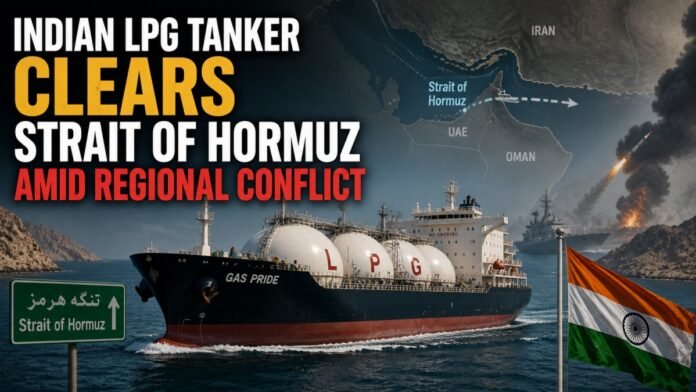
- Successful Transit: The MT Sarv Shakti cleared the high-risk Strait of Hormuz on May 2, 2026, the first major India-bound energy tanker to do so in two weeks.
- Vital Cargo: The vessel is transporting 46,313 metric tonnes of Liquefied Petroleum Gas (LPG) for the Indian Oil Corporation (IOCL).
- Arrival Timeline: Currently in the Gulf of Oman, the tanker is expected to reach the Visakhapatnam gas terminal by May 13.
- Diplomatic Corridor: The passage was secured through direct negotiations with Tehran, utilizing a specific maritime route past Larak and Qeshm islands.
- Domestic Mitigation: India has increased domestic LPG production by 60 percent to 54,000 tonnes daily, though a significant supply gap remains.
As maritime traffic in the Middle East remains largely paralyzed due to the escalating conflict between the United States and Iran, India has secured a vital win for its energy supply chain. The Marshall Islands-flagged LPG carrier, MT Sarv Shakti, safely exited the Strait of Hormuz on Saturday. The vessel, carrying a 20-member crew that includes 18 Indian nationals, is now in open waters heading toward the eastern coast of India.
The successful crossing is particularly significant given the current geopolitical climate, where transit through the waterway has plummeted to just 5 percent of pre-war levels. Since the implementation of the U.S. naval blockade, commercial vessels have faced extreme risks. To ensure safe passage, the Sarv Shakti reportedly broadcast continuous radio messages identifying its Indian crew and destination, a tactical measure used to avoid being caught in the crossfire between regional combatants and U.S. naval forces involved in “Operation Epic Fury.”
Navigating the “Iranian Corridor”
The tanker’s journey followed a precise maritime corridor designated by Iranian authorities, passing near the strategic islands of Larak and Qeshm. This successful navigation comes after a tense period in April, when Iranian forces reportedly opened fire on several vessels, including Indian, linked ships, on April 18. That incident led to a two-week “dry spell” where no major energy tankers managed to exit the Persian Gulf for Indian ports.
The safe departure of the Sarv Shakti is the result of intensive diplomatic efforts by the Ministry of External Affairs and the Ministry of Ports, Shipping and Waterways. These negotiations have aimed to evacuate at least eight stranded Indian gas tankers. While the crude tanker Desh Garima made a similar exit earlier in April by disabling its tracking systems, the Sarv Shakti represents a more transparent diplomatic success.
Addressing India’s Deepening Energy Crisis
The arrival of 46,313 tonnes of LPG is a much-needed reprieve for the Indian Oil Corporation (IOCL). While this single shipment meets only about half a day of India’s national consumption, it is a crucial signal that energy lifelines are beginning to reopen. India, the world’s third-largest oil importer, has seen its household and commercial gas supplies stretched to the breaking point.
To counter the import disruptions, Petroleum Minister Hardeep Puri confirmed that India has successfully ramped up domestic production by 60 percent, reaching 54,000 tonnes per day. However, with national demand hovering around 80,000 tonnes, the country still faces a significant daily deficit. The government continues to prioritize the safety of the nearly 3,000 Indian seafarers in the region, with the Directorate General of Shipping maintaining 24-hour monitoring of all Indian-bound vessels still navigating the volatile Gulf region.