
































Key Highlights
- Eco-Friendly Fuel: DME is a synthetic, clean-burning alternative to traditional LPG.
- Domestic Production: Manufactured from indigenous coal, biomass, and agricultural waste.
- Seamless Integration: Fully compatible with existing gas stoves and cylinders.
- Economic Independence: Reduces reliance on volatile and expensive fuel imports.
- Zero Hardware Changes: Up to 20% DME blending requires no modifications to the current infrastructure.
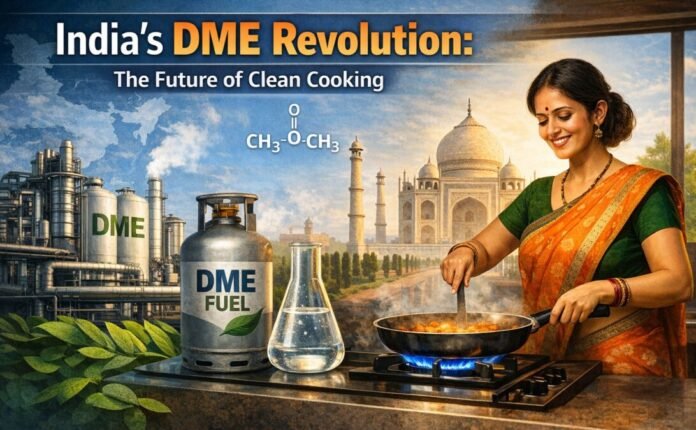
For decades, Liquefied Petroleum Gas, LPG, has been the primary fuel for Indian households, but as of 2026, a cleaner and more cost-effective rival is taking center stage. Dimethyl Ether, DME, is rapidly transitioning from a laboratory prospect to a mainstream energy solution. Unlike LPG, which India must import in massive quantities to meet domestic demand, DME can be synthesized entirely within national borders using local resources.
Understanding DME: The Synthetic Powerhouse
DME is a synthetic fuel that mirrors the physical properties of LPG, meaning it remains liquid under pressure but converts to a clean gas for cooking. What sets it apart is its versatility in production. Often referred to as a “future-ready” energy source, DME can be derived from various feedstocks, including high-ash coal, agricultural stubble, forest biomass, and even captured industrial CO2 emissions. This makes it a critical tool in India’s circular economy, turning waste into high-value fuel.
Compatibility and Consumer Convenience
One of the most significant hurdles for any new fuel is the cost of infrastructure. However, DME overcomes this by offering near-perfect compatibility with the existing LPG ecosystem. Recent government-led trials have confirmed that Indian households do not need to replace their burners, pipelines, or cylinders to switch to DME. Its performance in terms of heating value and flame stability is virtually indistinguishable from LPG, ensuring a smooth transition for the general public.
Health and Environmental Dividends
The move toward DME is as much about public health as it is about energy. Traditional fuels often leave behind soot and toxic fumes, but DME combustion is remarkably clean. It produces negligible particulate matter and zero sulfur oxides. For the home cook, this means a kitchen free of black residue on cookware and significantly improved indoor air quality, which is expected to reduce respiratory issues across rural and urban sectors alike.
Strengthening National Energy Security
India currently ranks as one of the world’s largest importers of LPG, leaving the national economy vulnerable to global price fluctuations and geopolitical instability. By scaling up the “National DME Mission,” India is poised to save billions in foreign exchange. Utilizing the country’s vast coal reserves and agricultural surplus to produce DME transforms a liability into a strategic asset, moving the nation closer to the “Atmanirbhar Bharat” (Self-Reliant India) vision in the energy sector.
The Roadmap to 2030
The transition is currently being managed through a phased blending strategy. Energy experts and policymakers have cleared the path for an immediate 20% DME-LPG blend, which can be distributed through existing supply chains without any technical adjustments. As production facilities ramp up across industrial hubs, this blending percentage is expected to rise, eventually offering a path toward 100% DME usage for industrial and domestic heating by the end of the decade.