



































Key Points
- A magnitude 7.5 earthquake struck at 4:53 PM JST off the Sanriku coast, at a shallow depth of 10 kilometers.
- Tsunami waves of 80 centimeters have already been recorded at Kuji Port in Iwate, with potential surges of up to 3 meters still forecasted.
- Prime Minister Sanae Takaichi has established an emergency task force and urged coastal residents to seek immediate shelter.
- High-speed Shinkansen services are suspended between Tokyo and Shin-Aomori, while regional nuclear plants report no abnormalities.
- The tremor registered as “Upper 5” on Japan’s seismic intensity scale, causing significant disruption to infrastructure and power.
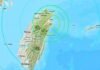
On Monday afternoon, April 20, 2026, a massive earthquake sent shockwaves through northern and northeastern Japan, sparking widespread panic and immediate coastal evacuations. The Japan Meteorological Agency (JMA) confirmed the quake registered a preliminary magnitude of 7.5, with its epicenter located off the Sanriku coast at a depth of approximately 10 kilometers. The shallow nature of the tremor has heightened the risk of destructive tsunami waves, which are now being monitored by authorities across the Pacific coast.
Tsunami Threat and Immediate Impacts
Within an hour of the initial tremor, a tsunami wave measuring 80 centimeters reached Kuji Port in Iwate Prefecture. Smaller waves of 40 centimeters were also recorded in other coastal zones. Despite these initial readings, the JMA maintains a high-level warning for Aomori, Iwate, and Hokkaido, where waves reaching up to 3 meters (10 feet) remain a serious possibility.
Residents in these high-risk areas have been ordered to flee to elevated inland areas or designated vertical evacuation towers. In coastal harbors, ships were seen moving toward the open sea to avoid being crushed against docks by the incoming surges. Authorities have warned that tsunami waves can arrive in multiple pulses, and the first wave is often not the largest.
Government and Emergency Response
Prime Minister Sanae Takaichi addressed the nation from her office in Tokyo, delivering a stern appeal for safety. She urged citizens in affected regions to prioritize their lives and move to higher ground without delay, regardless of whether a wave is immediately visible. The government has placed disaster management teams on the highest alert level, and rescue squads are currently being deployed to assess structural damage in northern prefectures.
Under Japan’s unique seismic intensity scale, the quake was classified as an “Upper 5,” a level that makes it difficult for individuals to remain standing and can cause unreinforced concrete walls to collapse.
Infrastructure and Nuclear Safety
The earthquake has caused immediate and significant disruptions to Japan’s transportation network. JR East has suspended the Tohoku Shinkansen bullet train service between Tokyo and Shin-Aomori to allow for safety inspections of the tracks. Local rail lines and major highways in the Tohoku region have also been closed as a precautionary measure.
Critical eyes have turned to the region’s nuclear facilities, particularly given the memory of previous disasters. Operators of the Higashidori and Onagawa nuclear plants, as well as the Fukushima Daiichi and Daini stations, have reported that no abnormalities or radiation leaks have been detected. Monitoring systems remain active to ensure the continued stability of these sites during anticipated aftershocks.
A Region on High Alert
Japan’s position along the Pacific “Ring of Fire” makes it one of the most seismically active nations in the world. The JMA has cautioned the public that aftershocks of a similar magnitude could strike within the next week, a common occurrence following a 7.5 magnitude event. As of Monday evening, emergency bulletins continue to dominate national television, guiding residents through evacuation routes as the nation waits for the tsunami threat to subside.