
































Key Points
- Naval Nuclearization: Kim Jong Un oversaw a two,day inspection of the Choe Hyon at Nampo Shipyard, following successful strategic cruise missile tests.
- Military Expansion: The new 5,000-ton class vessel is the first of a planned fleet, with Pyongyang aiming to produce two such warships annually.
- Russian Technical Support: International observers believe the destroyer’s advanced systems were developed through deepening military cooperation with Moscow.
- Geopolitical Timing: The move comes as the U.S. and Israel remain embroiled in a high,stakes conflict with Iran, following the February 28 strikes.
- Conditional Diplomacy: Kim has signaled a willingness to talk with the Trump administration only if Washington abandons its demand for “complete nuclear disarmament.”
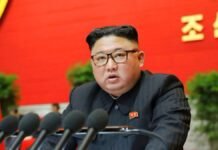
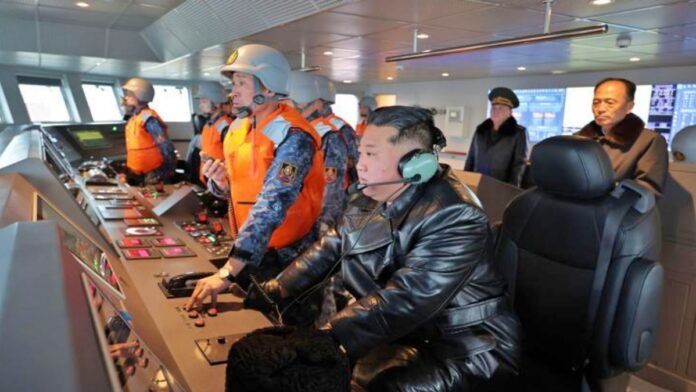
As the devastating conflict between Iran, Israel, and the United States pushes the global security architecture to a breaking point, North Korea is moving aggressively to cement its status as a maritime nuclear power. On March 4, 2026, state media confirmed that Kim Jong Un completed a rigorous two-day inspection of the country’s most advanced warship to date. In a climate where the international community is distracted by the humanitarian crisis in the Middle East, Pyongyang’s latest move suggests a calculated effort to open a secondary “naval front” of deterrence.
The Power of the Choe Hyon
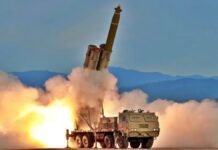
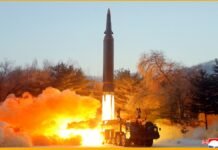
The Choe Hyon, the lead vessel in a new series of 5,000-ton destroyers, represents a quantum leap in North Korean naval engineering. During his visit to the Nampo Shipyard, Kim observed the test firing of “strategic” cruise missiles, a term Pyongyang reserves for weapons capable of carrying nuclear warheads.
Equipped with 74 vertical launch system (VLS) cells and advanced phased array radars, the destroyer is designed for preemptive strikes and maritime sovereignty protection. Kim Jong Un described the vessel as a “new symbol of sea defense,” noting that the successful integration of nuclear capabilities into the navy is a radical shift that hasn’t been achieved in half a century.
The Russian Connection and Future Ambitions
Military analysts in Seoul and Washington have raised alarms regarding the sophisticated design of the Choe Hyon, which bears hallmarks of Russian technical assistance. This collaboration appears to be a byproduct of the strategic partnership signed between Kim and Moscow last year.
To maintain this momentum, Kim has ordered his scientists to scale up production, setting a target of two modern warships per year for the next five years. While some experts remain skeptical about the full operational readiness of these vessels, the rapid relaunch of the second ship in this class, the Kang Kon, indicates that Pyongyang is prioritizing speed and volume in its naval buildup.
A Message to Washington
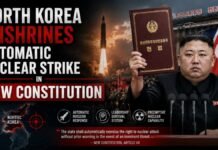
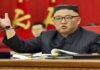
The timing of these tests serves as a direct warning to the United States and its Asian allies. Kim Jong Un’s rhetoric has shifted, emphasizing that while he remains open to dialogue with President Donald Trump, the terms have fundamentally changed. Pyongyang no longer views nuclear disarmament as a viable topic for negotiation. Instead, Kim is demanding that the U.S. recognize North Korea as a permanent nuclear state and cease its “hostile policy,” particularly in light of the recent U.S. military actions in Iran.
Global Stability at Risk
The world is already reeling from the “law of the mighty” being exercised in the Middle East, where the civilian toll, including the tragic deaths of 165 students and staff in Minab, has shocked the global conscience. North Korea’s opportunistic military expansion adds a layer of extreme volatility to an already fragile international system. There is a growing fear that if these localized conflicts coalesce, the post, World War II order could be permanently replaced by a multipolar era of unchecked military force.