


























Key Points
- 21-hour marathon talks between the U.S. and Iran in Islamabad conclude without a deal.
- U.S. Vice President JD Vance departs Pakistan after presenting a “final and best offer” to Tehran.
- Two tankers, including Pakistan’s Shalimar, execute a sudden U-turn near Larak Island.
- Incident follows Pakistan’s deployment of 13,000 troops and fighter jets to Saudi Arabia.
- Maritime experts warn of a “controlled system” in the Strait, not a return to open trade.
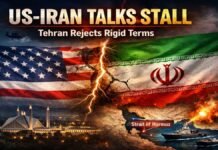
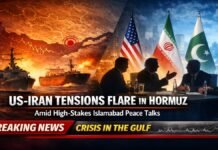
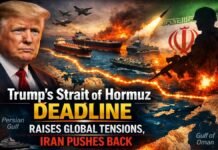
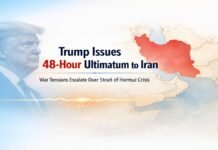
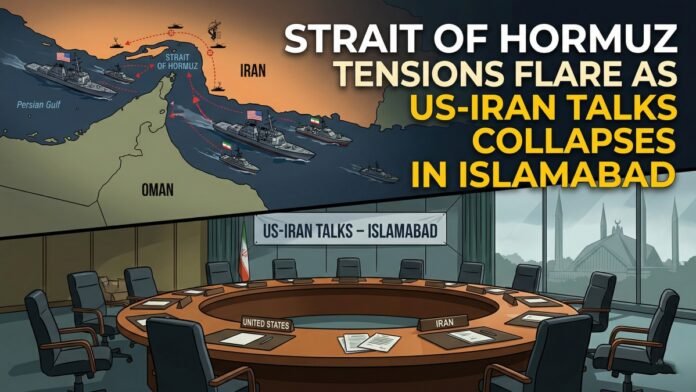
The fragile hope for a diplomatic resolution to the Middle East maritime crisis evaporated on Sunday following the collapse of high-stakes negotiations in Islamabad. The breakdown of talks between the United States and Iran, hosted by Pakistan, has triggered immediate ripples across the world’s most vital energy corridor, the Strait of Hormuz, where multiple supertankers have been forced to abandon their transit routes amid renewed security threats.
Strategic U-Turn at Larak Island
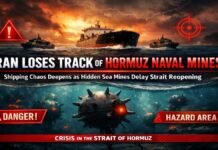
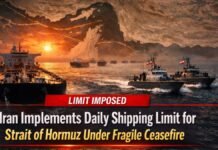
The impact of the diplomatic failure was felt almost instantly at sea. On Sunday, ship-tracking data revealed a startling shift in traffic patterns near Iran’s Larak Island. Three massive oil tankers, which had previously received clearance from Iranian authorities to transit from the Gulf of Oman toward the Persian Gulf, abruptly changed course.
The Agios Fanourios-I and Pakistan’s Shalimar performed 180-degree maneuvers at the mouth of the Strait, one of the most sensitive maritime choke points globally. Both vessels are currently steaming toward the United Arab Emirates for safety. Only one vessel, the Mombasa-B, proceeded into the Persian Gulf via the route approved by the Iranian Revolutionary Guard Corps (IRGC). While the exact directives behind these U-turns remain speculative, the timing coincides perfectly with the U.S. delegation’s departure from Islamabad, suggesting that shipping companies are reacting to an immediate escalation in the “threat environment.”
The Failed “Final Offer” in Islamabad
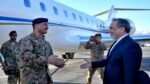
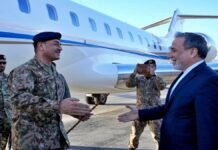
The diplomatic standoff in Islamabad catalyzed the maritime retreat. U.S. Vice President JD Vance, leading the American delegation, departed on Sunday after a grueling 21-hour session. Vance characterized the U.S. proposal as a “final and best offer,” centering on a fundamental commitment from Tehran to abandon its nuclear ambitions and ensure the unconditional reopening of the Strait of Hormuz.
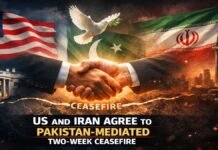
Tehran, however, rejected these terms. Iranian state media described the American stance as “unbalanced” and “excessive,” particularly regarding demands over the control of international shipping lanes. Although a two-week ceasefire was intended to facilitate these talks, the lack of a formal agreement has left the maritime industry in a state of “controlled chaos,” where vessels are deterred from passage rather than physically blocked.
Pakistan’s Strategic Pivot
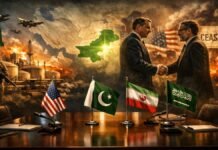
The involvement of the Pakistani-flagged vessel Shalimar is especially significant given Islamabad’s shifting role in the conflict. On Saturday, just hours before the talks concluded, Saudi Arabia announced the arrival of a massive Pakistani military contingent, including 13,000 troops and 10 to 18 fighter jets, at King Abdulaziz Air Base.
This deployment, executed under a mutual defense pact, signals Pakistan’s pivot toward Riyadh even as it attempted to mediate the U.S.-Iran dispute. Analysts suggest the Shalimar’s retreat may be a direct result of increased friction between Tehran and Islamabad following this military move. As political and military alliances shift, the safety of international waterways remains the primary casualty, leaving the prospect of a permanent peace deal more uncertain than ever before.