


































Key Highlights
- Tariff Rollback: US reciprocal tariffs on Indian goods slashed from 50% to 18%, effective February 7, 2026.
- Energy Pivot: India agrees to phase out Russian oil imports in favor of US and Venezuelan energy supplies.
- Trade Commitment: New Delhi pledges to purchase $500 billion in American goods over the next five years.
- Market Access: Removal of non-tariff barriers for US medical devices, ICT products, and agricultural exports.
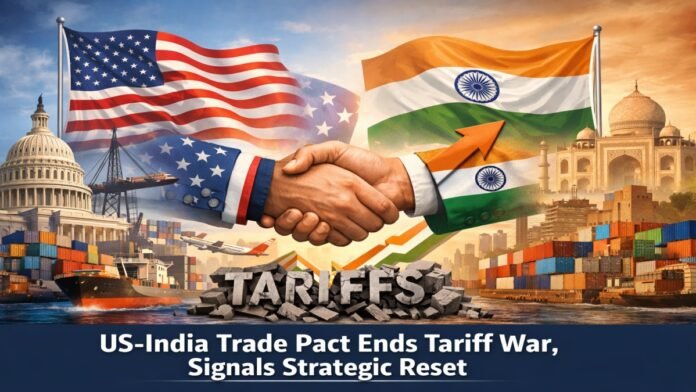
The year-long trade impasse between India and the United States formally concluded on Saturday, following a joint statement issued by the White House. The new interim agreement not only dismantles the aggressive tariff structures of the past year but also marks the beginning of a deeper strategic phase in economic cooperation between the world’s two largest democracies.
As part of the immediate implementation, US President Donald Trump signed an executive order removing the 25 percent “penalty” tariff previously imposed on India for its continued procurement of Russian oil. With this additional levy gone, the standard reciprocal tariff on Indian-made products has been set at 18 percent, down from the peak of 50 percent reached in August 2025. This reduction is expected to provide a vital lifeline to Indian exporters who have faced immense margin pressure over the last six months.
Economic Impact and Sectoral Relief
The move to an 18 percent tariff rate is a significant victory for India’s low-margin, labor-intensive sectors. Industry analysts suggest that Indian footwear, leather goods, and textiles will now hold a competitive edge in the American market, particularly against regional rivals like Vietnam (20 percent) and China (30–35 percent). Under the full scope of the agreement, these tariffs could eventually be eliminated entirely.
In exchange for this relief, India has committed to a strategic shift in its energy security policy. Sources indicate that India will significantly reduce its reliance on Russian crude, pivoting its procurement toward US shale oil and LNG, as well as potential supplies from Venezuela. President Trump highlighted that this energy shift is intended to further isolate Russia and aid in ending the conflict in Ukraine.
Opening the Indian Market
The agreement outlines a clear path for American products to enter the Indian domestic market with fewer restrictions. Key provisions include:
- Agricultural Exports: India will lower barriers for American almonds, apples, walnuts, and soybean oil.
- Aviation and Industry: Large-scale orders for US-based manufacturers like Boeing are anticipated as part of India’s $500 billion purchase commitment.
- Technology and Defense: Increased cooperation in high-tech trade, including GPUs and data center equipment, alongside a 10-year defense collaboration framework.
Addressing ‘Invisible’ Barriers
A major component of the deal focuses on non-tariff barriers, which have historically been a point of friction. India has agreed to a six-month review period to align domestic standards and testing procedures with US protocols for medical devices and information technology products. By simplifying import licensing for ICT goods, the agreement seeks to integrate India more deeply into the global technology supply chain, positioning it as a viable alternative to Chinese manufacturing.