































Key Points
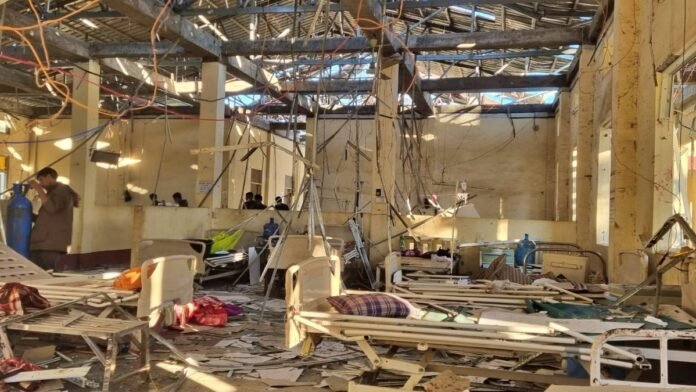
- Military airstrike on Rakhine State hospital kills 30, injures 70 on December 10, 2025
- Arakan Army fighters were present at the hospital during the attack
- Myanmar civil war began February 1, 2021, after military coup against Aung San Suu Kyi’s elected government
- Rebel groups control 40-50% of territory, including border regions in Shan and Rakhine states
- Military launched major 2025 counteroffensive, recaptured Kyaukme town from TNLA in October
- China provides military assistance to junta to protect pipeline and rare earth mineral interests
- Civilian attacks include September 2025 school bombing (22 students killed) and October festival attack (32-40 deaths)
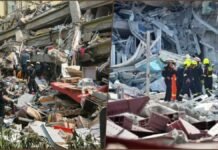
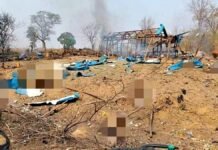
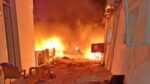
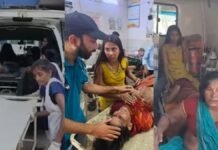
The December 10 airstrike targeted a hospital in Rakhine State, a region that has become a major flashpoint in Myanmar’s ongoing civil conflict. Eyewitnesses reported that the facility was treating both civilians and injured Arakan Army fighters when military aircraft dropped multiple bombs, causing the building to collapse. Rescue workers struggled through the night to extract survivors from the rubble, while medical supplies and equipment were destroyed.
The Arakan Army, one of Myanmar’s most powerful ethnic armed organizations, has been fighting for greater autonomy in Rakhine State for decades. Their presence at the hospital reflects the brutal reality of the conflict, where medical facilities often serve as the only safe haven for wounded combatants. International humanitarian law explicitly prohibits attacks on hospitals, yet Myanmar’s military has repeatedly targeted healthcare facilities throughout the conflict. The silence from military authorities suggests they are either preparing a justification or deliberately avoiding accountability for what could constitute a war crime.
Origins of the Civil War
Myanmar’s current civil war erupted on February 1, 2021, when the military, known as the Tatmadaw, staged a coup against the democratically elected government led by Aung San Suu Kyi’s National League for Democracy (NLD). The NLD had won a landslide victory in the November 2020 elections, securing 396 of 476 parliamentary seats. The military, led by Senior General Min Aung Hlaing, seized power, alleging electoral fraud without providing credible evidence.
The coup triggered massive nationwide protests, which the military brutally suppressed using live ammunition, arbitrary arrests, and torture. Over 5,400 civilians have been killed since the coup, according to the Assistance Association for Political Prisoners. The military’s crackdown transformed peaceful protests into armed resistance, plunging the country into its most severe conflict since independence in 1948.
Rebel Groups and Territorial Control
In response to the coup, citizens formed the People’s Defence Force (PDF), the armed wing of the National Unity Government (NUG), which was established by ousted lawmakers and pro-democracy activists. The PDF operates as a decentralized network of local defense groups, conducting guerrilla attacks on military targets across the country.
Several ethnic armed organizations have also intensified their decades-long struggles for self-determination. The Karen National Union (KNU) controls significant territory along the Thai border, while the Kachin Independence Organization (KIO) operates in northern Myanmar. The Ta’ang National Liberation Army (TNLA), Shan State Progress Party, and Arakan Army have formed a loose alliance, coordinating attacks against the military.
By 2024, rebel groups had seized control of approximately 40-50% of Myanmar’s territory, particularly in border regions like Shan State, Kachin State, and Rakhine State. They captured key towns, border crossings, and resource-rich areas, challenging the military’s authority. However, the junta retained control over major cities like Yangon, Mandalay, and the capital Naypyidaw, where it maintains its administrative apparatus and military command centers.
Military Counteroffensive and China’s Role
In 2025, the military launched a large-scale counteroffensive to reclaim lost territory, deploying airstrikes, artillery bombardments, and ground assaults. In October 2025, the military recaptured Kyaukme town in Shan State from the TNLA after weeks of intense fighting that displaced thousands of civilians. The town’s strategic location along the Mandalay-Lashio highway made its recapture a symbolic victory for the junta.
🚨 #BreakingNews – Airstrike on Mrauk-U Hospital
— Khine Thu Kha (@KhineThuKha) December 10, 2025
On December 10, 2025, at approximately 9:13 p.m., the People’s Hospital in Mrauk-U, Arakan State, was struck by an airstrike carried out by the Myanmar junta’s air force.
Preliminary information indicates that around ten patients… pic.twitter.com/FTm4Sx4UtQ
China has emerged as a crucial supporter of the Myanmar military, providing weapons, ammunition, and diplomatic cover at international forums. Beijing’s interests include protecting the China-Myanmar Economic Corridor, which includes oil and gas pipelines from Kyaukpyu to Yunnan, and rare earth mineral projects in Kachin State. Chinese officials have pressured rebel groups to cease attacks on these economic assets, while supplying the military with drones and armored vehicles. This support has dealt a significant blow to rebel advances and prolonged the conflict.
Civilian Casualties and Systematic Targeting
Civilians have borne the brunt of the military’s scorched-earth tactics. In September 2025, a military airstrike hit a school in Rakhine State, killing 22 students and 3 teachers. The attack occurred during morning assembly, with witnesses reporting that no rebel fighters were present. In October 2025, a Buddhist festival in Chaung-U Township, Sagaing Region, was attacked, resulting in 32 to 40 deaths, including women and children. The military claimed it targeted PDF fighters, but survivors described indiscriminate shelling of a civilian gathering.
Fighting continues to rage in Kayah State, where the Karenni Nationalities Defence Force has resisted military advances. The United Nations estimates that over 3 million people have been displaced internally, with another 1.5 million seeking refuge in neighboring countries. Humanitarian access remains severely restricted, with the military blocking aid deliveries to conflict zones.
International Response and Latest Developments
The international community has condemned the hospital attack, with the UN Special Rapporteur on Myanmar calling for an immediate investigation and accountability. The Association of Southeast Asian Nations (ASEAN) has expressed “deep concern” but remains divided on imposing sanctions. The United States and European Union have expanded sanctions targeting military-owned enterprises, though their impact on the ground remains limited.
As of December 11, 2025, the Arakan Army has vowed retaliation for the hospital strike, while the NUG has called for increased international arms embargo against the junta. Humanitarian organizations warn that the targeting of medical facilities could constitute crimes against humanity, urging the International Criminal Court to expedite its investigation. The conflict shows no signs of abating, with both sides preparing for intensified fighting in the dry season.