






























Key Points:
- Shehbaz Sharif’s participation in Trump’s “Board of Peace” draws fierce criticism as opposition calls it betrayal of principles
- Former UN ambassador Maliha Lodhi questions board’s credibility while ex-law minister Babar Awan terms it betrayal of Palestinian cause
- Israel’s inclusion creates diplomatic sensitivity given Pakistan’s historical non-recognition of the Jewish state
- Former senator Mustafa Nawaz Khokhar challenges validity of decision made without parliamentary approval or public debate
- Journalist Baqir Sajjad labels move as biggest example of “political hypocrisy” in Muslim world
- Trump positions board as potential alternative to United Nations, raising questions about Pakistan’s long-term foreign policy alignment
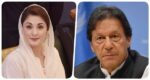
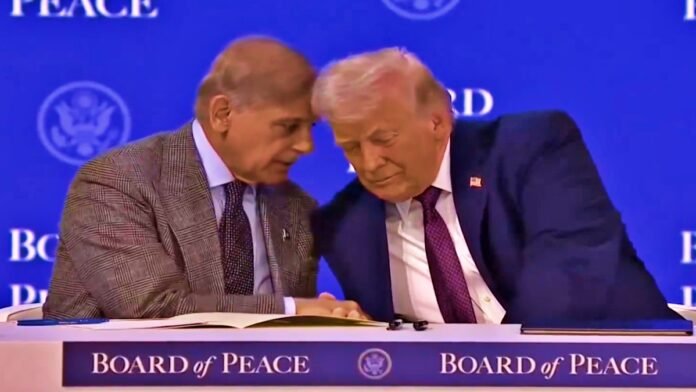
Prime Minister Shehbaz Sharif’s decision to join US President Donald Trump’s newly launched “Board of Peace” has triggered a severe political crisis in Pakistan, with opposition leaders, former diplomats, and intellectuals accusing the government of compromising national principles for diplomatic appeasement.
The controversy erupted after Trump unveiled the international body during the World Economic Forum in Davos, positioning it as a potential alternative to the United Nations. Sharif’s immediate acceptance of membership has been condemned across Pakistan’s political spectrum as an act of “flattery” toward the US president, particularly given the board’s controversial composition and objectives.
Diplomatic Credibility Under Scrutiny
Maliha Lodhi, Pakistan’s former ambassador to the United Nations and a respected diplomatic figure, has raised serious questions about the board’s legitimacy and strategic value. Her criticism carries significant weight given her extensive experience in international relations and deep understanding of global institutional frameworks. Lodhi’s skepticism reflects broader concerns within Pakistan’s foreign policy establishment about aligning with an untested body that challenges existing multilateral structures.
Former Law Minister Babar Awan has been more direct in his condemnation, describing the decision as a “betrayal of the Palestinian cause.” Awan alleged that Pakistan has agreed to sit alongside nations that should be held accountable for war crimes, merely to please Trump. He characterized the move as a historical blunder that undermines Pakistan’s moral standing on one of the most sensitive issues in Muslim politics.
Israel Factor Intensifies Controversy
The most explosive dimension of this diplomatic crisis involves Israel’s participation in the board. Pakistan has maintained a steadfast policy of non-recognition toward Israel since its creation, a position rooted in solidarity with the Palestinian people. By joining an organization that includes Israel as a member, the Sharif government has effectively circumvented this long-standing diplomatic position, creating a de facto normalization without parliamentary debate or public consultation.
Former Senator and constitutional lawyer Mustafa Nawaz Khokhar has declared the decision invalid, arguing that such a major international commitment requires democratic process and parliamentary approval. His legal challenge highlights concerns that the executive branch overstepped its authority by making a strategic foreign policy shift without legislative oversight.
Accusations of Political Hypocrisy
Journalist Baqir Sajjad has called the move the biggest example of “political hypocrisy” in the Muslim world, noting the irony of countries that claim to champion Palestinian rights engaging in what he described as transparent flattery of Trump. This criticism resonates with widespread public sentiment that Pakistan’s leadership is sacrificing principles for political expediency.
The opposition’s fierce reaction reflects deeper anxieties about Pakistan’s strategic autonomy. Critics argue that joining Trump’s board, which is presented as an alternative to the UN Charter, could compromise the country’s independent foreign policy and align it too closely with US interests at a time when global power dynamics are shifting.
Long-Term Foreign Policy Implications
The Sharif government’s decision carries significant implications for Pakistan’s international positioning. While Trump stated the board would work in coordination with the United Nations, its fundamental premise of replacing or supplementing global institutions raises questions about Pakistan’s commitment to multilateralism.
Pakistan’s inclusion in an organization that challenges the relevance of established global institutions could alienate traditional allies and partners who remain committed to the UN system. The move may also affect Pakistan’s relationships within the Muslim world, particularly with nations that have maintained stronger positions on Palestine.
As the controversy intensifies, the Sharif government faces mounting pressure to justify its decision to both domestic audiences and international partners. The opposition has signaled it may challenge the move through parliamentary channels, potentially creating a protracted political crisis that could destabilize the already fragile coalition government.
The unfolding situation demonstrates how personal diplomacy and summit initiatives can create complex challenges for nations balancing principle, pragmatism, and public opinion in an increasingly polarized global environment.