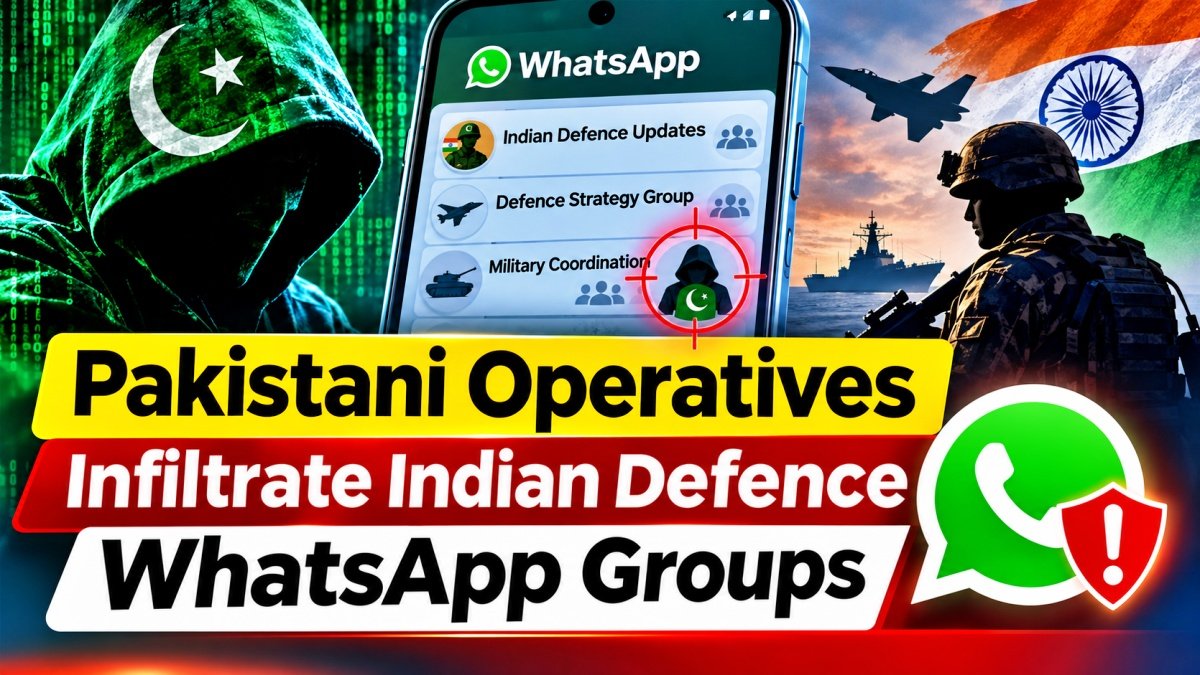
Security agencies have detected a targeted cyber-espionage operation where Pakistani operatives infiltrated private WhatsApp groups used by Indian defence and paramilitary officials.
Key Points
- Group Infiltration: Operatives entered approximately 13-14 private groups used by security forces.
- Fake Identity: One operative posed as a DRDO scientist named Sonia to gather sensitive data.
- Audit Orders: Authorities have ordered a comprehensive cleanup of all social communication platforms.
- Cyber Hygiene: Officials have been instructed to strictly avoid sharing confidential data on social media.
Cyber-Espionage Operation Detected
NEW DELHI: Security agencies have uncovered a sophisticated cyber-espionage attempt by Pakistan-based intelligence operatives (PIOs) targeting Indian security infrastructure. The operatives successfully infiltrated between 13 and 14 private WhatsApp groups used by personnel from the defence forces, Central Armed Police Forces (CAPFs), and various defence-civilian officials.
The operation was described as a targeted strike against individuals performing sensitive security duties. Investigators believe the PIOs utilized fake or hacked Indian mobile numbers to gain access. Once inside, these operatives remained as silent members, monitoring ongoing conversations and observing the documents shared within the private forums.
Impersonation of DRDO Scientist
In a notable instance of deception, officials revealed that one Pakistani operative joined a group of defence-civilian officials by posing as a scientist from the Defence Research and Development Organisation (DRDO). The operative used the alias Sonia to establish a presence within the group.
Authorities suspect that sensitive information may have been shared within this specific group. There are also concerns that some of this data might have been exchanged for monetary gain, highlighting a multi-layered threat involving both espionage and potential financial fraud.
Government Audit and Security Protocols
Following the detection of these breaches, the government has issued immediate orders for a comprehensive audit and cleanup of all social communication platforms used by security agencies. All forces and defence-civilian organisations have been directed to identify and remove any unknown members from their respective groups.
A senior official confirmed that strict instructions have been issued to ensure that no official or confidential information is shared on social media platforms. The government has also reiterated fixed guidelines regarding cyber hygiene to prevent future unauthorized access.
Broader Security Concerns
The incident has prompted a wider alert regarding digital privacy. According to reports from Sambad English, the Home Ministry has raised alarms over WhatsApp Web sessions, citing concerns over Pakistani espionage and potential fraud. This follows a broader trend of warnings regarding the risks of leaving web sessions logged in on unsecured devices.
Security experts suggest that the move towards using unofficial platforms for communication creates significant vulnerabilities. The current crackdown emphasizes the need for secure, encrypted, and government-approved channels for all sensitive departmental communications.
Context of Defence Cyber Security
The Defence Research and Development Organisation (DRDO) is India’s premier research and development agency under the Ministry of Defence. It is tasked with developing advanced technologies for the armed forces, making its personnel and internal communications high-value targets for foreign intelligence agencies.
The use of end-to-end encrypted messaging apps like WhatsApp by security personnel has become common for rapid communication. However, the infiltration of these groups by Pakistan-based operatives underscores the risk of ‘social engineering’, where spies use fake identities to gain trust and access to internal networks. This incident highlights the ongoing need for rigorous digital security training for all personnel handling sensitive national security data.