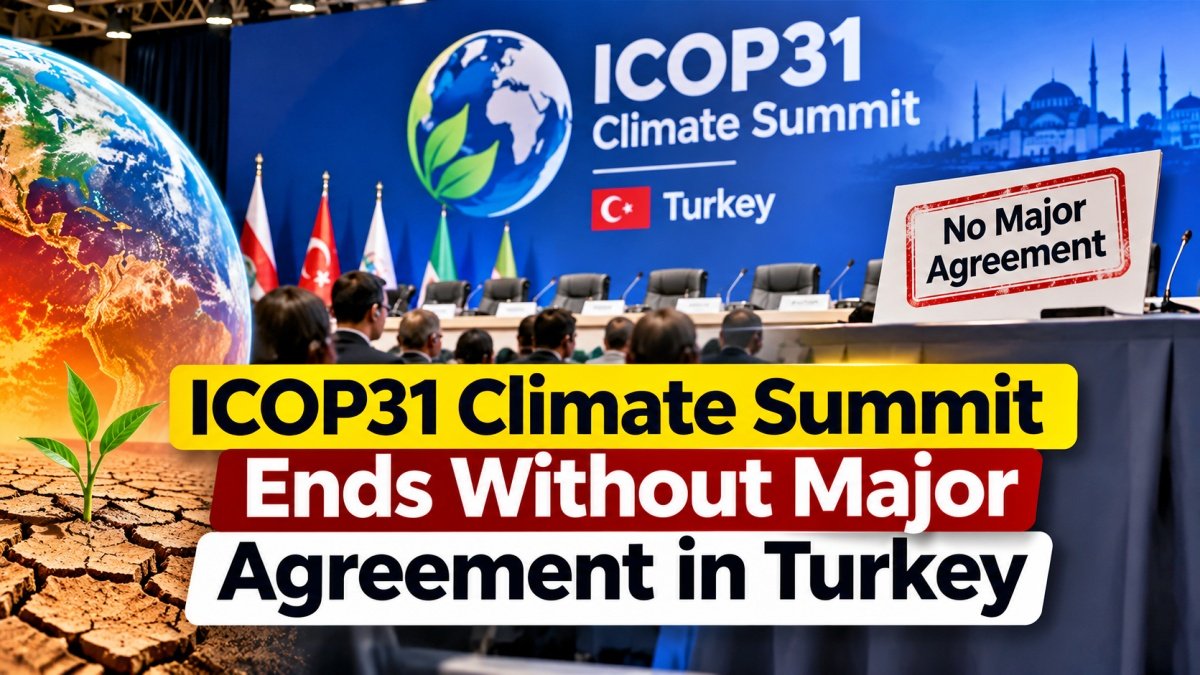
The United Nations climate conference, COP31, concluded in Antalya, Turkey, without a major political agreement for the first time in 17 years, as nations failed to reach a consensus on fossil fuels.
Key Points
- No Consensus: Representatives from nearly 200 countries failed to agree on reducing coal, oil, and gas use.
- Fossil Fuel Omission: The final proposal notably omitted any mention of fossil fuels, sparking objections from the EU and small nations.
- Major Opponents: Saudi Arabia and Russia opposed explicit language on reducing fossil fuels, citing energy security and price concerns.
- Finance Deadlock: Developing nations expressed resentment as the specific 120 billion dollar climate finance target was removed from the draft.
- US Absence: The United States stayed away from the summit for the second consecutive year due to President Trump’s climate policies.
Historic Failure in Antalya
ANTALYA: The United Nations climate conference, COP31, held in Antalya, Turkey, has concluded without any major political agreement. After two weeks of intense negotiations involving representatives from nearly 200 countries, the summit failed to produce a consensus on the critical issue of reducing global reliance on coal, oil, and gas. This outcome marks the first time since 2009 that a UN climate conference has ended without a significant political deal.
The final proposal presented at the summit was criticized for its lack of substance regarding carbon emissions. Notably, the document did not mention fossil fuels, a move that drew sharp condemnation from the European Union and several smaller nations. The deadlock was primarily driven by a divide between oil-producing nations and those seeking aggressive climate action.
Conflicting Interests and Pressures
Saudi Arabia and Russia emerged as the primary opponents of any language explicitly calling for a reduction in fossil fuel use. Saudi Arabia, in particular, was accused by other negotiators of exerting significant pressure to steer decisions in its favor. Instead of a phase-out, Saudi Arabia advocated for the promotion of carbon capture technology, arguing that a rapid reduction in oil and gas supplies would cause price spikes that would disproportionately harm poor countries.
Russia echoed these concerns, stating that a swift transition away from fossil fuels could lead to severe energy shortages and economic instability. Conversely, the European Union, Britain, Panama, and several island nations, including the Marshall Islands, argued that coal, oil, and gas are the primary drivers of climate change and that any agreement without addressing them is insufficient. Ireland’s Climate Minister, Dara O’Brien, stated that an agreement omitting fossil fuels is unacceptable.
Financial Deadlocks and Global Stance
Another major point of contention involved financial aid for climate-related damages. Developing countries sought a commitment from wealthy nations to provide more funding for disasters like floods and rising sea levels. While an initial proposal suggested tripling financial aid to 120 billion dollars by 2035, this specific figure was removed from the final draft as developed countries refused to commit to a predetermined amount.
India and China, the world’s largest energy consumers, played pivotal roles in the negotiations. India did not formally oppose the final proposal but expressed reservations on specific parts. Union Environment Minister Bhupender Yadav stated that while a major agreement was not reached, India remains committed to the dialogue. China accepted the proposal but urged all nations to show more flexibility to reach a consensus.
Systemic Challenges and US Absence
The inconclusive nature of COP31 has reignited debates over the United Nations’ consensus-based decision-making process. Because decisions require unanimous agreement, a single dissenting nation can stall progress. Former US Vice President Al Gore called the outcome disappointing, while Australia’s Climate Minister Chris Bowen admitted the consensus model is becoming a significant hurdle. However, UN Climate Chief Simon Stiesenhuber defended the system, noting it was the mechanism that produced the 2015 Paris Agreement.
The absence of the United States for the second consecutive year also impacted the talks. European diplomats suggested that American presence might have helped counter Saudi Arabia’s opposition. The US absence is attributed to President Donald Trump’s climate policies, as he has consistently argued that international climate agreements place an undue burden on the American economy.
Latest Updates
- The negotiations collapsed specifically due to a lack of fossil fuel regulation.
- The Saudi stance on fossil fuels was a primary factor in stalling the summit’s progress.