


























Key Points
- Over 2,000 people, including security personnel, reportedly killed in Iran protests according to an Iranian official.
- Supreme Leader Khamenei allegedly authorized live fire against protesters after a high level meeting of all three government branches.
- More than 10,000 people arrested as IRGC and Basij militia deployed across streets with live ammunition.
- Internet and phone services shut down for four and a half days, creating near total information blackout.
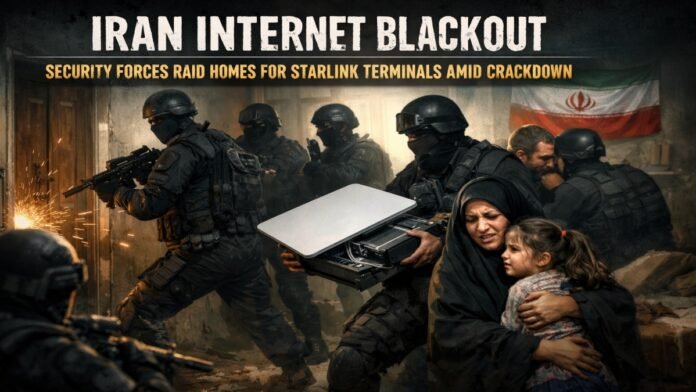
- Security forces raiding apartments in northern Tehran to confiscate illegal Starlink satellite dishes.
- President Trump warns Iran is in “big trouble” and threatens military options while also signaling openness to negotiations.
For the first time since the 1979 revolution, Iran is witnessing such widespread public unrest, with Supreme Leader Ayatollah Ali Khamenei reportedly ordering security forces to directly attack and fire upon demonstrators. According to Iran International, citing sources close to the Supreme National Security Council and presidential office, the mass killings were carried out on Khamenei’s direct orders with full knowledge and approval of heads of all three branches of government.
An Iranian official told Reuters that more than 2,000 people have been killed in the violence, including security personnel, though the government blames “terrorists” for the killings. The Supreme National Security Council formally issued an order permitting live fire, with the Islamic Revolutionary Guard Corps (IRGC) and Basij militia primarily responsible for the shootings. Human rights groups report that at least 10,721 people have been arrested across 187 cities in all 31 provinces, while state media claims that over 100 security forces have also been killed.
Iran Cut Off From The World, Internet And Communication Shut Down
To suppress the protests, Iranian authorities have completely shut down internet and phone services, cutting off the country from the world for four and a half days. Eyewitnesses report that the streets of Tehran resemble a war zone, with riot police and plainclothes security officers stationed at every corner armed with shotguns, tear gas, and batons. The blackout has brought bank transactions to a standstill, and several government buildings and ATMs have been set on fire by protesters.
The government launched large-scale efforts to jam GPS signals and disrupt Starlink access, resulting in an estimated 30% packet loss for connections, with some areas experiencing up to 80% loss. This electronic warfare has made it nearly impossible for Iranians to share videos and information about the crackdown with the outside world.
Raids For Starlink Terminals
Amidst the digital censorship, Iranian security forces are conducting door-to-door raids in northern Tehran to confiscate Starlink terminals. Despite being illegal, satellite dishes are installed in many homes, and authorities are now systematically seizing them to prevent news of the protests from reaching the international community.
Amir Rashidi, director of digital rights at Miaan Group, described the move as “electronic warfare,” noting that operations are most severe in protest hotspots and during evening gatherings. Security forces have also been searching homes in western Tehran, with opposition sources reporting that messages in Persian are warning users that Starlink disruptions are intensifying and spreading more widely than in previous days.
US Role And Trump’s Warning
Iranian Foreign Minister Abbas Araghchi claimed he is in constant contact with US envoy Steve Witkoff, but White House press secretary Karoline Leavitt has clarified that President Donald Trump will not hesitate to use military options, and Iran is well aware of this. Trump has declared Iran is in “big trouble” and warned that the government in Tehran “better not start shooting because we’ll start shooting, too”.
The president is expected to hold a security consultation to discuss potential actions, which could range from new sanctions against key regime figures and Iran’s energy or banking sectors to large-scale military attacks or more targeted strikes on specific Iranian leaders. Trump has also threatened to impose a 25% tariff against any country doing business with Iran, while simultaneously signaling interest in nuclear negotiations. Exiled leader Reza Pahlavi has appealed to Trump to take immediate action against Khamenei, as the protests continue to spread across the country.