


































Key Weather Highlights
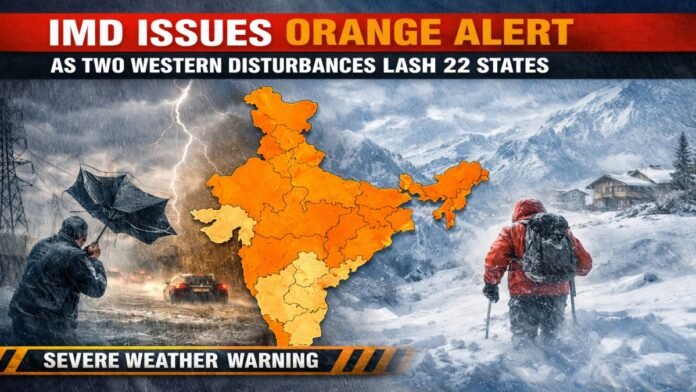
- Orange Alert: Issued for Delhi, Uttar Pradesh, Punjab, and Uttarakhand due to expected thundersqualls and heavy lightning.
- Wind Speeds: Gusts of 50 to 70 kmph are forecast for the National Capital Region and neighboring states on Saturday.
- Hailstorm Warning: Severe risk for standing crops in Rajasthan, Haryana, and Punjab, with heavy damage already reported in northern Rajasthan.
- Temperature Shift: Maximum temperatures in Delhi will hover around 29°C, providing relief from heat but causing logistical disruptions.
- Second Wave: A fresh, more powerful Western Disturbance is predicted to impact North India starting April 7, 2026.
With the arrival of April, the meteorological landscape of India has shifted dramatically. The IMD confirms that the current instability is driven by the simultaneous activation of two Western Disturbances, coupled with significant moisture incursion from the Arabian Sea. This synergy has created a volatile atmosphere across 22 states, transforming a typical spring onset into a period of severe weather alerts.
In Northwest India, including Jammu and Kashmir, Himachal Pradesh, and Uttarakhand, the impact is most pronounced. These regions are bracing for widespread rainfall and snow in higher altitudes, while the plains of Punjab, Haryana, and Delhi are facing “thundersqualls,” a phenomenon where wind speeds can reach up to 70 kmph.
Agricultural Crisis and Economic Concerns
The most critical fallout of this weather shift is the threat to the agricultural sector. For farmers in the “breadbasket” states of Punjab, Haryana, and Rajasthan, the timing could not be worse. The hailstorms reported on Friday have already flattened standing crops in parts of northern Rajasthan, and the Jaipur Meteorological Centre warns that Saturday could see further devastation across the Ajmer, Kota, and Jaipur divisions.
Meteorologists emphasize that these are not standard spring showers. The intensity of the hailstones and the velocity of the winds are capable of destroying months of labor in minutes, leading to significant economic anxiety in rural communities.
State-Specific Forecasts and Temperature Trends
In the national capital, Delhi, the IMD has designated an ‘Orange Alert’ for central and southern districts. Saturday’s maximum temperature is expected to settle near 29°C, a notable dip from the usual April heat. Conversely, eastern cities like Patna and Kolkata, which saw temperatures soaring to 38°C earlier this week, are expected to see a gradual cooling by Sunday as moisture flows in from the Bay of Bengal.
Central India is not exempt from this turbulence. Madhya Pradesh, Chhattisgarh, and the Vidarbha region are expected to remain under the grip of lightning and gusty winds until at least April 7. Meanwhile, down south, states like Kerala and Telangana are experiencing localized instability, with light rainfall and frequent lightning strikes reported.
The Road Ahead: A Second Disturbance Looms
While some regions may see a brief respite on Sunday and Monday, the relief will likely be short-lived. IMD data suggests that another, potentially more intense Western Disturbance will track across the border on April 7. This second system is expected to trigger a fresh spell of storms and hailstorms across Rajasthan and the northern plains, potentially extending the period of meteorological uncertainty well into the second week of April. Authorities advise residents to stay indoors during peak storm hours and for farmers to take all possible precautions for their harvested and standing produce.