
































Key Highlights
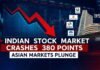
- Sensex & Nifty Plunge: Sensex opened with a 2,743 point drop to 78,543, while Nifty fell 519 points to 24,659.
- Khamenei’s Death: Geopolitical instability peaked following the confirmed death of Iran’s Supreme Leader, Ayatollah Ali Khamenei.
- Oil Prices Surge: Brent crude jumped over 7%, trading near $78 per barrel amid fears of supply blocks in the Strait of Hormuz.
- Rupee Weakens: The Indian rupee hit a new low, crossing the 91 mark against the US dollar.
- Economic Resilience: Despite the crash, India’s Q3 GDP grew by 7.8% and February GST collections reached ₹1.83 lakh crore.
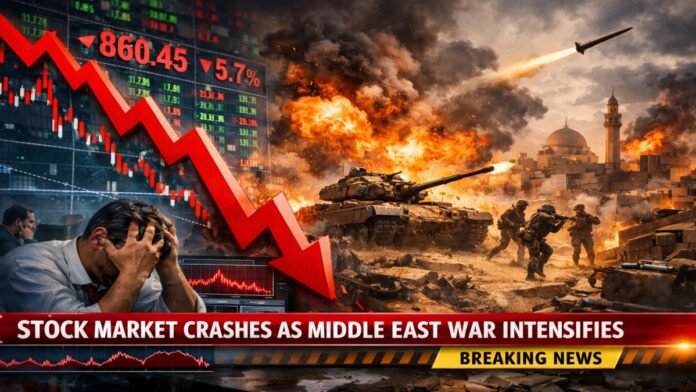
The trading week began on a disastrous note for Indian investors as the opening bell was met with a relentless wave of selling. The screens flashed red immediately, reflecting the deep-seated fear of a full-scale Middle East conflict. This “war-fueled fire” did not just sink the benchmark indices; it also sparked widespread concerns regarding domestic inflation and the future of global trade.
By 11:30 AM, the Sensex had recovered slightly to trade around 80,100, but the initial impact had already wiped out approximately ₹7.8 lakh crore of market capitalization. Small and large-cap investors alike remained glued to news updates, watching their portfolios dwindle in real-time.
Geopolitical Crisis: The Death of Ali Khamenei
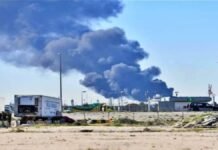
The primary catalyst for this global market tremor is the confirmed death of Iran’s Supreme Leader, Ayatollah Ali Khamenei, following joint U.S. and Israeli military strikes. This monumental shift in Middle Eastern leadership has plunged the region into further chaos.
Retaliatory missile strikes from Hezbollah on Monday morning have further escalated the conflict, causing ripples across Asian and American markets. As risk appetite evaporated, investors pivoted toward “safe haven” assets, sending gold prices to record highs as they abandoned equities in favor of stability.
Crude Oil and the Inflation Threat
The military confrontation has put the world’s most critical energy chokepoint, the Strait of Hormuz, in the crosshairs. With nearly 20% of the world’s oil passing through this narrow waterway, any disruption is catastrophic for energy-importing nations like India.
Brent crude oil prices surged by 7.60% to $78.41 per barrel, with some analysts warning of a potential spike toward $100 if the conflict persists. For the average Indian citizen, this translates to the looming threat of higher petrol and diesel prices, which could ultimately drive up the cost of essential goods and services.
Economic Fundamentals: A Glimmer of Hope
While the equity markets are in a state of flux, India’s internal economic data suggests a level of underlying strength. Recent reports indicate that India’s GDP growth for the October, December quarter stood at a robust 7.8%, up from 7.4% in the previous quarter.
Furthermore, the government’s revenue remains strong, with February’s GST collection hitting ₹1.83 lakh crore, an 8.1% year-on-year increase. This fiscal health provides the government with some cushion to manage the external shocks caused by the rising oil bill and currency depreciation.
Strategic Advice for Investors
Market experts are urging retail investors to maintain composure during this period of high volatility. Selling in a state of panic often leads to permanent capital loss.
Instead, this is a time for “portfolio hygiene,” reviewing long-term holdings while keeping an eye on the evolving geopolitical situation. Since the fundamentals of the Indian economy remain resilient, the current dip may eventually provide a buying opportunity for quality stocks once the war situation stabilizes.